WHO: Ebola Threatens States, Societies in W. Africa

The head of the World Health Organization (WHO) says Ebola poses a threat to the governments and societies of West Africa.

Dr. Margaret Chan, director-general of the WHO, said Monday that she has “never seen an infectious disease contribute so strongly to potential state failure.”

In a statement to a health conference in the Phillippines, Chan warned the number of cases is “rising exponentially” in Liberia, Guinea and Sierra Leone, and said the outbreak shows how the world is ill-prepared for a severe and sustained public health emergency.

Other U.N. officials, including U.N. chief Ban Ki-moon, have sounded similar warnings about the Ebola epidemic, which has killed more than 4,000 people in West Africa.

Defying calls for a strike

Chan spke as most health workers in Liberia reported to work Monday, ignoring calls for a strike that could have weakened efforts to fight the Ebola epidemic.

The country’s Health Workers Association had told members to stay home unless they received higher hazard pay promised by the Liberian government. But hospitals and health officials say the majority of nurses and physician’s assistants came to work, and medical facilities were operating.

The secretary-general of the union, George Williams, accused the government of pressuring workers to defy the strike.

In an interview with VOA, Liberia’s assistant health minister, Tolbert Nyensuah, said the government can’t meet all the health workers’ demands because it needs to keep opening Ebola treatment centers.

“So it’s negotiation,” he said. “And we understand that their leadership have understood this. We have to put all of our differences aside. Unite. Come together as a country. Solve this problem and then we can continue to discuss those issues.”

Alphonsus Wiah, a hygienist with the Island Clinic Ebola Treatment Unit, the largest government-run Ebola center in the capital, Monrovia, said the workers were demanding $700 in monthly hazard pay on top of their monthly salaries of $200 to $300.

“This [Ebola] epidemic is not just a normal hospital disease,” Wiah said. “… As I speak to you, some of our colleagues, the health workers, are dying. So, our demand was the salary structure that [the] government offered was too low, and we believe there should be an increment in the salary structure.”

Workers also have complained about a lack of protective gear.

The extra money promised to workers is being paid, Reuters news service quoted Health Minister Walter Swenigale as saying.

Liberia has endured the largest number of Ebola infections of any country, according to the World Health Organization, with 4,076 confirmed cases as of October 8. The virus has killed at least 2,316, including 95 health workers out of 201 infected. The regional outbreak had infected almost 8,400 people and killed more than 4,000.

Government position

President Ellen Johnson Sirleaf reportedly toured Ebola treatment units around Monrovia Saturday and asked health workers to remain on the job, according to assistant health minister Tolbert Nyenswah.

Health Minister Walter Gweningale referred VOA to Minister of Information Lewis Brown for comment. Brown has not responded to VOA’s requests for comment for the past week.

Health workers

Wiah said that although the health workers took an oath to save lives, they need protection from Ebola while making a living.

He said that when the first Ebola cases were confirmed in Guinea in March, the government agreed to pay $700 a month for hazard pay. But, Wiah said, the government soon changed its mind and reduced the monthly allowance.

“We projected, according government’s first announcement, that doctors will make $1,500. Nurses will make $750, plus their government salary, then hygienists will make $750,” Wiah said.

“Later on, it came to as low as 250 US dollars. So, we are saying the $250 is very small, and those that go in the ETUs [Ebola treatment units] $300 is also very small.”

Vaccine clinical trials begin

Meanwhile, the Public Health Agency of Canada said Monday that phase one clinical trials for an experimental Ebola vaccine have begun.

It says the vaccine has shown great promise in animal research and will be tested at the Walter Reed Army Institute of Research in the U.S. state of Maryland.

source: http://www.voanews.com


Teknologi Kedokteran: 9 RS Dilibatkan Dalam Pengembangan Sel Punca

menkesdahlan

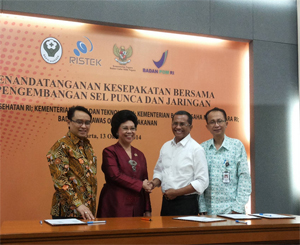
menkesdahlanIndonesia siap kembangkan teknologi sel punca (stem cell) dan jaringan secara serius, lewat kerjasama antara Kementerian Kesehatan (Kemenkes), Kementerian Riset dan Teknologi (Kemenristek), Kementerian Badan Usaha Milik Negara (BUMN) dan Badan Pengawasan Obat dan Makanan (BPOM) yang baru saja di tandatangani, di Jakarta, Senin (13/10).
“Langkah pertama adalah pembentukan konsorsium yang beranggotakan pemerintah, akademisi, dunia usaha dan komunitas,” kata Menkes Nafsiah Mboi dalam pidato sambutannya.

Hadir dalam kesempatan itu, Menteri BUMN Dahlan Iskan, Kepala Badan POM, Roy Sparringa, dan Ketua Komite Pengembangan Sel Punca dan Jaringan, dr Farid Anfasa Moeloek.

Melalui penandatangan MoU ini, Menkes Nafsiah Mboi berharap pengembangan sel punca dan jaringan dapat terlaksana secara komprehensif, serta mencakup semua aspek. Baik penelitian, penerapan, pemanfaatan, pelayanan, maupun pengawasan.

“Di dunia, sel punca telah banyak digunakan dalam pengobatan baik untuk anak-anak hingga orang tua. Melihat begitu besar manfaat sel punca, kenapa kita tidak mengembangkannya. Padahal teknologi bukan hal baru di kalangan peneliti kita,” ujar Menkes.

Pengembangan teknologi dan pelayanan sel punca dan jaringan telah mulai dilakukan di Indonesia sejak 2008. Sel punca dipergunakan untuk pengobatan seperti parkinson, alzheimer, stroke dan penyakit lain yang disebabkan oleh kerusakan sel dan jaringan.

Menkes menuturkan, dirinya begitu bersemangat menandatangani kerjasama ini tatkala mengetahui mantan presiden BJ Habibie menggunakan sel punca untuk mengobati lututnya.

“Kalau manfaatnya sebesar itu, kenapa kegembiraan ini tidak kita berikan kepada semua orang saja,” kata Menkes.

Selain itu, lanjut Nafsiah, pihaknya juga bosan mendengar produsen sel punca dan jaringan saling menjelekkan satu sama lainnya sehingga terpikir untuk membentuk konsorsium dalam proses pengembangannya.

“Konsorsium ini selain melakukan rekayasa sel punca dan jaringan untuk pengobatan, juga memiliki fungsi pengawasan atas peredaran sel punca dari luar negeri yang telah direkayasa untuk pengobatan,” ucap Nafsiah.

Pemerintah menunjuk 9 rumah sakit (RS) vertikal untuk memulai pengembangan layanan sel punca dan jaringan, yaitu RS Dr M Djamil Padang, RS Jantung dan Pembuluh Darah Harapan Kita, RS Hasan Sadikin Bandung, RS Sardjito Yogyakarta, RS Fatmawati Jakarta, RS Khusus Kanker Dharmais, RS Dr Kariadi Semarang, RS Sanglah Bali, dan RS Persahabatan Jakarta.

Sementara itu, Menteri BUMN Dahlan Iskan menuturkan, ilmuwan Indonesia sebenarnya tidak kalah kemampuannya dibanding ilmuwan negara lain dalam hal pengembangan sel punca dan jaringan.

Apalagi, Dahlan sendiri sudah merasakan manfaat yang cukup besar dalam penggunaan sel punca dan jaringan di dalam tubuhnya.

“Saya tidak mungkin mau menandatangi MoU ini kalau sel punca tidak bermanfaat. Malah saya sudah merasakannya untuk implan gigi dan rekayasa sel punca untuk memperbaharui sel dalam tubuh saya,” kata Dahlan Iskan.

Bahkan Dahlan sangat bangga dengan hasil kerja tenaga medis asal Indonesia terkait dengan sel punca dan jaringan tersebut. “Saya tidak melakukannya di Jerman, tidak juga di Korea, tapi di Surabaya. Itu sudah menunjukan bahwa sel punca bisa menjadi tuan rumah di negerinya sendiri,” kata Dahlan menandaskan. (TW)

{jcomments on}

Quality education is (also) a health policy – Adhitya S. Ramadianto

As the nation welcomes a new leader, the future of Indonesian health policy has become a hotly debated topic among medical professionals and the public alike. The upcoming administration will have to tackle numerous obstacles to implement the promised universal healthcare coverage to improve the health of Indonesians. However, the incoming government must not lose sight of the bigger picture on health.

So far, most of the conversations about health policies have been constrained to the provision of medical care: how to develop adequate facilities, allocate resources, deploy medical professionals and certainly how to finance the whole operation. While they are real problems facing our healthcare system right now, our policymakers must also take into account other determinants that have a real and measurable impact on health. These include socioeconomic environment, physical environment and individual characteristics and behaviours.

For example, experiencing unbearable psychological stress at work may lead to troublesome physical symptoms. A lack of open green spaces means children spend more time indoors, deprived of healthy physical activities. Smokers feel free to puff in public spaces thanks to weak law enforcement. Neglecting to manage these determinants will put a heavy burden on even the most developed healthcare system, let alone our fledgling system.

One important determinant of health is education. Research findings show that better education brings better health outcomes. More years of schooling translates into a lower mortality rate, better physical health conditions and higher life
expectancy.
Education exerts its effects through many channels: the better educated are less likely to engage in unhealthy behaviour, are more likely to adopt preventive healthcare and to utilise available healthcare more optimally. In short, educated people have better health literacy, or “the capacity to obtain, process and understand basic health information and the services needed to make appropriate health decisions,” a study report stated.

Furthermore, those with higher education land better-paid jobs – and income still plays a huge role in one’s health status.

Implementing a high-quality education system, therefore, is a requirement to achieve the goals of “Indonesia Sehat” (Healthy Indonesia). Sadly, recent examples show the inadequacy of our schools in educating the masses, especially in health literacy.

Quack healers are still attracting clients all over the country, including those selling dubious “natural remedies”, even though there is simply no physiological or pharmacological basis for the therapy. People are spending exorbitant amounts of money to pay for a placebo effect at best, or even worse, potentially harmful treatments.

Indonesian children are being increasingly victimised by the anti-vaccination movement that has sprung up in recent years, an unwelcome import from misguided Western cultures as well as conspiracy-loving religious extremists. These “anti-vaxxers” rely on pseudo-science and mass hysteria, instead of sound medical evidence affirming the safety and benefits of immunisation.

Two examples of their malicious handiwork are the 2005 polio outbreak in Sukabumi, West Java, and the 2011 diphtheria outbreak in East Java; not to mention the steady rise of previously-rare vaccine-preventable diseases.

The use of long-term contraception methods, such as the intrauterine device (IUD), praised for its effectiveness and convenience, is hampered by myths about its side effects. Many women still reject the IUD in fear of exaggerated risk of uterine damage or the baseless rumour that it causes congenital defects in the baby should it fail in preventing pregnancy. Couple this trend with the fact that less-educated women tend to have more children and we still have a long way to go in reducing the maternal mortality rate that disproportionately affects those with a high number of children.

Thus, investing in quality education and health literacy is as pressing an issue as building hospitals and training new physicians. Education is more than a job requirement; it serves a higher purpose as the key to leading a fruitful life by opening up precious opportunities. By providing quality education, we are giving our next generations an opportunity to grow up and live healthily.

Additionally, educated people make empowered patients who realise that their health is their responsibility and are ready to collaborate with the medical system to achieve good health. Patient and community empowerment to maintain one’s own health is vital because physicians and other health professionals can only influence the health of their patients up to a certain degree.

As health itself depends on various factors, there are many parts of the curriculum that can contribute to improving health literacy. The education system should properly equip students with critical thinking skills so that they will be able to navigate the flood of information in the digital era. Successful science education, like biology and chemistry, will build a strong foundation of health knowledge. Reading is crucial, as many health information sources are written.

Oral language skills are as influential to allow people to describe their health condition more accurately to the doctor, a starting point to better care. Basic math will always come in handy, whether to calculate one’s body mass index or to take the correct drug dosage. Finally, students must develop analytical thinking to select relevant information and apply it in health-related decision making.

A chain is only as strong as its weakest link; building the medical system alone will not suffice in achieving Indonesia Sehat. An understanding of the close connection between education and health should serve as yet another wake-up call for stakeholders to evaluate, and to redesign if necessary, the national education system.

The fresh air president-elect Joko “Jokowi” Widodo brought to politics should also make its way into our education policies. The government must not hesitate to overhaul our school system and curricula, and give the national education system a fresh start. Nevertheless, these changes must be carefully thought through with sufficient time, unlike the last decade’s rushed curriculum changes that have become more like knee-jerk reflex reactions instead of deliberately planned actions.

If the government is serious about improving the health of the nation, the quality of our education must also take centre stage, considering that its success or failure will affect the health of generations of Indonesians to come. – Jakarta Post, October 10, 2014.

* Adhitya S. Ramadianto graduated from the faculty of medicine of the University of Indonesia and is a former executive committee member of Asian Medical Students’ Association International.

* This is the personal opinion of the writer or publication and does not necessarily represent the views of The Malaysian 

source: http://www.themalaysianinsider.com


Puluhan Ribu Pasien Gangguan Jiwa di Indonesia Dipasung

Presiden terpilih Joko Widodo diminta segera memperkuat Undang-Undang (UU) Kesehatan Jiwa yang telah disahkan DPR pada 8 Juli 2014 dan ditandatangani Presiden Susilo Bambang Yudhoyono pada 8 Agustus 2014 lalu.
Hal itu disampaikan inisiator Undang-Undang Kesehatan Jiwa, Nova Riyanti Yusuf pada Hari Kesehatan Jiwa Sedunia bersama Kementerian Kesehatan, di Jakarta, Minggu, 12 Oktober 2014.

Menurut Noriyu, sapaan akrabnya, UU Kesehatan Jiwa harus memiliki peraturan turunan. Hal ini dimaksudkan agar UU bisa diimplementasikan dalam kehidupan nyata.

“UU Kesehatan Jiwa itu sifatnya general berupa bahasa hukum. Tapi pada saat menjadi peraturan turunan lebih sistematis, teknis dan implementantif,” ujar Noriyu.

Mantan anggota DPR dari Fraksi Demokrat ini juga berharap, dalam waktu satu tahun nantinya Jokowi segera mengeluarkan peraturan turunan UU Kesehatan Jiwa ini.

Selain itu, kata Noriyu, ada juga lima peraturan menteri yang harus segera direalisasikan guna memperkuat UU Kesehatan Jiwa yakni, empat Peraturan Menteri Kesehatan dan satu Peraturan Menteri Sosial yang direncanakan terwujud dalam satu tahun ke depan.

“Ini mampu memberikan banyak dampak positif yang nyata bagi kondisi kesehatan jiwa Indonesia. Di mana jika ada masyarakat ada yang ingin berperan membantu orang yang gangguan jiwa, harus memenuhi kriteria dari peraturan tersebut,” ucapnya.

Puluhan ribu dipasung

Noriyu melanjutkan, langkah itu juga nantinya bisa meminimalisir banyaknya panti yang sangat tidak memenuhi kriteria untuk melayani orang dengan gangguan jiwa.

“Ada banyak panti yang peduli pada orang dengan gangguan jiwa. Tapi, sayang sekali panti itu malah memberikan ruang bagi pelanggaran HAM,” katanya

Noriyu memaparkan, di Indonesia ada sekitar 56.000 orang yang dipasung karena mengalami gangguan jiwa.

“Pada 2009, diperkirakan yang dipasung sekitar 18.000 orang. Angka itu dikoreksi menjadi 56.000 berdasarkan data Riset Kesehatan Dasar tahun 2013. Itu termasuk orang dengan gangguan jiwa skizofrenia. Kita harus peduli akan hal itu,” kata dia.

sumber: http://nasional.news.viva.co.id


Bahaya Merokok: Kemkes Beriklan di Bioskop Sasar Generasi Muda

10okt

10oktKementerian Kesehatan luncurkan iklan layanan masyarakat tentang dampak merokok di jaringan bioskop di dalam negeri dan sejumlah stasiun televisi lokal. Hal itu merupakan bagian dari upaya mengurangi jumlah prevalensi perokok muda di Indonesia.

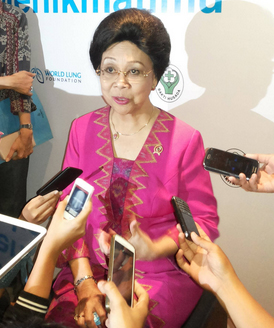
“Tantangan yang harus dihadapi dalam pengendalian merokok adalah masih kuatnya iklan, promosi, dan sponsor perusahaan rokok. Ini dilakukan secara masif dan intensif agar anak-anak menjadi perokok pemula,” kata Menteri Kesehatan (Menkes) Nafsiah Mboi saat peluncuran iklan layanan masyarakat tentanhg bahaya rokok, di Jakarta, Jumat (10/10).

Iklan layanan masyarakat itu bertujuan untuk memperkuat pencantuman peringatan bergambar pada bungkus rokok yang diluncurkan pasa 24 Juni 2014 lalu. Melalui iklan tersebut muncul kesadaran baru sehingga bertekad untuk berhenti merokok, mencegah para perokok pemula, dan membebaskan masyarakat dari asap rokok pasif.

Menkes menjelaskan, sejumlah kegiatan telah dilakukan Kemenkes demi mengurangi prevalensi perokok, mulai dari kampanye, peraturan pemerintah, hingga pemasangan peringatan gambar bahaya merokok di kemasan rokok.

Dengan menembus gedung Bioskop, Menkes berharap, para remaja yang menjadikan aktivitas menonton film di bioskop sebagai gaya hidup mampu menyerap makna dari iklan layanan masyarakat tersebut. Selain membantu sesama anak muda yang terlanjur menjadi perokok.

Iklan berdurasi sekitar 1 menit itu menampilkan kondisi penderita paru-paru yang kesakitan akibat penyakitnya tersebut. Ini untuk melawan iklan komersil dari industri rokok yang menampilkan kemudaan, riang, gembira dan bahagia.

“Kami ingin mengingatkan generasi muda yang merokok di usia muda usia, dampaknya itu setelah tua. Tidak bisa bermain-main dengan cucu karena sakit-sakitan. Penglihatan akan merekam pesan itu ke dalam otak, dan akan terus diingat,” katanya.

Epidemi tembakau telah membunuh sekitar 6 juta orang per tahun. Data badan kesehatan dunia WHO 2014 menyebutkan dimana 600 ribu di antaranya merupakan perokok pasif.

“Jika tidak ada penanganan yang serius, maka pada 2030 diperkirakan jumlah korban akan bertambah menjadi 8 juta orang. Jumlah itu sebgian besar terjadi negara-negara berkembang,” ucapnya.

Hasil Riset Kesehatan Dasar (Riskesdas) 2013 menunjukkan, perokok usia di atas 15 tahun sebanyak 36,3 persen. Sebagian besar dari mereka adalah perokok laki-laki dengan prevalensi 64,9 persen dan jumlah ini merupakan yang terbesar di dunia.

Sementara itu, lanjut Menkes, prevalensi pada perempuan merokok terjadi peningkatan dari 5,2 persen pada 2007 menjadi 6,9 persen pada 2013. Sekitar 6,3 juta wanita Indonesia usia 15 tahun ke atas juga merokok.

Hal itu juga selaras dengan data Global Youth Tobacco Survey (2009), 89,3 persen remaja Indonesia melihat iklan rokok di billboard, 76,6 persen di media cetak dan 7,7 persen pernah menerima rokok gratis.

Sementara studi yang dilakukan Universitas Muhamadiyah Prof Hamka (Uhamka) dan Studi Komnas Anak pp2007 menunjukkan, 70 persen remaja mengaku mulai merokok karena terpengaruh oleh iklan.

“Sebanyak 77 persen mengaku iklan menyebabkan mereka untuk terus merokok, dan 57 persen mengatakan iklan mendorong mereka untuk kembali merokok setelah berhenti,” tuturnya.

Diakhir sambutannya, Menkes mengajak seluruh masyarakat Indonesia untuk bersama-sama mendukung dan mensukseskan upaya pengendalian tembakau.

“Marilah kita ubah norma di masyarakat agar merokok tak lagi menjadi norma sosial yang lazim dan yang dapat diterima masyarakat. Marilah kita ubah perilaku masyarakat terkait merokok yang sangat merugikan kesehatan individu, masyarakat, dan negara ini,” kata Nafsiah menandaskan. (TW)


Ebola could cost global economy $32.6B, World Bank says

Ebola could cost the global economy over $32 billion by the end of 2015 if the viral infection spreads into countries that neighbour those already affected by the outbreak

That’s according to the most recent estimates from the World Bank, the UN’s global financial arm, which is tasked with handling loans to poorer nations.

To get the $32.6-billion estimate, the organization charted two scenarios.

  • In the first, which they call the “low Ebola” scenario, the group assumed officials manage to contain the outbreak in the three most heavily impacted countries: Guinea, Liberia and Sierra Leone.
  • In the second, known as “high Ebola,” they assume the outbreak takes longer to get a lid on in those countries, and has meanwhile spread to new ones in the region.

In the first scenario, the financial impact might be limited to about $9 billion. In the latter, it would be more than $32 billion.

For context, the U.S. government estimates that the SARS outbreak in 2003 which killed almost 800 people and infected more than 8,000 cost the world economy about $40 billion.

Beyond the deadly and more serious human toll, one of the factors having an impact on Ebola’s financial toll is what the World Bank calls “aversion behaviour,” or fear factor, whereby neighbouring countries close their borders to humans as well as commercial goods, and international airlines cancel flights.

David Evans, a senior economist at the World Bank and co-author of the report, said fear prompts flights to be cancelled, mining operations to halt, businesses to close, and farming and investment to slow as people try to avoid putting themselves and their employees at risk. That behaviour has a larger economic impact than sickness and death, he said.

“Closing borders and halting flights has a huge impact,” he said. “These economies trade with the outer world. They have international investment in mining. Liberia imports food. So as we close borders and cancel flights, there is a real impact on the food security and the incomes of the households in these countries.”

Minimizing financial impact

It’s possible to minimize the financial impact if those types of behaviour aren’t unnecessarily continued.

“The successful containment of Ebola in Nigeria and Senegal so far is evidence that this is possible, given some existing health system capacity and a resolute policy response,” the World Bank said.

Part of the problem of the Ebola outbreak is it’s attacking areas that already had insufficient and underfunded health-care infrastructure.

“The international community now must act on the knowledge that weak public health infrastructure, institutions and systems in many fragile countries are a threat not only to their own citizens, but also to their trading partners and the world at large,” World Bank president Jim Yong Kim said.

The latest estimates from the World Health Organization indicates the Ebola outbreak, already the worst confirmed in the disease’s history, has killed more than 3,400 people.

News on Wednesday emerged that the first victim to make landfall in the U.S., Thomas Eric Duncan, died in a Dallas hospital on Thursday morning.

It’s worth noting that neither scenario considered the financial impact if the disease were to spread in any significant way to wealthier nations with much bigger GDPs. Under that scenario, the financial toll would presumably be much higher.

In a release, the World Bank also said it is mobilizing $400 million in emergency financing for the three countries hardest hit by the crisis.

source: http://www.cbc.ca/


Pemerintah Mendatang Harus Merekonstuksi Sistem Kesehatan Nasional

Dalam acara dialog nasional bertajuk “Revolusi Kesehatan Menuju Revolusi Mental, di Universitas Indonesia Depok, Jawa Barat, Asisten Deputi Urusan Sumber Daya Kesehatan Kementerian Pembangunan Daerah Tertinggal (KPDT), dr. Hanibal Hamidi M.Kes menyatakan, untuk pelaksanaan revolusi mental harus dimulai dari bidang kesehatan.

“Ada lima persoalan kesehatan di Indonesia yang harus menjadi fokus pemerintah mendatang, yaitu, penyediaan dokter tiap desa, penyediaan bidan tiap desa, pemenuhan gizi masyarakat, sanitasi yang baik, dan tersedianya kebutuhan air bersih,” kata Hanibal dalam siaran persnya, di Jakarta, Rabu (8/10)

Kegiatan dialog ini sendiri, menghadirkan narasumber dr. Hanibal Hamidi, M.Kes (Asisten Deputi Bidang Sumber Daya Kesehatan Kementerian Pembangunan Daerah Tertinggal), Prof.Dr. Purnawan Junadi, MPH, Ph.D (Universitas Indonesia), Prof. DR. Dr. Indrawati Lipoeta (Universitas Andalas), Prof. DR, dr. Tri Martiana,MPH (Universitas Airlangga), Prof. DR, dr. Mulyanto (Universitas Mataram) Prof. DR. Dr.bambang (Univeritas Tanjung Pura), Prof. DR. Dr. Muhamad Syafar dan Prof. DR. Dr. Alimin, MPH (Universitas Hasanuddin).

Hanibal mengatakan, revolusi besar-besaran di bidang kesehatan perlu diwujudkan untuk membangun kembali karakter bangsa. “Revolusi mental erat kaitannya dengan karakteristik bangsa. Gagasan revolusi mental, harus segera dimulai dari revolusi kesehatan,” kata Hanibal.

Revolusi kesehatan, lanjut dia, merupakan upaya menyeluruh untuk meningkatkan kualitas kesehatan masyarakat Indonesia. Hal itu, kata Hanibal, bisa dilakukan lewat rekonstuksi total terhadap sistem kesehatan, ditambah dengan penyempurnaan sistem rekrutmen tenaga kesehatan yang bebas dari sistem transaksional.

“Salah satu alasan, mengapa banyak tenaga kesehatan yang enggan ditempatkan di daerah terpencil adalah kurangnya penghargaan dari pemerintah. Hal ini sangat keliru dan harus ada kepastian soal kesejahteraan bagi mereka,” tambah dia.

sumber: http://www.beritasatu.com


Dokter di Indonesia Perlu Revolusi Mental

Jumlah dokter di daerah terpencil atau daerah tertinggal masih sangat minim, padahal banyak warga yang membutuhkan pelayanan kesehatan. Hal ini antara lain karena banyak dokter yang tidak mau atau tidak betah ditempatkan di daerah terpencil.

Asisten Deputi Bidang Sumber Daya Kesehatan Kementerian Pembangunan Desa Tertinggal, Hanibal Hamidi menilai perlu revolusi mental terhadap para dokter ini. Menurut dia, dokter harus memiliki integritas sosial yang tinggi.

“Bukan orang kaya saja yang sekolah di kedokteran karena mahal. Jadi saat bertugas pun kepekaan sosialnya tinggi, mau ditempatkan di mana pun,” kata Hanibal dalam diskusi Revolusi Kesehatan Menuju Revolusi Mental di Universitas Indonesia, Depok, Jawa Barat, Selasa (7/10/2014).

Hanibal menilai banyaknya dokter yang memilih bertugas di kota besar merupakan suatu hal yang logis. Mereka telah mengeluarkan banyak biaya untuk sekolah. Akibatnya, dokter menumpuk di suatu kota, sementara daerah terpencil kekurangan dokter.

“Karena sekolah mahal, dia tentutnya ingin dapat tugas yang bisa kembalikan uangnya. Logis. Manusiawi,” kata dia.

Menurut Hanibal, kesejahteraan bagi para dokter sebaiknya dijamin oleh negara. Ia juga meminta pemerintah memastikan pendidikan kedokteran tidak mahal, bahkan gratis. Selain itu, mempertimbangkan adanya sekolah kedinasan bagi tenaga kesehatan ini. Revolusi mental bagi para dokter harus dibangun sejak mereka mengenyam pendidikan.

“Memastikan proses pendidikan menjauhkan spirit transaksional menjadi spirit sosial,” imbuhnya.

Guru Besar Fakultas Kesehatan Masyarakat Universitas Hasanuddin, Muhammad Syafar yang juga Koordinator Pedesaan Sehat wilayah Sulawesi mengemukakan contoh. Ia mengatakan banyak dokter pegawai tidak tetap (PTT) yang tidak menyelesaikan masa tugasnya di daerah. Mereka tidak mau mengabdi di daerah terpencil sehingga kembali ke kota-kota besar.

“Memang ini menjadi fenomena di lapangan. Beberapa dokter PTT, misalnya di lapangan dia terjadwal 3 tahun, tapi biasanya ditemukan di lapangan tidak ada sampai 3 tahun,” terang dia.

Para dokter itu yang tidak terpantau oleh pemerintah daerah setempat. Syafar mengatakan, di daerah pun sulit mendapatkan lulusan dokter karena tingkat pendidikan yang rendah.

sumber: http://health.kompas.com


Tackling global warming will improve health, save lives, and save money

A very recent study released in JAMA (Climate Change: Challenges and Opportunities for Global Health) provides a very thorough review showing how climate change affects human health. Perhaps more importantly, the paper also describes how tackling climate change leads to many health and economic benefits.

Authors Jonathan Patz, Howard Frumkin and colleagues combined a survey of the current literature with measured and projected changes to climate to assess health risks associated with climate change. They report many things that we already know. For instance, some of the adverse health effects from climate change are heat-related (such as heat stress, increased cardiac arrests, reductions in work productivity, to name a few).

Others, such as decreased respiratory health (from changes to ground level pollution associated with climate change or increases in pollens for example), increases in infectious diseases, decreased food security, and more mental stress are just some of the lesser reported effects we are seeing and will continue to see. The authors conclude,

Evidence over the past 20 years indicates that climate change can be associated with adverse health outcomes. Health care professionals have an important role in understanding and communicating the related potential health concerns and the co-benefits from reducing greenhouse gas emissions.

First let’s talk more about these health impacts, then we will get to so-called co-benefits.

It’s clear that some changes are happening to our climate and weather. For instance, heat waves, floods, extreme precipitation, and droughts are happening with greater severity in different parts of the globe. These changes, associated with human emissions of greenhouse gases, can be dealt with by either mitigation (stopping climate change), adaptation (dealing with climate change as it occurs), or both. The authors propose various adaptation strategies including more robust infrastructure, increased public green spaces, and white roofs (as just three examples).

Information about extreme heat waves was determined from downscaled climate models that take global or regional climate information and bring it to a more local level. They also obtained ground level temperature and ozone measurements from the US Environmental Protection Agency and nicely show that temperature and ground-level ozone are tightly connected. It should be noted here that ozone in the upper part of the atmosphere (often termed the ozone layer) helps us by blocking high-energy solar radiation which can cause a variety of health effects. However, near the ground, in the air we breathe, ozone is a harmful pollutant.

With the information described above and from other literature, the authors report that the health impacts of a warming planet can be significant – they can also be under-reported. For instance, during very hot episodes, deaths recorded to cardiac arrest may actually be caused initially by elevated body temperatures – although the officially reported cause of death may not reflect this fact. But, even with the under-reporting of heat-related health impacts, we learn that these deaths exceed fatalities from all other weather events combined. This was an astonishing finding; I work in the area of biological heat transfer and yet I was surprised by the numbers.

The authors report that by the end of the century, “more than 2000 excessive heat-wave related deaths per year may occur in Chicago.” They also report that mega-heat waves may increase by 500-1000% in Europe over the next few decades. Likewise, days with high temperatures (above 90–100°F) will increase significantly in major cities.

But it isn’t just heat, there are many other health impacts that should concern us. For instance, the broad category of respiratory disorders has seen a lot of recent research. Most of that research has focused on either ozone (mentioned already) or airborne particulates which can be inhaled during respiration. The authors of the paper discuss how changes to emissions and temperatures affect these pollution levels. In fact, even if we reduce particulate pollution, the changing climate will cause a respiratory “climate penalty” that must be prepared for.

Other health issues discussed are allergens and pollen, increases in infectious diseases, and vector-borne diseases, reduced food security, mental health, and climate-displacement problems. I was particularly interested in the report on water-borne diseases because it is an area of my own research. I am involved in projects to provide pasteurized water to impoverished areas or regions hit by disasters or civil strife.

What we have found, and what the research shows, is that it is difficult to keep pathogens out of a community water source. Some sources, like surface waters, streams, lakes, rivers, or shallow wells can be expected to contain bacteria, viruses, protozoa, and other pathogens which can cause diarrhea and death, particularly in small children. However, when extreme precipitation events occur and short-term flooding results, otherwise clean water sources become contaminated. While estimates vary widely, each year more than 1 million children die from diarrhea and the number is likely far higher. Reducing greenhouse gas emissions while simultaneously improving water infrastructure will help alleviate flood-related water contamination.

But as with other studies, this is not all doom-and-gloom. The important point is there is something we can do about the problems. Of course, we can rapidly implement smart policies that encourage more efficiency in our energy systems. We can also speed the implementation of clean and renewable energies. But too often, the cost-benefit analysis is focused solely on the energy costs with such plans. Rarely do we think of the other benefits that might be achieved by taking smart actions.

As an example, the study finds that increases in energy efficiency and renewable energy generation will cause a reduction in other pollutants such as nitrogen oxide and sulfur dioxide (aside from carbon dioxide). Such reductions would result in human health benefits that must be considered in the calculus. Additionally, dealing with black carbon or other short-term greenhouse gases would reduce premature deaths and improve crop yields. Putting in urban green spaces and cooling cities with white surfaces would increase worker productivity and urban life quality and improve health by promoting exercise.

The point of all this is, these so-called co-benefits must be added to the ledger as we think about dealing with climate change. We often hear that mitigating and adapting to climate change is too expensive. We are now learning that doing nothing is very costly and an unwise choice. What this latest work shows us is that taking action will provide hidden auxiliary benefits that should encourage us to act faster.

source: http://www.theguardian.com/


Promosi Kesehatan Penting: Makin Banyak Penderita Jantung Berusia Muda

dirjen

dirjenHasil Riset Kesehatan Dasar (Riskesdas)2007 menunjukkan satu dari 7 orang usia 18 tahun terkena penyakit jantung. Kondisi ini kemungkinan bertambah, jika melihat prevalensi perokok pada 2013 yang mencapai 36,3 persen dan perubahan gaya hidup masyarakat yang malas bergerak dan gemar makanan manis, asin dan berlemak.

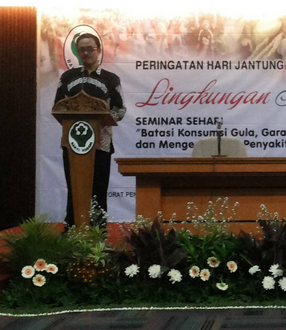
“Untuk itu pentingnya upaya promosi kesehatan. Karena penyakit jantung dan stroke ini bisa dicegah dengan gaya hidup sehat,” kata Agus Purwadianto, Plt Dirjen Pengendalian Penyakit dan Penyehatan Lingkungan (P2PL), Kementerian Kesehatan dalam seminar memperingati Hari Jantung Sedunia 2014, di Jakarta, Selasa (7/10).

Ia menyebutkan upaya kecil yang bisa dilakukan individu untuk terhindar dari penyakit jantung dan stroke seperti lari pagi secara rutin, tidur malam maksimal jam 8, diet makanan sehat dan tidak merokok.

“Sayangnya banyak dokter yang hanya memberi obat statin kepada orang yang didiagnosa jantung. Padahal ada yang tak kalah penting untuk diingatkan tentang perubahan gaya hidup sehat agar penyakitnya tidak makin parah,” ujarnya.

Ditambahkan, upaya promosi kesehatan menjadi penting, karena penyakit jantung dan pembuluh darah jika tidak dikendalikan dari sekarang akan memberi beban kesakitan, kecacatan, dan beban sosial ekonomi bagi keluarga, masyarakat, dan negara.

Hal senada dikemukakan Ketua Perhimpunan Dokter Spesialis Kardiovaskular Indonesia (Perki) Anwar Santoso. Bahkan penderita penyakit jantung di Indonesia sudah banyak yang berusia muda.

“Data yang tercatat di Rumah Sakit Jantung Harapan Kita, pasien berusia 30 tahun sudah ada yang terkena penyakit jantung,” kata Anwar Santoso

Bila tidak dikendalikan lewat kampanye hidup sehat, Anwar memprediksi usia penderita penyakit jantung di Indonesia akan lebih muda lagi. “Tidak menutup kemungkinan usia penderita jantung semakin muda. Kita lihat saja makin banyak anak SD (sekolah dasar) yang merokok,” katanya.

Sementara itu Direktur Pengendalian Penyakit Tidak Menular (PTM), Ekowati Rahajeng mengatakan, Kemenkes dalam pengendalian penyakit jantung dan pembuluh darah melakukan upaya komprehensif dari hulu sampai hilir, yang mencakup upaya promotif-preventif dan kuratif-rehabilitatif.

Upaya yang dilakukan antara lain, pembentukan Pos Pembinaan Terpadu (Posbindu) PTM. Posbindu melakukan upaya deteksi dini, monitoring, dan tindak lanjut penyakit tidak menular termasuk penyakit jantung. Saat ini tercatat ada 7.225 Posbindu PTM di seluruh Indonesia.

Selain itu, upaya penguatan regulasi melalui Peraturan Pemerintah (PP) No 109/2012 tentang Pengamanan bahan mengandung zat adiktif berupa produk tembakau bagi kesehatan. Ada Peraturan Menteri Kesehatan (Permenkes) No 28 tahun 2013 tentang Pencantuman Peringatan Kesehatan dan Informasi Kesehatan pada Kemasan Produk Tembakau.

“Juga ada UU No 28/2009 tentang Pajak Daerah dan Retribusi Daerah memuat tentang Pajak Rokok yang pelaksanaan pemungutannya dimulai sejak 1 Januari 2014,” ujar Ekowati Rahajeng.

Dan yang tak kalah penting adalah Permenkes No 30/2013 tentang pencantuman informasi kandungan gula, garam, dan lemak serta pesan kesehatan pada Pangan Olahan dan Siap Saji. Hal ini penting untuk pengendalian faktor risiko PTM.

“Permenkes No 30/2013 ini baru secara efektif diterapkan 3 tahun setelah diundangkan atau tahun 2016. Industri minta waktu 3 tahun untuk persiapan,” ujarnya.

Waktu menunggu 3 tahun ini, lanjut Ekowati, dimanfaatkan Direktorat PTM untuk melakukan pendataan makanan siap saja mana saja yang ada di pasaran yang terkena aturan Permenkes tersebut. “Jadi peraturan ini bisa cepat dijalankan,” kata Ekowati Rahajeng menandaskan. (TW)