UN: Indonesia’s New President Must Fill Funding Gap in HIV Fight

Indonesia, one of only three countries in the Asia-Pacific region that is seeing a trend of increased HIV infections, must plug a $30 million funding gap in its fight against HIV, a U.N. health official said on Wednesday.

President-elect Joko Widodo, who won a July election, should build on the policies implemented by the outgoing administration, Cho Kah Sin, Indonesia country director for the United Nations Program on HIV and AIDS, told Reuters.

Indonesia’s five-year strategic plan to combat HIV/AIDS ends this year and domestic funding of the plan is at about 40 percent, much lower than the targeted 70 percent, Cho said.

While the domestic budget for tackling HIV/AIDS has increased from $27 million in 2010 to $37 million this year, the current funding gap is estimated at about $30 million, and it is expected to increase to about $175 million by 2020.

“Indonesia is a middle income country [and] is going to have a challenge trying to convince international donors to continue to invest in development assistance for social and health projects,” said Cho.

“Eventually it will have to provide its own funding for priorities like health,” he added. “It is very important for the national government to continue to increase the proportion of funding for HIV from domestic resources.”

The United Nations, in a report released every two years on the world HIV and AIDS epidemic, said last month new infection rates in Indonesia were a “cause for concern.”

About 0.43 percent of the adult population, or about 640,000 people, are infected with HIV in Indonesia.

Indonesia, Pakistan and the Philippines were the only three countries in the Asia-Pacific region with a trend of increased HIV infections, the United Nations said.

Cho said he was optimistic about the fight in Indonesia.

Since 2012, the world’s fourth most populous country has massively increased access to HIV testing and now offers early antiretroviral treatment.

“It’s important that the new administration stay on course, continue to invest in early testing and early treatment, and build on the foundation that the minister has already put in place,” Cho said, referring to Health Minister Nafsiah Mboi, who introduced a more effective response to HIV/AIDS when she was appointed in 2012.

“If this is continued, we have no doubt that this is going to be able to reverse the epidemic,” Cho continued.

Advisers to Widodo could not be reached for comment.

One reason for the rise in HIV rates in Indonesia was that infections only began to start picking up in the mid-1990s, Cho said, later than in many other countries.

Also, as testing has increased and become more accepted, more people are willing to get tested and therefore know their HIV status, he said.

“Of course we don’t expect these to turn the epidemic around overnight – it will take time to show but we’re on the right track. She has put the foundations in place,” Cho said referring to Mboi’s work.

source http://www.voanews.com


TP2RKOKI Minta Revolusi Sistem Perawatan Kesehatan Segera Digalakkan

Ketua Tim Penyelamat dan Pengawas Regulasi Kosmetika Obat Kesehatan Indonesia (TP2RKOKI), Mohammad Ismail mengharap segera dimulainya revolusi sistem pengelolaan perawatan kesehatan di Indonesia, sehingga akan lahir generasi yang lebih kuat dan sehat.

Lewat revolusi perawatan kesehatan ini, semangat yang semula membangun perawatan kesehatan dengan berpusat pada penyakit dan berorientasi pada obat-obatan kimiawi maupun herbal, beralih pada pembahasan yang berpusat pada perawatan kesehatan.

“Artinya setiap individu perlu memancing kemampuan yang ada dalam dirinya agar tetap sehat tanpa obat-obatan kimiawi,” kata Mohammad Ismail dalam acara diskusi kesehatan “Revolusi Sistem Perawatan Kesehatan di Indonesia untuk Melahirkan Generasi Sehat & Kuat Mandiri Secara Universal” di Hotel Harris, Jakarta, Rabu (10/9).

Menurutnya, revolusi Perawatan Kesehatan ini bukan lagi berbicara tentang siapa yang membiayai dan membayar perawatan kesehatan bila kita sakit, melainkan tentang bagaimana caranya supaya tidak perlu minum obat dan tidak perlu sakit lagi.

“Pemerintah harus mulai membangun rakyatnya agar sehat dan kuat secara mandiri, yang keluar dari dalam dirinya sendiri,” tegasnya lagi.

Dalam kesempatan yang sama, Guru Besar Fakultas Kedokteran Universitas Gadjah Mada, Prof Ahmad Husain Asdie SpPD mengatakan, penyembuhan setiap penyakit sebetulnya dapat dilakukan melalui pendekatan spiritual. Intinya adalah menyadari sepenuhnya bahwa seluruh penyakit dan kesembuhan itu datangnya dari Tuhan.

“Sakit adalah pemberitahuan Allah bahwa ada kesalahan yang telah kita lakukan. Sehingga kita harus menemukan kesalahan diri tersebut, mengakuinya dan memperbaiki diri, kemudian memohon untuk dimaafkan agar diberi kesembuhan,” ujar konsultan di Yayasan Kesehatan Telkom tersebut.

Penulis: Herman/EPR

sumber http://www.beritasatu.com


Bangladesh a health model

The WHO’s South-East Asia regional countries have much to learn from Bangladesh, the UN agency’s chief Margaret Chan has said.

She praised Bangladesh’s overall health achievements and described its health leadership as “inspiring” that could serve as a lesson for other countries of the region.

The Dictor-General was speaking at the inauguration of the WHO SEARO’s meeting, which began in Dhaka on Tuesday.

Prime Minister Sheikh Hasina inaugurated the gathering that drew ministers of eleven countries.

Chan said Bangladesh’s “stunning rise” in the overall health status and life expectancy had been internationally documented.

And it overcame many challenges the country had faced, she said.

Despite many challenges Bangladesh had faced over decades, “the solid improvements in the country’s health system and the services it provides, together with a stunning rise in overall health status and life expectancy have been internationally documented”.

“The countries of the Region have much to learn from the rich experience and inspiring health leadership of Bangladesh.”

Bangladesh, Bhutan, North Korea, India, Indonesia, Maldives, Myanmar, Nepal, Sri Lanka, Thailand and Timor-Leste are the members of WHO’s South-East Asia Region.

Opening the meetings, Prime Minister Hasina made a personal plea to the health delegates from the countries to support Bangladesh’s efforts to mobilize global support for the cause of autism.

“It is imperative that individuals with autism and other developmental disabilities must find easy access to improved diagnosis and services,” she said as Bangladesh was pursuing “universal health coverage” for all.

source http://bdnews24.com


Pemerintah Indonesia Ingatkan Jemaah Haji Antisipasi Corona

Virus corona yang menyebabkan penyakit sindrom pernapasan Timur Tengah atau Middle East Respiratory Syndrom (MERS)-Cov menjadi perhatian dunia. Terutama, di musim haji saat umat Islam dari berbagai belahan dunia berkumpul di Arab Saudi. Pemerintah Indonesia pun melakukan berbagai tindakan agar virus itu tak menyusahkan jemaah asal Tanah Air.

Kepala Seksi Kesehatan Daerah Kerja Makkah, Muhammad Ilyas, mengatakan Kementerian Kesehatan Indonesia telah mensosialisasikan risiko penyakit itu kepada para jemaah. Sehingga para jemaah haji dapat beribadah dengan tenang dan nyaman di Tanah Suci.

“Mulai dari promosi kesehatan dengan terus mensosialisasikan perilaku hidup bersih dan sehat, pengawasan dan pengendalian Sanitasi Lingkungan dan pondokan jamaah, pengawasan katering, sampai pada menyediakan sarana dan prasarana pelayanan Kesehatan,” demikian rilis dari Muhammad Ilyas yang diterima Metrotvnews.com, Jakarta, Selasa (9/9/2014).

Namun demikian, para jemaah sebaiknya tetap peka terhadap gejala MERS-Cov yang bisa saja menyerang. Misalnya demam, nyeri otot, dan sakit kepala selama 3 hingga 7 hari. Kemudian penderitanya mengalami batuk tak berlendir serta sesak yang dapat berkembang menjadi gagal napas.

Sebagian kasus menampakkan gejala mirip influenza ringan. Namun ada pula kasus yang disertai dengan diare dan muntah.

Tak ada pengobatan atau vaksin yang spesifik. Namun tim medis dapat memberikan terapi untuk membantu menghilangkan gejala. Pengobatan simptomik diberikan berdasarkan level penyakit.

Lantaran itu, Kementerian Kesehatan RI mengingatkan jemaah untuk membiasakan mencuci tangan yang berpotensi meminimalisasi penularan virus dan mengenakan masker.
(Rrn)

sumber http://news.metrotvnews.com


Ooredoo launches mobile health clinics in Indonesia

Ooredoo and the Leo Messi Foundation have officially launched mobile health clinics in Indonesia.
The ceremony took place in Jogja, the capital of the Yogyakarta Special Region in Java, which marked the first step in an on-going expansion of Ooredoo’s and the Leo Messi Foundation’s healthcare initiative announced in May. Plans are in place to make more clinics accessible in Indonesia, Myanmar, Algeria, and Tunisia as part of the programme.

With a focus on the importance of education and healthy living for communities, the clinics will play an informative role, in addition to providing people with a range of free services, including medical checks, dental checks, nutritional advice and vitamin distribution.
The launch ceremony was attended by Sheikh Abdullah bin Mohamed bin Saud al-Thani, Ooredoo chairman and chairman of the board of commissioners of Ooredoo’s company in Indonesia, Indosat; Dr Nasser Marafih, Group CEO, Ooredoo; Alexander Rusli, president director and CEO, Indosat; and representatives of Jogja’s local government.

In addition, 150 parents and 150 children attended the event, where they received messages about the prevention and cure for common illnesses, as well as the importance of a healthy lifestyle and education for the children.

Dr Marafih said: “These mobile health clinics are an investment in the future of the communities we serve.”
He added: “I had the opportunity to see the mobile clinics in action. They travel out to remote areas, staffed by medical professionals and volunteers, and actively work with the community to address a range of healthcare issues…we are passionate about helping them to reach as many people as possible, not only here in Indonesia but across all of the markets that we operate in.”

Alexander Rusli, president director and CEO, Indosat, said:
“The mobile clinic programme was created as an immediate response to some of the serious health issues facing people in Indonesia’s rural and under-served communities. To date our clinics have treated 600,000 people in Indonesia.”
The Ooredoo mobile health clinic initiative was launched in 2013 in partnership with the Leo Messi Foundation. As part of this partnership, the two organisations are providing healthcare in rural areas across Ooredoo’s footprint in South East Asia, the Middle East and North Africa, aiming to reach more than 2mn young people with services by 2016. Ooredoo also works with football hero Leo Messi as its global brand ambassador.

source http://www.gulf-times.com


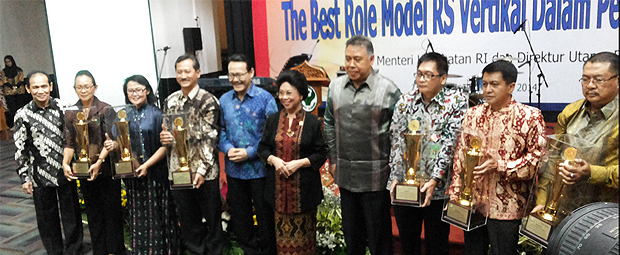
6 RS Vertikal Raih Penghargaan “Panutan Terbaik”

menkes9sept2

menkes9sept2

Kementerian Kesehatan bersama Badan Penyelenggara Jaminan Sosial (BPJS) Kesehatan memberi anugerah penghargaan “Panutan Terbaik” kepada 6 rumah sakit (RS) vertikal.

Hal itu dilakukan guna memberi model kepada rumah sakit baik vertikal atau non-vertikal lainnya untuk memberi layanan optimal serta pengelolaan program Jaminan Kesehatan Nasional (JKN) yang baik.

Penghargaan diberikan secara simbolik oleh Menteri Kesehatan (Menkes) Nafsiah Mboi di Jakarta, pada Senin (8/9) malam. Turut hadir dalam kesempatan itu, Dirut BPJS Kesehatan, Fachmi Idris dan Dirjen Bina Upaya Kesehatan (BUK), Akmal Taher.

Enam RS yang mendapat penghargaan, untuk kategori rumah sakit umum diberikan kepada RSUP Sanglah, Bali (Juara I), RSUP Fatmawati Jakarta (Juara 2) dan RSUP Dr Kariadi Semarang (Juara 3).

Untuk kategori rumah sakit khusus yaitu RS Orthopedi Prof Dr R Soeharso, Surakarta (Juara 1), RS Jiwa Lawang, Malang (Juara 2) dan RS Jantung dan Pembuluh Darah Harapan Kita.

Menurut Menkes, RS vertikal berperan penting dalam menyukseskan pelaksanaan program JKN, karena memiliki beberapa keistimewaan. Disebutkan, antara lain, kompetensi sumber dayanya, fasilitas pelayanan yang lengkap, sebagai rumah sakit pendidikan dan rumah sakit rujukan pusat.

“Sebagai rumah sakit percontohan, RS vertikal selain memberi layanan optimal, harus lebih detil lagi dalam menyusun dan menerapkan clinical pathway sebagai acuan dalam pengendali mutu dan biaya rumah sakit,” ujar Nafsiah.

Selain itu, lanjut Menkes, RS sertikal juga harus melakukan standarisasi penggunaan alat dan obat, termasuk mendisiplinkan penggunaannya dan yang tak kalah penting mengaktifkan tim audit klinis rumah sakit.

“Ini semata dilakukan demi memberi pelayanan JKN yang komprehensif, terintegrasi dan berorientasi pada pasien,” kata Nafsiah Mboi menegaskan.

Pada kesempatan yang sama, Menkes Nafsiah Mboi menyatakan kegembiraannya atas cakupan JKN yang semakin meningkat. Hingga 4 September tercatat ada 127 juta penduduk Indonesia yang menjadi peserta JKN.

Disebutkan, saat ini jumlah rumah sakit yang sudah tergabung dalam program JKN sebanyak 1551 RS dari 2353 RS. Jumlah itu termasuk 33 RS vertikal milik Kemenkes.

“Saya harap jumlah faskes baik di tingkat pertama maupun rujukan secara bertahap dapat terus ditingkatkan. Sehingga akses seluruh peserta JKN semakin mudah dan cepat,” tuturnya.

Sementara itu, Dirjen BUK Akmal Taher menjelaskan, ada 4 kategori besar yang dinilai dalam proses pemilihan Panutan Terbaik yaitu sistem pendaftaran, sistem manajemen pelayanan, sistem penagihan klaim JKN dan sistem penanganan komplain.

“Seluruhnya ada 17 variabel dari kriterian penilaian dengan bobot yang berbeda-beda,” kata mantan Dirut RS Cipto Mangunkusumo itu seraya menambahkan penghargaan akan diberikan setiap tahun.

Ditambahkan, peraih penghargaan tahun ini berpeluang untuk menang lagi di tahun depan. Dengan demikian, masing-masing rumah sakit vertikal harus berlomba-lomba memperbaiki terus kinerjanya. (TW)


Berita Terkait


{jcomments on}

RS Khusus Vertikal Harus Jadi Center of Excellence

menkes9sept

menkes9sept

Rumah sakit khusus vertikal milik Kementerian Kesehatan (Kemenkes) harus memperbanyak pengembangan layanan unggulan. Selain memenuhi kebutuhan masyarakat akan layanan medik spesialistik, juga memperkuat fungsi pendidikan dan penelitian.

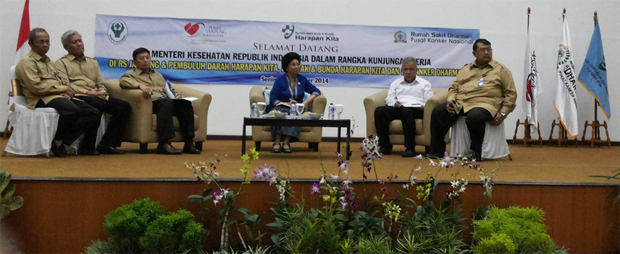
“Rumah sakit khusus vertikal harus bisa jadi center of excellence. Jangan berlaku biasa-biasa saja. Fungsi pendidikan dan penelitiannya harus diperkuat,” kata Menkes Nafsiah Mboi saat kunjungan kerja ke 3 rumah sakit vertikal Kemenkes, di Jakarta, Senin (8/9).

Tiga rumah sakit yang dikunjungi adalah RS Jantung dan Pembuluh Darah (RSJPD) Harapan Kita, RS Ibu dan Anak (RSIA) Harapan Kita dan RS Kanker Dharmais, yang berada dalam satu kompleks di wilayah Jakarta Barat.

Di Era pelaksanaan Jaminan Kesehatan Nasional (JKN), lanjut Nafsiah Mboi, RS khusus harus melakukan penguatan pelayanan dengan memberdayakan komite medik dalam menyusun Panduan Praktik Klinik dan Clinical Pathway. Melalui panduan tersebut, diharapkan setiap klinisi dilakukan secara sungguh-sungguh.

“Upaya ini, dapat memacu rumah sakit untuk memberikan pelayanan yang bermutu dengan biaya terjangkau,” ujarnya.

Menkes menegaskan, keberhasilan pelaksanaan JKN sangat ditentukan oleh komitmen seluruh sumber daya manusia bagi tenaga kesehatan maupun non-kesehatan yang berada di fasilitas pelayanan kesehatan tersebut.

“Utamakan patient safety dan berikan pelayanan terbaik. Pelayanan itu tak hanya pada aspek medik dan keperawatan, tetapi dalam aspek sikap dan perilaku seperti keramahan, empati, komunikatif. Ini yang sering diabaikan tenaga kesehatan kita,” ujarnya.

Menkes memberi perhatian pada ketiga rumah sakit vertikal itu, karena penanganan kanker dan penyakit jantung di Indonesia masih sangat tinggi. Dalam pembiayaan Jaminan Kesehatan Masyarakat (Jamkesmas) 2012, pengobatan kanker menempati urutan ke-4 setelah hemodialisa (cuci darah), thalasemia (kanker darah) dan Tuberkulosis (TB).

“Jumlahnya mencapai Rp 144,7 miliar. Kondisi ini jelas menjadi beban ekonomi dan sosial masyarakat. Untuk menekan beban pelayanan kesehatan, perlu upaya penguatan pelaksanaan kegiatan promotif-preventif termasuk upaya deteksi dini penyakit tidak menular,” tutur Nafsiah Mboi.

Riset Kesehatan Dasar (Riskesdas) 2013 menunjukkan prevalensi kanker di Indonesia adalah 1,4 per 1000 penduduk. Artinya, pada 2013 terdapat sekitar 3 juta orang terkena kanker di seluruh Indonesia.

Menkes menambahkan, salah satu tantangan besar lainnya yang harus disikapi secara sungguh-sungguh adalah menurunkan angka kematian ibu dan bayi. Hasil survey demogragi dan kesehatan Indonesia (SDKI) 2012 menunjukkan Angka Kematian Ibu (AKI) di Indonesia mencapai 359 per 100 ribu kelahiran hidup.

Sedangkan angka kematian bayi (AKB) pada 2012 adalah 32 per 1.000 kelahiran hidup. Sementara sasaran Millenium Development Goals (MDGs) tahun 2015 adalah menurunkan AKI menjadi 102 per 100 ribu kelahiran hidup dan AKB menjadi 23 per 1.000 kelahiran hidup. (TW)

Berita Terkait


{jcomments on}

World Health Organization calls for blood transfusions in fight against Ebola

As medical researchers struggle to produce desperately needed drugs to fight the Ebola outbreak, the World Health Organization on Friday endorsed an old-school remedy that is already abundant in Africa – the blood of people who have survived infection.

Health officials acknowledged that their support for blood transfusions was motivated by emotion as well as by science. Limited quantities of a tested vaccine will not be available until November at the earliest, and stocks of experimental drugs such as ZMapp may not be ready until next year.

“One of the things driving fear and panic in communities … is the belief that there is no treatment for Ebola virus disease,” said Marie-Paule Kieny, an assistant director-general at the United Nations’ health agency. “We have to change the sense that there is no hope.”

But to others, the move looked more like an act of desperation than a decision based on clinical evidence.
“It’s an unproven therapy,” said Dr. William Schaffner, an infectious disease specialist and professor at Vanderbilt University in Nashville. “It ought to be evaluated critically before we start investing huge amounts of money.”

The concept behind the transfusions is simple: The blood plasma of people who have recovered from Ebola contains antibodies that were successful in fighting off the virus. If these antibodies are pumped into an infected person, they might help the recipient fight the disease as well.

Such transfusions were used to fight illnesses before the advent of antibiotics and vaccines. The German surgeon Emil von Behring first used blood serum to treat diphtheria in 1890 and was awarded a Nobel Prize for his discovery. The technique was expanded to treat many other infectious diseases, such as scarlet fever and measles, before it fell out of favor.

Its effectiveness in fighting the Ebola virus is a matter of debate.

Transfusions were used to treat a small number of patients during the 1995 Kikwit Ebola outbreak in Zaire, now known as the Democratic Republic of Congo, according to Dr. Oyewale Tomori, a professor of virology at Redeemer’s University in Nigeria. A study published in the Journal of Infectious Diseases after the outbreak reported that eight patients received transfusions, and only one died.

“The reason for this low fatality rate remains to be explained,” the researchers wrote. The blood transfusions may not have been responsible for their recovery, they noted: “The transfused patients did receive better care than those in the initial phase of the epidemic.”
Transfusion techniques have improved since then, Tomori said. The method has already been used in the current outbreak, which began in March and has sickened at least 3,967 people and killed at least 2,105, according to the World Health Organization.

Dr. Kent Brantly, an American aid worker who was infected with Ebola in Liberia, was given blood serum from a boy who survived an Ebola infection. He and fellow aid worker Nancy Writebol also received the drug ZMapp. The two were evacuated to Emory University Hospital in Atlanta, where they both made a full recovery.

Ebola is spread by contact with the bodily fluids of infected individuals. Once in the bloodstream, the virus enters cells and begins to replicate itself, damaging blood vessels and organs in the process. Symptoms begin to appear two to 21 days after infection and include fever, diarrhea, vomiting, aches and bleeding. In the current outbreak, the odds of survival are slightly below 50 percent.

Kieny said the use of blood transfusions was the topic of intense discussions last week during a WHO-sponsored conference of more than 200 health and pharmaceutical experts. They were meeting in Geneva to weigh the deployment of up to 10 Ebola drugs that are now under development, including two experimental vaccines.

“There was a consensus that this has a good chance to work, but also that this is something that can be produced now from the affected countries themselves,” Kieny said.

That doesn’t mean transfusions can begin immediately, she added. The international community needs to help hard-hit West African nations including Guinea, Sierra Leone and Liberia build the capacity to safely draw blood, type it to make sure donors and recipients are compatible, remove the red blood cells from the antibody-containing serum, store the serum properly and then deliver it to patients using proper equipment. Blood should also be screened to make sure the transfusions would not spread other diseases, such as HIV.

“All efforts must be invested into helping affected countries,” Kieny said. “This should be done as a priority . so that this procedure can be put at play as soon as possible.”

source: http://www.fayobserver.com


CDC, International Health Community: ‘The World Is Losing The Battle To Contain’ Ebola

The world’s leading public health voices are all in agreement that West Africa is losing precious time in the fight against its ongoing Ebola outbreak, and the window is closing on containing the virus in the region.

“The level of outbreak is beyond anything we’ve seen—or even imagined,” Director of the Centers for Disease Control and Prevention Thomas Frieden said at a press conference this week as he returned from a visit to the affected areas– mostly the nations of Guinea, Sierra Leone, and Liberia, though Senegal and Nigeria have both reported instances of Ebola infections. Frieden lamented that “the window is closing” on preventing the outbreak from becoming a full epidemic, and the nations on the front lines severely lack the resources to contain the virus.

Continue reading

MSF: Dunia Gagal Segera Atasi Epidemi Ebola

Organisasi kemanusiaan Dokter Lintas Batas (MSF) menilai para pemimpin dunia telah gagal mengatasi epidemi Ebola yang telah berlangsung selama enam bulan terakhir. Menurut pemaparan Presiden Internasional MSF, dr. Joanne Liu di kantor Sekretaris Jenderal PBB dan Organisasi Kesehatan Dunia (WHO), penyebaran virus tidak akan bisa dicegah tanpa adanya pengiriman bantuan massif berupa unit-unit medis khusus untuk memperkuat upaya pengendalian epidemi di negara yan terkena dampak.

Pemaparan Joanne itu tertuang dalam keterangan pers MSF yang diterima VIVAnews pada Rabu, 3 September 2014. Dia menyebut kenyataan yang terjadi di lapangan selama ini untuk melawan Ebola, negara di kawasan Afrika Barat hanya mengandalkan Kementerian Kesehatan dan organisasi non pemerintah. Padahal, MSF sudah berulang kali menyerukan adanya mobilisasi bantuan yang massif di lapangan. Tetap saja, respons internasional dirasakan kurang.

Continue reading