Menkes RI Tegaskan Penanganan Tiga Isu Penting Kesehatan di Indonesia

Menteri Kesehatan Republik Indonesia (Menkes RI) Prof Dr dr Nila Farida Moeloek SpM (K) mengatakan bahwa pemerintah menjadikan tiga isu penting kesehatan sebagai fokus penanganan.

Tiga isu itu yakni stunting, tuberculosis dan imunisasi.

“Kami akan garap ini dengan memanfaatkan seluruh sektor. Satu diantara upaya dengan menerapkan program Indonesia sehat melalui 12 Indikator,” ungkapnya saat diiwawancarai usai Rapat Kerja Kesehatan Daerah (Rakerkesda) Provinsi Kalimantan Barat Tahun 2018 di Hotel Kapuas Palace Pontianak, Rabu (18/4/2018).

Ia menambahkan Indonesia menempati urutan kedua penderita tuberculosis (TBC) di dunia. Di sisi lain, angka stunting juga terbilang tinggi di Indonesia di atas angka target yang ditetapkan WHO.

Menkes menimpali isu kesehatan di Indonesia memang paling menarik digali sekaligus diselesaikan.

Khusus tuberculosis, yang ditakutkan adalah resistensi dari obat. Pendampingan harus dipastikan berjalan kontinyu dan optimal.

“Semua harus saling bahu-membahu menuntaskan masalah ini. Jika sudah terjadi resistensi, itu dapat merugikan negara baik secara ekonomi maupun hubungan dengan negara lain. Pemberian imunisasi kepada anak sejak dini adalah dasarnya,” katanya.

Apabila stunting tidak disikapi serius, Menkes pesimis Indonesia siap menghadapi bonus demografi. Selain masalah penyakit menular, pemerintah tengah fokus dalam penanganan penyakit tidak menular diantaranya penyakit jantung dan Diabates.

“Untuk mengentaskan permasalah ksehatan, kita tidak bisa bekerja sendiri dari jajaran Kemenkes. Namun, kerjasama yang baik tentu itu yang diharapkan. Misalnya, dalam memberikan dakwah, berikan dakwah tentang kesehatan,” tukasnya.

Artikel ini telah tayang di tribunpontianak.co.id dengan judul Menkes RI Tegaskan Penanganan Tiga Isu Penting Kesehatan di Indonesia , http://pontianak.tribunnews.com/2018/04/18/menkes-ri-tegaskan-penanganan-tiga-isu-penting-kesehatan-di-indonesia 
Penulis: Rizky Prabowo Rahino
Editor: Dhita Mutiasari


Face of Defense: Doctor Builds Partnerships Through Global Health Engagement

FALLS CHURCH, Va. —
Air Force Lt. Col. (Dr.) Elizabeth Erickson’s experiences in military health outreach around the world allows her to build strong partnerships, and her position as a female officer and physician has given her the unique opportunity to work with and learn from inspiring women around the globe.

The Air Force Medical Service participates in international medical outreach efforts, called global health engagements, to strengthen relationships with partner nations that bear fruit diplomatically and medically.

Building Strong Relationships With Allies, Partners

GHEs include a broad range of international medical activities undertaken by the U.S. military. These activities help to build strong relationships with allies and partners, increase military medical interoperability between nations and build global capacity to address health security threats.

“For example, we work with some partner nations on biosurveillance in order to better detect and respond to outbreaks, so they do not become larger health security crises,” Erickson said.

Erickson, a family physician and currently a preventive medicine resident at the Uniformed Services University of the Health Sciences in Bethesda, Maryland, always had an interest in working and studying abroad. Before joining the Air Force, she studied and volunteered in India and Africa.

In the Air Force, after assignments in Turkey and Germany and a deployment to Afghanistan, she was an international health specialist at Pacific Air Forces and U.S. Pacific Command.

“I was always interested in having a global perspective on care, so I gravitated towards these unique opportunities,” Erickson said. “As an international health specialist, I planned and executed GHEs, coordinated Department of Defense health activities across the Indo-Asia-Pacific region, and developed strategies to use health engagements to achieve national security objectives.”

Service in Afghanistan

Erickson’s GHE experiences allow her to apply and expand intercultural, medical and military skills. As a female officer, she had opportunities to support the health and empowerment of women in multiple countries, specifically in Afghanistan.

From July 2009 to March 2010, Erickson served as senior medical officer and director of Women’s Affairs on the Zabul Provincial Reconstruction Team in Afghanistan. She and her team executed programs that supported the local government and improved the health and well-being of the local population, especially women and children. The team engaged with the local Ministry for Women’s Affairs representatives, female health care providers at local hospitals and the province’s only girls’ school.

“It was a priority for our commander to find sustainable ways to improve the lives of Afghan women,” Erickson said. “One project provided women with solar stoves. We found that women were inhaling harmful smoke while cooking with charcoal and wood, and we wanted to provide an alternative cooking method that would ultimately improve their health.”

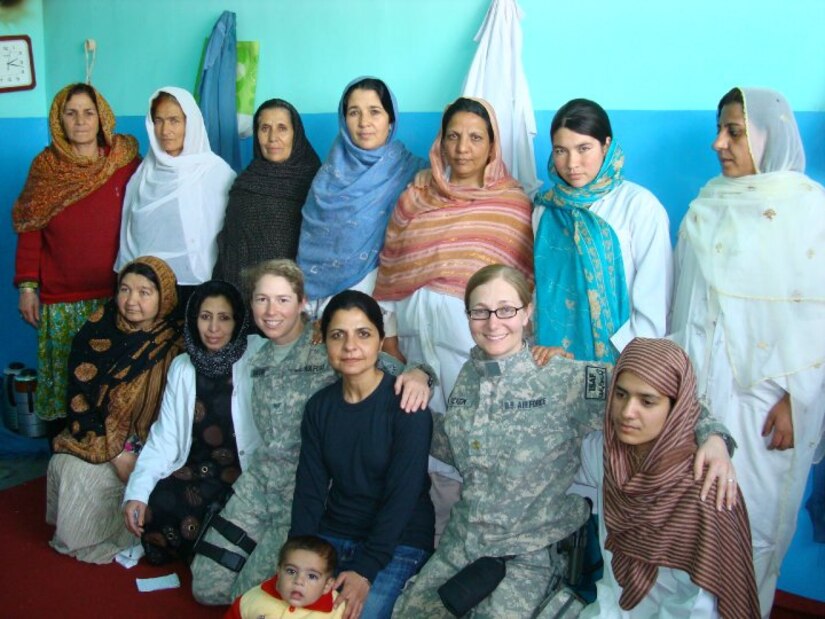
The three medical Air Force women on the PRT met regularly with local female health care providers.

“We developed strong relationships with them and learned about their challenges,” Erickson said. “We conducted training on basic life support in obstetrics to help them recognize potentially life-threatening events that happen during childbirth and prepared them to manage those events.”

International Women’s Day Event

While in Afghanistan, Erickson participated in an International Women’s Day event. Local women — including the female nurses and physicians she had worked with so closely — gave speeches, performed music and recited poetry.

“It was special to see our friends, these women we became so close with, share their hopes for peace and stability in Afghanistan,” Erickson said.

Erickson’s experiences serve as an important reminder that female military leaders and medical personnel are vital for full-spectrum global health engagement, and she encourages other female medical airmen to pursue opportunities in GHE.

“There are some really inspiring women in our partner nations, and it was a rewarding experience to meet and work with them,” Erickson said. “Many times, my female counterparts and I built a special bond and we worked together to move health cooperation between our militaries forward.”

She added, “We should encourage more women to become leaders on both sides of the GHE community to improve our engagements with our partner nations and the global military medical community.”

source: https://www.defense.gov/News/Article/Article/1496686/face-of-defense-doctor-builds-partnerships-through-global-health-engagement/ 

 

Australia to join global health and climate change initiative

The Lancet Countdown report on health and climate change was published in October 2017 by The Lancet and will be updated annually through to 2030.

It tracks progress on health and climate change across 40 indicators divided into five categories: climate change impacts, exposures and vulnerability; adaptation planning and resilience for health; mitigation actions and health co-benefits; economics and finance; and public and political engagement.

Dr Ying Zhang, a senior lecturer in the University of Sydney’s School of Public Health, and Associate Professor Paul Beggs, from Macquarie University, wrote in the MJA that, from an Australian perspective, “with our high level of carbon emissions per capita, it will be important to reflect on our progress and how it compares with that of other countries, especially high-income countries”.

“A group of Australian experts from multiple disciplines is commencing work on our first national countdown report,” Zhang and Beggs wrote.

“The project recognises the importance of the climate change challenge in Australia, including its relevance to human health, and also the unique breadth and depth of the Australian expertise in climate change and human health.

“The Australian countdown will mirror the five domain sections of the Lancet Countdown, adopt the indicators used–where feasible and relevant to Australia–and include any useful additional indicators.

“The inaugural Australian report is planned for release in late 2018 and is expected to be updated annually. We hope to raise awareness of health issues related to climate change among Australian medical professionals, who play a key role in reducing their risks,” the authors concluded.

“The Australian countdown is also envisioned as a timely endeavour that will accelerate the Australian government response to climate change and its recognition of the health benefits of urgent climate action.”

###

The University of Sydney appointed Dr Tony Capon as the world’s first professor of planetary health in 2016. Learn more about the mission and activities of the University of Sydney’s Planetary Health Platform.

source: https://eurekalert.org/pub_releases/2018-04/uos-atj041218.php


Teknologi dan Distribusi Layanan Kesehatan

Isu kesehatan berkaitan dengan banyak sektor salah satunya layanan kesehatan. Hingga saat ini, masyarakat di daerah terpencil masih sulit untuk mendapatkan pelayanan kesehatan yang mumpuni.
Jangankan daerah terpencil, permasalahan distribusi akses layanan kesehatan di Jakarta saja masih menjadi momok hingga saat ini. Contoh paling besar ialah 1 rumah sakit di DKI Jakarta saja diperuntukkan untuk penanganan 1.000 penduduk, dan ini melebihi kapasitas yang seharusnya.

Lewat permasalahan inilah, perusahaan swasta berusaha berkontribusi dengan memberi inovasi teknologi terhadap penyedia layanan kesehatan. Saat ditemui di acara Forum Diskusi Philips Indonesia di EV Hive D.Lab, Gondangdia, Menteng, Jakarta Pusat pada Jumat (13/4), Suryo Suwignjo selaku Presiden Direktur Philips Indonesia juga mejabarkan langkah yang telah Philips tempuh dalam mengatasi hal ini.

“Philips telah mengambil peranan dalam upaya meningkatkan pemikiran progresif mengenai isu-isu terkait layanan kesehatan di Indonesia, penguatan kesadaran akan hidup sehat, dan peningkatan upaya kolaborasi antara pemerintah dengan instansi-instansi terkait dalam rangka mencari dan memberi solusi terhadap permasalahan yang dihadapi industri kesehatan,” papar Suryo dalam forum diskusi ini.

Fajaruddin Sihombing selaku perwakilan dari Asosiasi Rumah Sakit Swasta Indonesia juga memaparkan bahwa era digitalisasi yang tak terhindari ini harusnya menjadi pemicu agar semua pihak dalam bidang kesehatan bersiap untuk saling bersinergi sehingga dapat memberikan pelayanan kesehatan yang efisien dan menyeluruh.

Teknologi harus dimanfaat sebaik mungkin agar bisa menjawab permasalahan seperti penghitungan biaya rumah sakit, lama perawatan hingga ketenagaan medis. Selain itu teknologi di bidang kesehatan yang telah ada saat ini diharapkan mampu menjadi langkah preventif juga deteksi dini bagi para masyarakat daripada harus menanggulangi ketika sudah terserang suatu penyakit.

http://www.1health.id/id/article/category/sehat-a-z/teknologi-dan-distribusi-layanan-kesehatan.html


World Health Day : Nestlé Nutrition Institute Africa empowers Health Care Professionals

As people across the globe joins World Health Organisation to celebrate World Health Day on April 7, Nestlé Nutrition Institute Africa (NNIA) commemorated the Day in collaboration with the Ogun State Ministry of Health by training primary healthcare professionals in Abeokuta on Friday April 6, 2018.

With the 2018 year theme, “Universal Health Coverage: Everyone, Everywhere,” NNIA in observance of the organisation’s vision which focuses on ensuring that all people can get quality health services, where and when they need them, without suffering financial hardship embarked on the training of healthcare professionals to key into the mandate.

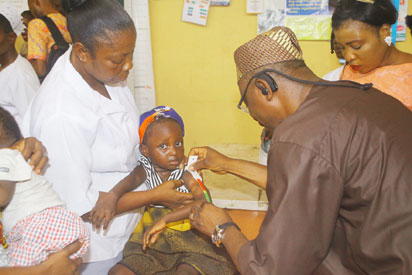
The one day training held at Nigeria Medical Association (NMA) house in Abeokuta by experts from NNIA witnessed various primary healthcare professionals from 110 Primary Health Care Professionals from Abeokuta North local government area of Ogun state who participated in the training on Malnutrition in the First Years of Life: Its Assessment and Management.

Giving a welcome address at the flag-off of the training, the NNIA representative, Dr. Omotayo Omoteso shed light on the objectives of the training. He said, “Global studies have shown that malnutrition is an underlying factor in 55 percent of all child deaths, with Nigeria largely affected by the scourge. Each year, about 1 million Nigerian children die and more than half of these deaths are traceable to malnutrition.”

According to him, this situation calls for urgent multi-stakeholder action. “Nestle Nutrition Institute Africa is therefore happy to collaborate with the Ogun State Government in its efforts to address malnutrition in the first 1000 days of life. This is in line with our commitment to bridge the gap between science and the practical application of nutrition to ensure a healthier, brighter future for children. We therefore welcome this opportunity to contribute through the development of the capabilities of Primary Health Care Professionals here in Ogun State.”

Addressing the press at the Ogun State Secretariat where the training took place, Ogun State Commissioner for Health, Dr. Babatunde Ipaye said it is sad to note that millions of people across the globe suffer financial hardship in obtaining essential health services due to poverty.

“Currently, about 800 million people, which constitute 12 per cent of the world’s population, spend at least 10 per cent of their household budget on health needs. Of this number, about 100 million suffer financial hardship because of out of pocket health expenditure and half of the world’s population is unable to obtain essential health services, due to poverty.” Ipaye stressed.

Dr. Ipaye said that the World Health Day 2018 celebration and intervention programme provided another opportunity for strengthening the health care system in Ogun State which was made possible by the partnership with stakeholders like Nestlé Nutrition Institute Africa (NNIA) who supported the state’s efforts by delivering a capacity building training to primary Health Care Professionals (HCPs) on Friday.

Dr. Babatunde Ipaye also revealed some of the measures the state has put in place to improve maternal and child health. One of these according to him is a state funded social insurance scheme popularly called “Araya”. He disclosed that since its inception in 2014, the scheme has enrolled over 23,000 people. The commissioner expressed his appreciation to Nestlé Nutrition Institute Africa (NNIA) for providing support towards the delivery of the health mandate of the administration. He also thanked the HCPs for making themselves available for the training and encouraged them not to keep the knowledge to themselves, but also to do well to transfer the same to their family members and colleagues who did not have the opportunity to participate in the training.

Meanwhile, Nestlé Nutrition Institute Africa, NNIA is an institute that shares leading science-based information and education with Health Care Professionals. It was founded on the credo that good nutrition begins before birth, continues through the lifecycle and is nurtured by the knowledge and consumption of a nutritionally adequate and appropriate diet. It aims for a future across the African continent where individuals are nourished healthier and live longer lives.

Furthering the understanding of the science of nutrition of the HCPs is envisioned to go a long way in bridging the gap between the science of nutrition and its practical application. Right now, there are over 20,000 Health Care professionals who have registered and benefits on the Nestlé Nutrition Institute Africa’s website.

Read more at: https://www.vanguardngr.com/2018/04/world-health-day-nestle-nutrition-institute-africa-empowers-health-care-professionals/ 


Peran WHO dalam Membantu Pemerintah Indonesia

World Health Organization atau biasa disebut WHO adalah organisasi internasional yang didirikan pada tanggal 7 April 1948 yang bermarkas di Jenewa, Swiss. WHO adalah organisasi internasional di bawah Perserikatan Bangsa-Bangsa (PBB) yang mempunyai tanggungjawab untuk memberikan arah dan kebijakan dalam penanganan kesehatan masyarakat dunia.

WHO terdiri atas Lembaga Perwakilan atau The World Health Assembly dan Badan Eksekutif atau Executive Board. Lembaga perwakilan beranggotakan 193 negara dan badan eksekutif WHO terdiri atas 34 orang yang dipilih setiap tiga tahun sekali.

Badan eksekutif terdiri dari orang-orang yang memiliki keahian khusus dalam bidang kesehatan, sedangkan lembaga perwakilan yang menentukan siapa yang akan menjadi Direktur Jenderal, merencanakan anggaran organisasi, dan membahas laporan badan eksekutif WHO.

WHO memiliki tujuan untuk mencapai kesehatan maksimal bagi seluruh masyarakat dunia, untuk mencapai tujuannya, WHO aktif melakukan tugas-tugas yang diantaranya sebagai berikut, bertugas menanggulangi kesehatan dengan cara membantu melakukan pembatasan terhadap penyakit-penyakit menular, memberikan bantuan kesehatan kepada negara-negara yang membutuhkan, membantu meningkatkan kesejahteraan dan kesehatan ibu dan anak, serta mendorong dan membantu pelaksanaan penelitian-penelitian dalam bidang kesehatan.

Menurut deklarasi WHO 1948, WHO memiliki fungsi yang di antaranya adalah sebagai berikut, bertindak, mengarahkan dan mengkoordinir kewenangan otoritas dalam upaya kesehatan internasional, membantu pemerintah dalam meningkatkan pelayanan kesehatan, berkerjasama dengan badan-badan khusus lain jika perlu, untuk mencegah terjadinya kerugian nyata terkait dengan kesehatan masyarakat dunia, membantu perkembangan kesehatan mental, terutama yang mempengaruhi keselarasan hubungan antarmanusia, dan mempromosikan dan melakukan riset dalam bidang kesehatan.

Indonesia mempunyai tuntutan perubahan dalam tingkat global untuk memajukan ketatakelolaan yang baik di semua sektor, termasuk sektor kesehatan. Tuntutan ini tidak hanya dimiliki oleh Indonesia secara khusus, namun seluruh negara-negara dunia. WHO sebagai organisasi internasional juga dituntut untuk menerapkan mekanisme kerjasama yang mengedepankan transparansi, adil, dan setara.

Pada 23 Mei 1950, Indonesia resmi menjadi anggota WHO hingga saat ini. Dalam kurun waktu 68 tahun sejak Indonesia resmi menjadi anggota WHO, WHO banyak memberikan dukungan program kesehatan di Indonesia, khususnya dalam meningkatkan kapasitas institusi maupun individu guna mendukung kebijakan kesehatan tingkat nasional maupun komitmen global.

Tidak hanya itu, WHO juga berperan dalam membantu pemerintah untuk mengatasi maraknya peredaran obat palsu melalui kerjasama dengan Departemen Kesehatan dan Badan Pengawas Obat dan makanan serta organisasi non-pemerintah seperti Lembaga Swadaya Masyarakat (LSM) untuk mengumpulkan data-data yang kemudian diserahkan dan dipergunakan oleh pemerintah Indonesia untuk membuat suatu kebijakan dalam bidang kesehatan berkaitan dengan obat palsu.

WHO juga mempunyai peran dalam mengatasi virus flu burung (H5N1) di Indonesia. Wabah flu burung (Avian influenza) adalah penyakit menular yang disebabkan oleh burung tipe A strain virus influenza.

Penyakit ini mulai terindentifikasi sejak tahun 2003 di China dan Vietnam. Pada tahun 2005, flu burung mulai masuk ke wilayah indonesia dan mulai memakan korban dan dinyatakan 13 orang meninggal akibat menderita flu burung.

Dalam hal ini, WHO telah menyerahkan bantuan untuk Indonesia berupa 22 unit ambulans dan beasiswa bagi 48 mahasiswa untuk melakukan pelatihan field epidemoligy, WHO juga meminta pemerintah Indonesia menyerahkan sampel virus flu burung untuk dijadikan penelitian, serta memberi bantuan berupa 36 ribu box tamiflu. WHO juga membantu dalam meningkatkan pengawasan, manajemen terhadap serangan penyakit, dan menyiapkan rumah sakit.

sumber: https://kumparan.com/deyan-nugraha/peran-who-dalam-membantu-pemerintah-indonesia-pada-sektor-kesehatan


Penyakit Infeksi dan Degeneratif, Beban Ganda Dunia Kesehatan Indonesia

JAKARTA, (PR).- Pakar gizi Susianto Tseng menilai Indonesia sedang menghadapi beban ganda dalam bidang kesehatan yang harus ditindaklanjuti dengan langkah yang serius.

“Sekarang ini, baik disadari atau tidak, Indonesia dihadapkan pada masalah beban ganda di bidang kesehatan, yakni selain masalah penyakit infeksi yang belum tuntas ditangani, muncul masalah baru berupa penyakit degeneratif yang memerlukan biaya kesehatan yang lebih mahal,” kata doktor lulusan UI yang banyak mendalami kajian terkait manfaat tempe itu di Jakarta, Selasa, 3 April 2018, seperti dilansir Kantor Berita Antara.

Ia menambahkan, kurangnya energi dan protein (KEP), anemia gizi besi (AGB), kurang vitamin A (KVA), dan gangguan akibat kurang iodium (GAKI) masih tetap menjadi masalah gizi buruk di Indonesia yang harus diselesaikan.

Sementara penyakit degeneratif, seperti penyakit jantung, stroke, hipertensi,kanker, diabetes melitus, obesitas, osteoporosis juga menjadi masalah lain yang sedang dihadapi oleh masyarakat Indonesia.

“Kondisi ini diperparah lagi dengan munculnya berbagai penyakit dari hewan, seperti flu burung dan antraks,” kata Susianto yang juga Sekjen Indonesia Vegetarian Society (IVS) itu.

Bahkan ia mencatat penyakit jantung, tekanan darah tinggi (hipertensi), stroke, dan kanker yang selama ini menduduki tempat utama penyebab kematian di Amerika Serikat dan negara maju lainnya kini mulai menjadi ancaman yang sama di Indonesia.

Ia mengatakan, penyakit kardiovaskular yang pada awal mula merupakan penyebab kematian nomor 11 yaitu sebanyak 5,1 persen pada 1971, tetapi meningkat menjadi nomor 3 sebanyak 9,7 persen pada 1986.

Selanjutnya pada 1995 meningkat menjadi nomor 1 (18,9 persen) dan 26 persen pada 2001, terutama terjadi di kota-kota besar di Indonesia.

“Telah terjadi peningkatan jumlah penderita yang berusia muda yakni di bawah umur 45 tahun dari 7 persen pada 1985 meningkat menjadi 17 persen pada 1989,” katanya.

Ia mengutip data Susenas (2003) dan Depkes (2005) yang mencatat bahwa masalah gizi lebih pada usia dewasa di Indonesia tergambar dari indeks massa tubuh (IMT) lebih dari 25 sebanyak 21,0 persen (gemuk), IMT lebih dari 27 sebanyak 11,1 persen (obesitas), dan IMT lebih dari 30 sebanyak 3,9 persen.

“Peningkatan pola konsumsi makanan cepat saji (fast food) yang tinggi kolesterol, lemak jenuh, garam, namun rendah serat, dan minuman soft drink yang tinggi gula serta gaya hidup yang rendah aktivitas fisik pada masyarakat perkotaan meningkatkan prevalensi terjadinya gangguan penyakit-panyakit itu,” katanya.

Perbanyak buah dan sayur
Oleh karena itu, ia menyarankan agar Pemerintah dan masyarakat di Indonesia mulai menggalakan pola makan sehat khususnya memperbanyak pangan berbasis nabati terutama di daerah perkotaan dengan mengonsumsi lebih banyak sayur dan buah.

“Upaya ini dapat dilakukan melalui program KIE (komunikasi, informasi, edukasi) untuk mencegah dan menanggulangi penyakit degeneratif yang sudah menjadi masalah kesehatan masyarakat Indonesia,” kata Susianto.

sumber: http://www.pikiran-rakyat.com/


Tuberculosis services in Moscow extend “health for all” even to the most vulnerable

Karam is a 23-year-old from the Khatlon region of Tajikistan. He came to Moscow in 2015 to work in construction, and 2 years later fell ill with a high fever and headache. He felt as though he had no strength, but nevertheless tried to carry on. When his condition became so severe that he was barely conscious – a state described by his doctors as the edge of life and death – Karam’s uncle, with whom he lives, called an ambulance.

At the hospital, Karam was diagnosed with tuberculous meningitis. Up until that point, he knew nothing about tuberculosis (TB). He felt afraid and unsure, wondering how he would pay for the treatment he needed to get well. But then he learned that his treatment would be completely free, provided by the Moscow Research and Clinical Center for Tuberculosis Control. This was part of an initiative undertaken by the city of Moscow to ensure that all people, including migrants like Karam, have access to the TB services they need.

A new model of TB services

The city launched the initiative in 2012. Though at that time the TB rate among the resident population of Moscow was declining, increasing numbers of migrants, who are often more susceptible to the disease, made it necessary to change the traditional approach to TB control efforts.

The city created a new organizational model in the spirit of providing universal health coverage to everyone, without causing financial hardship. It based the model on key components that include:

  • providing people-centred care;
  • strengthening human resource capacity for TB; and
  • monitoring the epidemiological situation.

The Chief TB Specialist of the Moscow City Department of Health oversees these activities.

In 5 years, the new model resulted in significant changes to TB care in Moscow. Most importantly, it allowed the city to provide quality services to all vulnerable populations, including migrants and homeless people.

Intensive work with latent TB infection and TB contacts has helped to reduce TB notification rates among permanent residents in Moscow by 11.7% (to 12.8 per 100 000 population) and among children by 23.8%. New approaches to treating multidrug-resistant TB (MDR-TB) and extensively drug-resistant TB (XDR-TB) have also been applied, with positive outcomes.

In 2016, an increased focus on prevention among the migrant population in Moscow contributed to the detection of an additional 1605 TB cases. Since 2012, the number of TB deaths in the capital has decreased by 22%, and the number of registered patients with MDR-TB has decreased by 44% (to 3.4 per 100 000 population), making it the lowest in the country.

The benefits of Moscow’s new approach to TB services are perhaps felt most deeply on the individual level. For Karam, the news that his treatment would be provided free of charge came as a great relief. It took 2 months of intensive therapy before his condition stabilized and began to improve. He was treated and observed by several specialists over the course of 11 months.

Today, Karam has made a near-complete recovery. He appreciates the work of the doctors who have treated him, supported by the city of Moscow. “When I got here, I felt very bad. I had no strength at all,” he says. “After the treatment started, gradually I became better. I believe I will one day have enough strength to return to work.” When he is well, he hopes to return to his native Tajikistan and his large extended family still living there. He plans to work in his family’s lemon grove.

source; http://www.euro.who.int/


Ingin Tenaga Kesehatan Indonesia ‘Kompak’, Kemenristekdikti Adaptasi Sistem Pelayanan Kesehatan Inggris

JAKARTA — Dalam upaya meningkatkan Sumber Daya Manusia (SDM) Indonesia terutama untuk konsentrasi tenaga kesehatan. Kementerian Riset, Teknologi, dan Pendidikan Tinggi (Kemenristekdikti) serta Kementerian Kesehatan (Kemenkes) berkolaborasi dengan Kedutaan Besar (Kedubes) Inggris untuk mengadakan workshop dan seminar pendidikan kesehatan.

Seminar yang berlangsung pada 23-24 Maret 2018 di Fairmomt Hotel Jakarta ini mengusung tema praktif kolaboratif interpersonal untuk para tenaga kesehatan dan yang terkait dalam bidang pendidikan kesehatan. Direktur Jenderal Sumber Daya Ilmu Pengetahuan Teknologi dan Pendidikan Tinggi Kemenristekdikti Ali Ghufron Mukti mengatakan bahwa paradigma masyarakat Indonesia terlalu fokus pada satu bidang permasalahan.

“Paradigma masyarakat ini kan kalau sudah menangani orang sakit jantung ya jantungnya saja yang diurusi. Padahal, semua di dalam tubuh juga terkait itu,” ungkapnya, Jumat (23/3/2018).

Ghufron menyatakan sangat penting bagi para tenaga kesehatan untuk berkolaborasi satu sama lain agar terjadi peningkatan pelayanan kesehatan di Indonesia dan pasien pun terlayani secara maksimal.

“Jadi, kita juga belajar dari sistem pelayanan kesehatan Inggris atau biasa disebut National Health Service. Sistem ini paling besar dan modern di dunia, jadi para tenaga kesehatan di sana bekerja sama satu dengan lainnya,” lanjutnya.

Ghufron menambahkan akan ada banyak ide inovatif yang dapat diadaptasi Indonesia dalam bidang pendidikan antarprofesi dan praktek kolaboratif tenaga kesehatan. Pemerintah meyakini bahwa keahlian serta pengalaman kolaboratif tenaga kesehatan dari Inggris bisa menjadi contoh sebagai panduan model kolaboratif tenaga kesehatan di Indonesia.

Untuk melihat dan menguji hasil kolaborasi yang diharapakan tersebut, Kemenristekdikti dan Kemenkes sepakat untuk melakukan percobaan kolaborasi interpersonal di lima rumah sakit terpilih yakni rumah sakit Universitas Indonesia (UI), Rumah Sakit Cipto Mangunkusumo (RSCM), rumah sakit Universitas Gajah Mada (UGM), rumah sakit Universitas Airlangga (Unair), rumah sakit Universitas Padjajaran (Unpad), dan rumah sakit Universitas Hasanuddin (Unhas).

sumber: http://kabar24.bisnis.com/


Building Resilient Health Systems to Climate Change Among SIDS

Health Ministers and Environment Ministers, Experts, Officials and other key stakeholders from Small Island Development States (SIDS) of Africa and South East Asian regions, namely Cabo Verde, Comoros, Madagascar, Maldives, Mauritius, Reunion Island, Sao Tome and Principes and Seychelles participated in the World Health Organization (WHO) Third Global Conference on Climate Change and Health on 21-22 March 2018 in Mauritius. This special Initiative was launched by the WHO in view of supporting SIDS countries in the adoption of a streamlined and concerted approach to climate change and health. During the conference, the participants focused on climate change and health, with a vision that by 2030 all health systems in SIDS will be resilient to climate variability and change. The importance of a collaborative approach towards having a regional and national institutional mechanism for mitigating the impacts of climate change has been stressed upon by the WHO.

Dr (Mrs) Joyce St John, Assistant Director-General Climate and Other Determinants of Health in WHO Head Quarters, Geneva, Dr Magaran Bagayoko, delegated by Dr Moeti, Regional Director of the WHO Regional Office for Africa, and representatives from various international institutions, including United Nations Environment Programme (UNEP) and the Indian Ocean Commission participated in the conference. Dr St John addressed the representatives from the different SIDS countries at the opening of the conference and said that ‘SIDS should speak in one strong voice to make them heard by the whole world as SIDS countries contribute little to climate change and yet, they suffer most of the adverse effects of climate change.’ She reiterated her full support and commitment in supporting SIDS countries in mitigating the impacts of climate change. She pointed out that ‘the outcome of the deliberations once finalized will be submitted in the form of a Regional Action Plan at the forthcoming World Health Assembly in May 2018 in view of obtaining support and assistance to enable SIDS to cope with health and climate challenges’. During the two days conference, the SIDS countries recognised that climate change cannot be dissociated from health as it affects, in profoundly adverse ways, some of the most fundamental determinants of health, including clean air, safe drinking water, sufficient food and secure shelter.

Dr. M. Bagayoko from WHO AFRO highlighted the global initiatives taken by WHO to mitigate impacts of climate change such as the United Nations Framework Convention on Climate Change (UNFCC) in 1992 which recognises human health and welfare as a priority response for climate change and Paris Agreement 2015 which cites the right to health to implement the agreements as a public health treaty. It was recalled that WHO launched the Small Islands Development States (SIDS) initiatives in collaboration with UNFCC and Fijian Presidency of COP-23 in view of providing the SIDS countries all the necessary technical and financial support to build climate resilient health system to address the effects of climate change. According to Dr Bagayoko, SIDS countries from African and South East Asian Region (SEAR) will have to lead the way for developing sustainable climate resilient model of health systems that will also focus on diseases prevention through integrated diseases surveillance and early warning system. In the same line, he emphasized the need for SIDS countries to ensure sustainable funding for addressing the impacts of climate change at national and regional levels. It was noted that the WHO special initiative on climate change and health in SIDS was launched by Dr Tedros Adhanom Ghebreyesus, Director General of WHO, who made health impact of climate change and environment on SIDS Countries ‘one of his main priorities’ and consequently, climate change and health was incorporated in the WHO Global Programme of Work for 2019-2022.

At the opening of the Global Conference, the Health Minister, Dr Hon. Anwar Husnoo, pointed out that ‘climate change constitutes potential threats to SIDS due to their small size, geographical remoteness, level of development and vulnerability to national disasters’. He added that ‘SIDS are in the front line exposed from acute to long term risks, from extreme weather events including torrential rains, flash floods, storm to impending risks as a result of water and food borne infectious diseases, and the rise in sea level constitutes imminent danger and hazard to healthcare facilities especially those on coastal areas.’ He highlighted that the average temperatures in Mauritius have increased over the region by 0.74 °C to 1.2 °C since 1950 and the minimum temperature has increased by a larger magnitude. On the other hand, summer temperatures have been observed to be increasing more rapidly than winter ones and the number of days with maximum temperatures above the threshold value of 30 degrees Celsius is on the rise over the entire Republic of Mauritius. He recalled that Mauritius has already been experiencing the adverse effects of climate change during the flash flood that occurred in 2013 causing the loss of lives.

Dr Husnoo stated that as a small island, Mauritius remains highly vulnerable to climate change, given that the Aedes mosquito and Anopheles mosquitoes, the local vectors of dengue and malaria are present in the country, and with the recent heavy rainfalls, there is high risk of proliferation of these mosquitoes, rendering the country highly vulnerable to emergence of mosquito related infectious diseases. He stressed upon all the precautionary measures taken by the Government of Mauritius at points of entry to reinforce surveillance of communicable diseases. Mauritius though not endemic for dengue fever, has already experienced several outbreaks so far, namely in 2009, 2014 and 2015 when locally transmitted cases were reported. About ten years ago, an epidemic of Chikungunya affected about 30% of the population. Dr Hon A. Husnoo also highlighted the ageing of the population of Mauritius as a factor that increases the vulnerability of the country to communicable and non-communicable diseases.

Dr Laurent Musango, the WHO Representative in Mauritius, in his opening remarks said that ‘climate change among SIDS is no longer a distant threat’. He added that climate change is ‘a shared problem in need of a global solution, and above all, multilateral, integrated and coordinated approach and solutions’ It was pointed out that SIDS countries will require massive technology transfer and financial support to take climate-friendly measures. Dr Musango, stated that ‘developed countries not only need to reduce their emissions adequately but they are also expected to help meeting the technology and financial needs of developing countries, including SIDS countries.’ He made an appeal to all the representatives of the SIDS countries present to join forces to build solidarity and re-commitment to a global partnership for sustainable development.

During the course of the meeting, the Framework for action on climate change was discussed. SIDS countries realise that the challenges for small islands are the same and joint actions are necessary to raise a strong common voice at global level. Action points along the four strategic line actions, namely empowerment of leadership, building evidence, implementation and facilitating access to resources were discussed and targets and indicators were identified to address the challenges through participative approach.

The deliberations of the Conference will adequately inform the formulation of a regional action plan on climate change for the period of 2019 to 2023 for SIDS in the African and South East Asian Regions. In the same vein, the SIDS countries agree to leverage the existing regional mechanism to ensure that health and climate change is placed high on the agenda at regional and global levels. It was also agreed to strengthen the collaboration between different sectors at country level for evidence generation, surveillance, building capacities and resource mobilisation. Further, it was highlighted that existing networks for evidence generation needs to be strengthen in terms of human resource capacity in the areas of data generation, data use and dissemination across various regional and global platforms. Other recommendations from the participants from the Global Conference include placing the health agenda item at the UNFCC and AOSIS (Alliance of Small States) so that voices of SIDS countries are heard at the highest level possible, be it at WHO level or other bodies.

source: https://reliefweb.int/