Indonesia Negara Rentan Hepatitis B

Virus hepatitis B termasuk salah satu masalah kesehatan global yang cukup serius. Menurut lembar fakta World Health Organization (WHO) tahun 2013, sudah ada dua miliar orang yang terinfeksi penyebab sirosis dan kanker hati ini. Laporan menunjukkan bahwa sekitar satu juta orang mati setiap tahun.

Di Indonesia, virus ini mampu menyerang hingga 4-20,3 persen. “Yang rendah di bawah 2 persen,” kata Yuyun Soedarmono, staf peneliti dari Direktorat Bina Upaya Kesehatan Dasar Kementerian Kesehatan, dalam seminar di Gedung Eikjman Institute for Molecular Biology, Jakarta Pusat, Kamis, 16 April 2015.

Artinya, menurut Yuyun, Indonesia termasuk sebagai daerah kelas menengah dan atas untuk penyebaran infeksi virus hepatitis B. Kemampuan menyerang virus ini di dunia memang beragam. Laporan WHO melaporkan bahwa negara-negara di kawasan Eropa, Amerika Serikat, Kanada, Australia, dan Selandia Baru termasuk ke dalam tingkat rendah, sekitar 0,1-2 persen.

Negara-negara yang ada di dataran Mediterania, Jepang, Asia Tengah, Timur Tengah, dan Amerika Selatan termasuk ke dalam tingkat menengah, dengan tingkat menyerang sebesar 3-5 persen. Yang termasuk ke dalam frekuensi tinggi ialah negara-negara yang ada di Asia Tenggara, Cina, dan Afrika sub-Sahara, dengan persebaran mencapai 10-20 persen.

Angka tersebut, menurut Meta Dewi Thedja, peneliti di Eijkman Institute, jelas merupakan peringatan bagi pemerintah Indonesia. Musababnya, hepatitis B ialah salah satu virus yang dapat menyebabkan penyakit kronis, bahkan kematian. Terlebih Indonesia merupakan negara dengan pola penduduk yang beragam. “Ini bisa menjadi salah satu penyebab berkembangnya virus,” ujarnya di tempat yang sama.

Dia menyarankan pemerintah untuk segera melakukan upaya pencegahan penyebaran virus. Salah satunya, kata Meta, dengan menjalankan program vaksinasi dan mengimbau masyarakat untuk hidup sehat.

sumber: http://www.tempo.co/


PROGRAM JKN: Pengusaha Mbalelo Terancam 8 Tahun Penjara

16apr

16aprPengusaha yang menolak mendaftarkan karyawan dan keluarganta sebagai peserta Badan Penyelenggara Jaminan Sosial (BPJS) Kesehatan bisa dikenakan sanksi berupa hukuman penjara hingga 8 tahun.
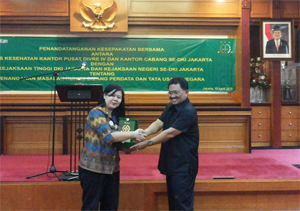
“Sanksi pidana itu termaktub dalam Undang-Undang (UU) No 24 tahun 2011 tentang BPJS pada pasal 55. Itu amanah Undang-Undang,” kata Direktur Hukum, Komunikasi dan Hubungan Kerjasama BPJS Kesehatan, Purnawarman Basundoro usai penandatanganan kerjasama dengan Kejaksaan Tinggi DKI Jakarta, di Jakarta, Rabu (15/4).

Karena itu, Purnawarman menghimbau kepada semua badan usaha baik milik pemerintah, daerah maupun swasta untuk taat pada aturan tersebut.
“Pemerintah memberikan waktu per 1 Januari 2015 ini bagi semua badan usaha untukbergabung dalam BPJS Kesehatan. Jadi sebenarnya waktunya sudah jatuh tempo. Tetapi kan ada kesepakatan baru badan usaha minta perpanjangan hingga Juni 2015,” kata Purnawarman.

Ia menyebutkan, jumlah peserta BPJS Kesehatan dari unsur dunia usaha hingga April 2015, tercatat baru ada sekitar 23 juta orang. Pihaknya menargetkan ada kenaikan 8 juta peserta selama kurun waktu 2015.

“Jumlah karyawan atau penerima upah saat ini tercatat ada sekitar 50 juta orang. Jumlah itu belum termasuk keluarganya. Jadi bisa lebih banyak lagi. Tapi kani menargetkan ada penambahan 8 juta peserta tahun ini,” ucapnya.

Purnawarman menegaskan, kepesertaan pada BPJS Kesehatan ini bersifat wajib bagi seluruh rakyat Indonesia, sesuai amanah UU No 24/2011. Meski perusahaan sudah bekerjasama dengan asuransi swasta untuk menanggung pembiayaan kesehatan karyawannya.

Terkait kerja sama dengan Kejaksaan Tinggi DKI Jakarta, Purnawarman menjelaskan, hal itu dilakukan seiring dengab makin bertambahnya jumlah peserta BPJS Kesehatan. Kondisi itu tentunya akan menimbulkan berbagai persoalan hukum.

“Itu sebabnya kami menjalin kerja sama dengan Kejaksaan.Karena permasalahan dapat timbul dari berbagai pihak, antara lai klien, mitra kerja, peserta atau bahkan pihak internal,” tuturnya.

Karena itu, lanjut Purnawarman, kerja sama dengan kejaksaan tinggi sebagai pihak berkompeten dianggap sebagai keputusan tepat dan bijaksana. “Sehingga keputusan yang kami buat bisa sesuai dengan koridor hukum, selain tepat dan bijaksana,” kata Purnawarman menandaskab. (TW)

{jcomments on}

World Health Organisation issues warning on caesarean births

Women should only give birth by caesarean section if it is medically necessary, the World Health Organisation warns.

The global health body issued guidance on Friday suggesting the “ideal rate” of caesarean births was between 10 per cent and 15 per cent, suggesting unnecessary operations could be “putting women and their babies at risk of short and long-term health problems”.

About one in four babies are born each year by caesarean section just in the UK, according to the latest figures, and current National Institute for Health and Clinical Excellence guidelines allow for expectant mothers to choose to have one, irrespective of need.

The WHO cited United Nations-backed studies suggesting there is “no evidence” the death rate decreases when the C-section rate goes beyond 10 per cent of births.

In a statement, it warned “caesarean sections can cause significant complications, disability or death, particularly in settings that lack the facilities to conduct safe surgeries or treat potential complications.

“Across a population, the effects of caesarean section rates on maternal and newborn outcomes such as stillbirths or morbidities like birth asphyxia are still unknown.”

More research on the impact of caesarean section on women’s psychological and social well-being is still needed.

“Due to their increased cost, high rates of unnecessary caesarean sections can pull resources away from other services in overloaded and weak health systems.”

Dr Marleen Temmerman, director of WHO’s Department of Reproductive Health and Research, said: “These conclusions highlight the value of caesarean section in saving the lives of mothers and newborns.

“They also illustrate how important it is to ensure a caesarean section is provided to the women in need – and to not just focus on achieving any specific rate.

“We urge the healthcare community and decision-makers to reflect on these conclusions and put them into practice at the earliest opportunity.”

source: http://www.smh.com.au/


Upaya Pengendalian Tembakau di Indonesia Lemah

Upaya pengendalian tembakau di Indonesia masih lemah terlihat dari masih ada epidemi yang disebabkan oleh rokok sehingga pencegahan terhadap penyakit tidak menular sulit diwujudkan.

Hal itu dikemukakan oleh Soewarta Kason dari Badan Penelitian dan Pengembangan Kementerian Kesehatan dalam kegiatan Tobacco Control Leadership Programe” yang diselenggarakan oleh WHO Indonesia dan John Hopkis University di Yogyakarta, Senin (13/4).

Ia mengatakan sulitnya pencegahan penyakit tidak menular, beban makro ekonomi yang ditanggung oleh negara akibat epidemi tembakau jauh lebih besar daripada pajak yang diterima dari cukai tembakau.

Rokok menjadi faktor risiko utama penyebab kematian akibat penyakit tidak menular, ada sekitar 20 faktor risiko utama dan rokok berada di posisi kedua. Oleh karena itu, Kementerian Kesehatan berupaya untuk mengurangi tembakau.

Ada lima negara yang memproduksi tembakau tinggi, Indonesia berada di urutan tertinggi. Negara Lain sudah membatasinya dengan meratifikasi FCTC. Jadi, tembakau dari Indonesia tidak bisa masuk. Akhirnya dipasarkan ke Singapura dan rokok yang diproduksi dikirim kembali ke Indonesia.

“Industri rokok memproduksi 380 miliar rokok per tahun, jumlah penduduk kita (Indonesia) hanya sekitar 250 juta. Coba bayangkan berapa banyak rokok yang harus kita hisap,” katanya.

Prevalensi rokok di Indonesia telah menjangkau usia muda kurang dari 15 tahun. Jumlah perokok terbanyak ada di desa yakni 38,9 persen, sedangkan perkotaan hanya 33,8 persen. Kebanyakan mereka yang merokok berpendidikan rendah dan berasal dari keluarga miskin.

“Bisa dibayangkan sudah tinggal di desa miskin dari kota tapi konsumsi rokok lebih tinggi,” katanya.

Sementara itu, Regional Adviser, The Internasional Union, Tara Singh Bam menyampaikan, Indonesia merupakan salah satu negara di Asia Tenggara yang belum meratifikasi konvensi pengendalian tembakau melalui Framework Convention on Tobacco Control (FCTC), ini peluang bagi industri rokok untuk menjadikannya pasar terbesar tembakau.

“Indonesia adalah pasar yang ramah tembakau. Lebih dari 248 juta populasinya adalah perokok dan merupakan pasar ketiga di dunia,” katanya.

Menurut dia, tidak ikutnya Indonesia meratifikasi FCTC akan memberikan manfaat kepada industri rokok untuk mencari keuntung, karena tidak ada yang menghalangi mereka.

“Target FCTC adalah tidak ada lagi yang mati karena rokok,” katanya.

Saat ini sudah ada 188 negara yang meretifikasi FCTC, dan hampir seluruh negara di Asia Tenggara telah menandatanganinya hanya Indonesia yang belum.

Farrukh Qureshi dari WHO Indonesia menambahkan, FCTC adalah perangkat sangat kuat dalam meyakinkan dukungan internasional untuk melindungi masyarakat dunia dari ancaman bahaya rokok.

“FCTC sangat ampuh dan berdampak sangat signifikan dalam menurunkan prevalensi merokok di negara-negara yang sudah mengaksesi FCTC,” katanya.

Tobacco Control Leadership Programe diikuti oleh 92 orang peserta yang datang dari berbagai bidang keilmuan di antara Kementerian Kesehatan, Hukum dan HAM, Komnas HAM, dinas kesehatan dari sejumlah kota dan kabupaten yang menerapkan kawasan tanpa rokok di seluruh Indonesia, media, LSM perguruan tinggi serta praktisi.

Tujuan dari program ini untuk menumbuhkan pemikiran strategis dan pemimpin yang dapat mengendalikan peredaran tembakau yang membutuhkan keberanian untuk menyampaikan bahaya merokok bagi kesehatan.

sumber: http://www.beritasatu.com/


Health IT vendors slammed for hampering the exchange of patient data

Electronic health records vendors make the process of sharing patient information too expensive and complicated for hospitals and doctors, a problem that affects THE QUALITY and cost of care.

That’s the conclusion reached by the Office of the National Coordinator for Health Information Technology (ONC), the U.S. government agency that oversees the country’s health IT efforts.

e health record thinkstock
Health IT vendors slammed for hampering the exchange of patient data
Electronic health records vendors make the process of sharing patient information too expensive and
READ NOW
In a report released Friday, the ONC outlined challenges that health care providers face as they attempt to exchange patient data.

Among the issues identified: Health IT vendors charge high fees to set up interfaces for hospitals and labs to share patient data. They also force customers to use proprietary technology and refuse to publish APIs (application programming interfaces).

Sharing health data electronically is essential if technology is going to be used to deliver better and more affordable care, the ONC said in a blog post. “Information blocking” by IT vendors hinders this process, the ONC said. The agency didn’t call out specific companies.

It’s unclear how widespread this problem is, the ONC said. It’s difficult to get a more accurate assessment of the problem because vendors contractually forbid customers from discussing topics related to costs and restrictions.

Still, from the information that the ONC has collected, “it is readily apparent that some providers and developers are engaging in information blocking.”

Last year the ONC received 60 complaints about information blocking and reviewed anecdotal evidence from news reports and public testimony. The ONC also conducted interviews with health care providers, IT vendors and other stakeholders.

“We are becoming increasingly concerned about these practices, which devalue taxpayer INVESTMENTS in health IT and are fundamentally incompatible with efforts to transform the nation’s health system,” the ONC post said, adding that data blocking may become more pervasive as technology plays a greater role in health care.

Health care providers were also taken to task for not sharing patient data with each other. Hospitals may block information in an effort “to control referrals and enhance their market dominance,” the ONC said.

Some hospitals cite privacy and security regulations to explain why they can’t share information “in circumstances in which they do not in fact impose restrictions,” the ONC said.

The ONC heard about cases where health care organizations and vendors allegedly joined forces to complicate the sharing of information with third-party care providers.

Congress requested the report last December over fears that health IT vendors were profiting from keeping data locked up. The U.S. government has offered financial incentives for care providers to store patient medical information in EHRs instead of using paper files.

Resolving the problem of health information blocking may involve a multi-pronged approach, including new federal legislation, requiring more vendor transparency about software costs and restrictions, assisting law enforcement investigations of information blocking and encouraging interoperability and data sharing via incentives.

source: http://www.computerworld.com/


Belanja Kesehatan RI Kalah Jauh dari Negara Tetangga

Masalah kesehatan menjadi salah satu pekerjaan rumah bagi Indonesia untuk bisa naik kelas menjadi negara maju. Menurut Menteri Keuangan Bambang P.S. Brodjonegoro, masyarakat yang sehat merupakan salah satu prasyarat untuk menjadi negara maju.

Saat ini, lanjut Bambang, Indonesia masih dihadapkan pada rendahnya belanja di bidang kesehatan.

Data Bank Dunia menunjukkan, belanja kesehatan Indonesia (health expenditure per capita) pada 2011 hanya sebesar US$99, dan meningkat menjadi US$108 pada 2012.

“Pada 2011 Indonesia itu health expenditure per capita-nya itu sangat rendah,” ungkapnya, seperti dikutip dari laman Kementerian Keuangan, Minggu 12 April 2015.

Menurutnya, jika dibandingkan dengan negara-negara tetangga seperti Singapura dan Malaysia, Indonesia masih tertinggal.

Health expenditure per capita Singapura, misalnya, tercatat mencapai US$2.144 pada tahun 2011 dan US$2.426 pada tahun 2012.

Oleh karena itu, Bambang menjelaskan, agar dapat menjadi negara maju, Indonesia harus lebih serius dalam menangani masalah kesehatan.

“Kalau mau jadi negara maju, harus punya masyarakat yang sehat dulu, bukan sebaliknya, maju dulu baru sehat. Inilah kenapa kemudian kami harus serius menangani masalah kesehatan,” ungkapnya.

Bambang menambahkan, masalah kesehatan ini merupakan tanggung jawab bersama, tidak hanya pemerintah. Dia berharap, pihak swasta dapat turut berpartisipasi, khususnya yang terkait dengan pendanaan, karena terbatasnya kemampuan anggaran pendapatan dan belanja negara (APBN).

“Tidak mungkin ada satu pun negara di dunia yang mengandalkan hanya dari budget (APBN), berarti harus ada yang di luar budget, (yaitu) swasta,” katanya.

sumber: http://bisnis.news.viva.co.id


Industri Kesehatan Diramalkan Tembus Rp. 273 Triliun Pada 2019

Pasar industri kesehatan di Indonesia diprediksi mencapai US$21 miliar atau Rp273 triliun (kurs Rp13.000 per dolar AS) pada 2019. Hal ini didorong beberapa faktor, antara lain penerapan Jaminan Kesehatan Nasional dan semakin banyaknya rumah sakit swasta.

Healthcare Director Frost & Sullivan Asia Pacific Milind Sabnis mengatakan masyarakat Indonesia akan semakin menuntut kualitas pelayanan yang baik dan efektif. “Masyarakat yang dulu enggan berobat karena alasan finansial, akan lebih mudah menjangkau pelayanan kesehatan dengan adanya JKN,” ujarnya (8/4/2015).

Riset yang dilakukan oleh Frost & Sullivan menunjukkan bahwa JKN akan mendorong pertumbuhan industri kesehatan di berbagai sektor. Mulai dari industi farmasi, alat kesehatan dan laboratorium, serta rumah sakit.

Meski demikian, Sabnis menjelaskan bahwa dalam dua tahun ke depan, tidak akan ada perubahan yang signifikan. Hal ini disebabkan oleh sistem JKN yang memerlukan proses untuk bisa diimplementasikan secara menyeluruh.

Sejalan dengan itu, industri rumah sakit akan dirambah pemain swasta serta kemitraan. “Ada kebutuhan untuk menambah sekitar 40.000 ranjang rumah sakit. Dan pemerintah tidak bisa memenuhi ini, perlu bantuan swasta,” ujar Sabnis.

Terkait pasar farmasi, Sabnis mengatakan permintaan vaksin dan obat generik akan meningkat dengan adanya program JKN. Selain itu, pasar In Vitro Diagnostic (IVD) akan meningkat dengan permintaan JKN yang menggunakan IVD sebagai alat tes dasar.

Sabnis menilai ruang bagi industri kesehatan untuk berkembang di Indonesia sangat besar. “Pengguna jasa kesehatan masih sangat rendah, sehingga masih banyak potensi dan ruang untuk dikembangkan,” ujarnya.

Selain itu, Indonesia merupakan negara yang tingkat konsumsi dan daya belinya cukup besar.

sumber: http://finansial.bisnis.com


World Health Day: A long way to go for India

On April 7, World Health Day, India’s Prime Minister Narendra Modi tweeted “Govt is working tirelessly to realise the dream of a Healthy India where every citizen has access to proper & affordable healthcare.”

To back up that claim, India started its first national air quality index on Monday, belatedly following a World Health Organization (WHO) report last May that found 13 of the world’s 20 most air-polluted cities are in India. Of the 1,600 cities studied, the Indian capital New Delhi had the world’s dirtiest air with an annual average of 153 micrograms of small particulates (PM2.5) per cubic meter. According to the WHO, a shocking 627,000 Indians die each year due to pollution. The new index will initially cover ten cities and will subsequently be extended to 60. There are already around 247 Indian cities that have some air-quality monitoring mechanisms in place, including at least 16 with online real-time monitoring capabilities, but the “voluminous data” is often hard for people to understand. Government officials say the new index will track eight pollutants and then provide one consolidated number with color-coded associated health impacts, which will all be displayed online. The public can then see whether it would be safer to stay indoors or to refrain from strenuous activity outdoors, notes the BBC. But aside from issuing new rules on the disposal of waste from construction work (a major source of air pollution), the government has not done much to actually reduce air pollution.

More promising is Indradhanush, a massive immunization campaign aimed at inoculating 90% of the country’s children against seven preventable diseases by 2020. It began on Tuesday and will run through July. Health officials said the campaign would focus on diseases for which vaccines are available, including diphtheria, whooping cough, tetanus, measles, hepatitis B, and Japanese encephalitis. The Indian government provides free immunizations through its national public health system, yet overall vaccination rates in the country remain frustratingly low. Only 44% of children aged 1 to 2 years have received basic inoculations, with significantly less in rural districts, according to a National Family Health survey. And while India has made enormous strides in the past few decades in reducing mortality from these diseases, there is still far more work to be done.

Another sector in which India lags behind is food safety – the theme of this year’s World Health Day. The WHO has calculated that nearly 700,000 people die each year in South Asian countries alone from contaminated food and water. Toxic pesticides and antibiotics are the norm rather than the exception in food. The Centre for Science and Environment (CSE) said on Tuesday that pesticide use and management in India is largely unregulated, and food contaminated with pesticide residues is freely used by unsuspecting consumers. “Pesticides are linked to long-term health effects such as endocrine disruption, birth defects and cancer. Besides raw agriculture produce, pesticides have been found in packaged food products such as soft drinks, bottled water and in human tissues in India,” CSE noted. And while street food’s microbiological contamination is a concern, just as troubling is its most common replacement — processed and packaged food full of chemical additives whose long-term risks are unknown, as well as sky-high levels of salt, sugar, and fat.

Modi’s “Make in India” campaign needs to be joined by a “Make India Healthy” campaign.

source: http://blogs.blouinnews.com/


Pendanaan Kesehatan Indonesia Paling Rendah di Asean

8apr

8aprDalam 20 tahun terakhir ini, pendanaan kesehatan Indonesia jauh tertinggal dibandingkan negara-negara Asean. Dampaknya, kualitas layanan kesehatan di Indonesia belum optimal. Makanya banyak masyarakat kelas menengah ke atas yang berobat keluar negeri.

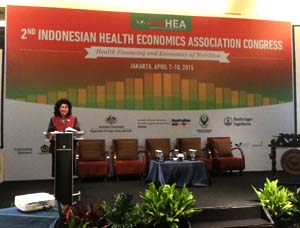
Hal itu dikemukakan Ketua Ina-HEA (Indonesian Health Economic Association), Hasbullah Thabrany dalam pidato pembuka dalam kongres Ina-HEA ke-2 yang digelar di Jakarta, Rabu (8/4).

Kongres dibuka oleh Menteri Kesehatan (Menkes) Nila FA Moeloek.

Hasbullah mencontohkan China yang pada 1997 lalu pendapatan per kapitanya jauh dari Indonesia sudah membelanjakan sebesar 72 dolar Thailand 199 dolar dan Malaysia 240 dolar per kapita per tahun. Sementara Indonesia hanya 50 dolar per kapita per tahun.

“Pada 2012 lalu, belanja kesehatan China sudah melonjak hingga 480 dolar, melewati Thailand yang sebesar 385 dolar. Sedangkan Malaysia sudah lebih tinggi lagi menjadi 676 per kapita per tahun,” ujarnya.

Sementara Indonesia, lanjut Hasbullah, pada 2012 hanya mengeluarkan 150 dolar per kapita per tahun untuk anggaran belanja kesehatannya. Karena itu, tak heran jika kualitas layanan kesehatan di Indonesia belum memadai hingga saat ini.

“Ini seharusnya jadi tantangan tak hanya bagi pemerintah, tetapi juga kalangan akademisi untuk mencari solusinya,” tutur Hasbullah.

Akibat rendahnya pendanaan kesehatan di Indonesia, menurut Hasbullah, menjadi pendorong atas tingginya angka kematian ibu hamil saat melahirkan. Jumlahnya mencapai angka 8 ribu per tahun.

“Itu jumlah angka yang besar. Bayangkan 5 kali lebih banyak dari penumpang Air Asia yang terjatuh belum lama ini. Tetapi, fakta itu tidak terekspos media,” kata Guru Besar Fakultas Kesehatan Masyarakat Universitas Indonesia itu.

Menkes Nila FA Moeloek menyatakan, kualitas layanan kesehatan yang baik memiliki keterkaitan dengan pembangunan ekonomi. Karena itu, untuk meningkatkan pendanaan kesehatan harus memperbaiki sektor ekonomi.

“Pendapatan negara harus naik dulu supaya layanan kesehatan kita optimal,” katanya.

Padahal, lanjut Nila Moeloek, saat ini pasien penyakit tidak menular jumlahnya semakin banyak. Pembiayaannya pun membutuhkan dana yang sangat besar, dibandingkan penyakit infeksi.

“Salah satu penyakit yang menyedot dana BPJS Kesehatan saat ini adalah kanker. Bagaimana caranya agar pasien kanker bisa ditemukan dalam stadium awal, selain peluang hidupnya lebih tinggi biayanya pun tidak terlalu mahal,” ucapnya.

Menkes juga menyebut pentingnya peran upaya promotif dan preventif di bidang kesehatan. Ia tak memungkiri bahwa promotif dan preventif agak sedikit terabaikan sejak era program Jaminan Kesehatan Nasional (JKN).

“Belajar dari pengalaman itu, kedepannya kita giatkan kegiatan promotif dan preventif melalui paradigma sehat,” ujarnya.

Menkes mengambil contoh perilaku seks berisiko, pengguna narkoba dan perokok. ‎Ketiga perilaku tersebut sangat merugikan bagi kesehatan, meski orang sudah mengerti hal itu.

“Perilaku yang tidak sehat inilah yang ingin kita minimalisasi. Bagaimana membangun keaadaran baru bahwa kebiasaan itu tidak sehat, dan dampaknya baru terasa setelah tua. Dan itu menghabiskan uang negara,” kata Nila menandaskan. (TW)

{jcomments on}

The healthiest countries in the world

World Health Day is April 7, and people around the globe are turning their attention to health issues. The global infant mortality rate of 33.6 deaths per 1,000 live births in 2013 has followed a long-term downward trend. Similarly, life expectancy has improved dramatically in recent decades. The improvements were uneven, however, and health conditions continue to vary widely between nations.

In order to assess the overall state of a country’s health, 24/7 Wall St. reviewed a host of factors broadly categorized as health indicators, access measures, or the economy. The healthiest country, Qatar, led the countries reviewed with the highest overall score, while the least healthy country, Sudan, received the lowest score. These are the most and least healthy countries worldwide.

Negative health outcomes were far less common in the healthiest countries than in the least healthy ones. Chief among them, life expectancy, tended to be far higher in the nations with the strongest overall health measures. Life expectancy at birth in all of the healthiest countries exceeded the global expectancy of approximately 70 years. A child born in Iceland is expected to live longer than 80 years, the highest life expectancy in the world.

According to Gaetan Lafortune, senior economist at the OECD Health Division, life expectancy is perhaps the best way to measure the health of a nation. However, a range of indicators is necessary to capture the complex picture of a national population’s health. Similarly, no single measure can explain a health outcome like life expectancy. Rather, only a wide range of behaviors, infrastructure characteristics, and economic factors can explain the strong or weak health outcomes in a nation.

For example, seven of the healthiest nations reported less than 10 incidents of tuberculosis per 100,000 people in 2013, a fraction of the global rate of 126 incidents of tuberculosis per 100,000 people. While lung diseases and other poor health outcomes were far less common in these nations, risk factors such as smoking were not necessarily less prevalent. The residents of the healthiest nations were actually more likely than most nations reviewed to report a smoking habit.

The quality of a nation’s infrastructure and health system are closely related to a low prevalence of disease. Doctors were far more available in the healthiest countries than in the least healthy ones, for example. The prevalence of physicians in seven of the healthiest countries was at least double the global ratio of 1.52 physicians per 1,000 people. In all of the least healthy countries, on the other hand, there was less than one doctor per 1,000 people.

The quality of infrastructure is also very important for the health of a country’s residents. “Access to clean water in particular is absolutely crucial to avoid all sorts of diseases that lead to death for children and adults,” Lafortune said. In all of the healthiest countries, drinking water is treated before it reaches residents’ homes In half of the least healthy countries, less than half of the drinking water consumed in rural areas was treated.

Health care spending and the availability of resources are also major determining factors of nationwide health. As Lafortune noted, “It is not too good for your health to be poor.” Poor people — in any country — will be in worse health and live shorter lives than rich people.

All of the healthiest nations spent more than $2,000 per capita on health annually, versus the global expenditure of just over $1,000 per capita. With only one exception — Equatorial Guinea — the least healthy nations spent far less than the global figure. In fact, health care expenditures in seven of the least healthy countries was less than $100 per capita.

Of course, high spending does not guarantee strong health outcomes. Annual health spending in the United States totalled $8,895 per capita, more than the spending of all but two other countries reviewed. Yet, the health of U.S. residents was rated worse than 33 other nations.

As Lafortune explained, the return from health spending is far higher in countries already spending very little. For example, immunization rates — which were as low as 25% in the Central African Republic for measles — can be increased dramatically with little resources. “As spending goes up, what becomes more important is the efficiency of the spending,” Lafortune said.

In many of the least healthy countries, living conditions are so poor that “unhealthy” may actually be an understatement. Recent regional violent conflicts may account for a country’s exceptionally low life expectancy much more than other unhealthy behaviors, for example. Four of the least healthy countries — Mozambique, Guinea-Bissau, Yemen, and Sudan — have all been through at least one civil war since 1990. Haiti, while not exactly war torn, is still recovering from a devastating earthquake in 2010 as well as a cholera epidemic that emerged in the aftermath of the natural disaster.

These are the most healthy countries in the world.

10. Australia

> Life expectancy: 79.9 (5th highest)
> Infant mortality rate (per 1,000 live births): 3.4 (21st lowest)
> Health expenditure per capita: $6,140 (6th highest)
> Unemployment rate: 5.7% (58th lowest)

Based on an assessment of healthy behaviors and outcomes, access to health services, and various economic factors, Australia is the 10th healthiest country in the world. The country’s strong national health care system compared to most countries largely explains its ranking. There were about 3.3 physicians per 1,000 Australians in 2011, the 26th highest such ratio out of the 174 nations reviewed, and well more than twice the global prevalence of just over 1.5 physicians per 1,000 people. In addition, annual health spending totalled $6,140 per capita, sixth highest of all countries reviewed and nearly six times the global expenditure of $1,030 per capita. Partly as a result, country residents had among the world’s longest life expectancies at nearly 80 years in 2012. However, Australia also had a relatively high obesity rate, at 28.6%, and a relatively high alcohol consumption rate.

9. Sweden

> Life expectancy: 79.9 (5th highest)
> Infant mortality rate (per 1,000 live births): 2.4 (8th lowest)
> Health expenditure per capita: $5,319 (10th highest)
> Unemployment rate: 8.1% (62nd highest)

Like in most of the healthiest countries, Sweden has universal health coverage, with patient fees covering only a very small percentage of health costs. The country’s annual health expenditures totalled $5,319 per capita, the 10th highest spending worldwide. The high health care spending and strong coverage have resulted in good health outcomes compared to most countries. There were just two infant mortalities per 1,000 live births and four maternal deaths per 100,000 live births in Sweden, both nearly the lowest such rates worldwide. Swedes also live longer than most people, with a life expectancy at birth of roughly 80 years. Compared to other healthy countries, however, Sweden’s 2013 unemployment rate of 8.1% was relatively high.

8. Singapore

> Life expectancy: 79.9 (5th highest)
> Infant mortality rate (per 1,000 live births): 2.2 (5th lowest)
> Health expenditure per capita: $2,426 (22nd highest)
> Unemployment rate: 2.8% (13th lowest)

The small island nation of Singapore has a remarkably strong economy. Less than 3% of Singapore’s workforce was unemployed in 2013, one of the lowest unemployment rates worldwide. Also, Singapore’s GDP per capita of $55,182 in 2013 was one of the higher economic outputs worldwide. In addition to a strong economy, Singapore fares especially well in health measures. The nation’s obesity rate of 6.2% was among the lower rates worldwide, and especially low compared to the healthiest countries. A child born in 2013 was also expected to live roughly 80 years, tied for the fifth highest life expectancy worldwide. While the city-state’s health care system is universal, like many other especially healthy countries, it is a unique system. Residents are subject to a forced savings rate, and funds for medical expenses are saved in a Medisave Account. Catastrophic health insurance enrollment is automatic for all residents as well, although people can opt out.

7. Austria

> Life expectancy: 78.4 (20th highest)
> Infant mortality rate (per 1,000 live births): 3.2 (15th lowest)
> Health expenditure per capita: $5,407 (9th highest)
> Unemployment rate: 4.9% (45th lowest)

Health care spending in Austria totalled about $5,400 per capita annually, ninth highest out of all countries reviewed. Like many other healthy countries, the relatively high level of health care expenditure helps increase the number of physicians and quality of health care. There were nearly five doctors per 1,000 Austrians in 2011, the fourth highest ratio globally. As in most of the healthiest nations, the Austrian government controls most functions of the country’s health care system. While Austria is one of the healthiest countries, nearly half of adult Austrians reported a smoking habit in 2011, one of the higher smoking rates worldwide.

6. Iceland

> Life expectancy: 81.6 (the highest)
> Infant mortality rate (per 1,000 live births): 1.6 (tied-the lowest)
> Health expenditure per capita: $3,872 (16th highest)
> Unemployment rate: 5.6% (56th lowest)

Iceland, by population, is the smallest of the 10 healthiest countries. Iceland is the sixth healthiest country worldwide partly because it had the highest life expectancy, which at 81.6 years was also a full year longer than Switzerland, the country with the second highest life expectancy. About 18% of adult Iceland women smoked, the 88th highest rate of all countries, while 19% of all adult males smoked, 17th highest of all countries. Iceland also had the lowest infant mortality rate, at just 1.6 deaths per 1,000 live births. Iceland’s low infant mortality rate came even though a relatively low 91% of children aged 12 to 23 months received DPT — diphtheria, pertussis (whooping cough), and tetanus — and measles vaccines.

5. Japan

> Life expectancy: 79.9 (4th highest)
> Infant mortality rate (per 1,000 live births): 2.1 (3rd lowest)
> Health expenditure per capita: $4,752 (11th highest)
> Unemployment rate: 4.0% (32nd lowest)

With 127 million people, Japan is the most populous of the 10 healthiest countries in the world. Ironically, it had the highest death rate of the top 10 countries, at 10 per 1,000 people. About one quarter of the nation’s population was over 65 last year, a testament to the longevity and health of Japanese people. One factor contributing to the strong overall health rating is Japan’s adult obesity rate of 3.3%, which was seventh best in the world and the best out of the 10 healthiest countries. Despite its high ranking, Japan has relatively high smoking rates for both males and females and one of the higher rates of CO2 emissions, at 9.2 metric tons per capita, almost twice the global average of 4.9 metric tons per capita. Japan’s tuberculosis rate of 18 per 100,000 people was far below the global rate of 126 per 100,000 people.

4. Luxembourg

> Life expectancy: 79.1 (16th highest)
> Infant mortality rate (per 1,000 live births): 1.6 (tied-the lowest)
> Health expenditure per capita: $7,452 (4th highest)
> Unemployment rate: 5.9% (63rd lowest)

With the fourth highest per capita health care spending, Luxembourg, the only grand duchy in the world also has the fourth best health results, suggesting a link between health spending and outcomes. Luxembourg had the lowest mortality rates for both infants and children under five years old. But like most of the 10 healthiest countries, Luxembourg has a relatively high death rate. Though it is reasonably strong, the country’s overall health ranking is likely held back by its residents’ relatively high alcohol consumption of 11.9 liters per capita, and relatively high obesity rate of 23.1%.

3. Switzerland

> Life expectancy: 80.6 (2nd highest)
> Infant mortality rate (per 1,000 live births): 3.6 (24th lowest)
> Health expenditure per capita: $8,980 (2nd highest)
> Unemployment rate: 4.4% (40th lowest)

With the second highest life expectancy of all nations, Switzerland is the third healthiest country in the world. Switzerland had 3.9 physicians per 1,000 people, the ninth highest ratio of the 172 nations reviewed. The country ranked high overall despite a relatively high death rate of nine deaths per 1,000 people as well as prevalent risk factors. The per capita alcohol consumption in Switzerland of 10.7 liters was almost 73% higher than the global average. Also, an estimated 22% of adult females and 31% of adult males smoked. The incidence of tuberculosis in Switzerland of 6.5 cases per 100,000 people was 16th highest in the world. Despite these habits, Switzerland’s population remains very healthy, perhaps due to its health care expenditure. An annual $8,980 per capita was spent on health in the country, the second highest globally.

2. Norway

> Life expectancy: 79.5 (9th highest)
> Infant mortality rate (per 1,000 live births): 2.3 (6th lowest)
> Health expenditure per capita: $9,055 (the highest)
> Unemployment rate: 3.5% (22nd lowest)

Norway spends more on health care per capita than any other country. The country’s annual health care spending totalled $9,055, ahead of Switzerland’s $8,980 and the United States’ $8,895. Norway had a relatively high death rate of 8.4 deaths per 1,000 people, six times that of Qatar. Norway’s infant mortality rate, its mortality rate for those under five, and life expectancy rate at birth all ranked within the top 10 of all nations, however. While the country fared relatively poorly on health measures, its economy is very strong, and residents have some of the best access to health professionals and facilities in the world. Norway had the second best access to services, reflecting clean water and that its entire population had access to electricity. There were also nearly four physicians per 1,000 people in the country, one of the highest shares.

1. Qatar

> Life expectancy: 77.6 (28th highest)
> Infant mortality rate (per 1,000 live births): 7.0 (44th lowest)
> Health expenditure per capita: $2,029 (25th highest)
> Unemployment rate: 0.5% (2nd lowest)

While Qatar topped 24/7 Wall St.’s health rankings, it was the only country of the 10 healthiest not to have a national health care system. As the emirate is transitioning to a universal system, however, the health of its population may become even better. Qatar plans to have its entire population covered by the end of this year. With 7.7 physicians per 1,000 people, more than any other country, the country’s health system is already very good. Qatar fared very well in health, access, and economic measures, largely on the strength of its relatively low overall death rate of 1.4 deaths per 1,000 people and relatively low maternal mortality rate. The small Middle Eastern country, which is about the size of Connecticut, took steps to protect its citizens from diseases with 99% of children receiving the DPT and measles vaccines. As in several other prosperous and healthy nations, Qatar had the second-highest obesity rate in the world.

Methodology

To determine the most and least healthy countries, 24/7 Wall St. collected data on 21 measures on more than 170 countries. These measures were grouped into three categories: health, access, and economy.

While our index aspires to be comprehensive, many measures are also interrelated. To account for interdependence, our index was created using a geometric mean rather than the traditional arithmetic mean. We then used the geometric mean of each index to calculate a country’s overall score. Potential scores ranged from one to 172, with lower values indicating better scores.

One challenge was data availability for all 172 countries. We addressed this challenge in two ways. The data is for the most recent year available but also needed to be no older than 2010. Secondly, data had to be available for at least 75% of countries. In addition, we only considered countries with at least 150,000 people.

The health category captured both outcomes and residents’ behaviors in each country. Infant mortality, fertility, maternal mortality, and the incidence of various diseases came from the World Bank. We used the World Bank’s life expectancy figure for males as a proxy for life expectancies for all people because it is much more widely available in the countries reviewed. Smoking rates and the percentage of children with certain immunizations also came come the World Bank. Lastly, we considered per capita alcohol consumption and adult obesity rates from the World Health Organization (WHO).

The access category was designed to measure the availability of specific resources that are critical to the health of a nation’s people. We looked at the share of a country’s population with access to clean water, clean air, and electricity — all data from the World Bank. Additionally, we looked at the concentration of physicians in each country as a proxy for how easily residents can access health care.

Economic conditions also have an impact on health and health outcomes. The economy category included per capita health expenditure by public and private sources, as well as poverty and unemployment rates. All economic data came from the World Bank.

source: http://www.usatoday.com/