Kemenkes Tambah Peserta KIS 2,2 Juta

Program Jaminan Kesehatan Nasional (JKN) melalui Badan Penyelenggara Jaminan Sosial (BPJS) Kesehatan telah berhasil melampaui target kepesertaan 2014 dengan total 131,4 juta jiwa.

Pada 2015, pemerintah akan menambahkan peserta untuk Kartu Indonesia Sehat(KIS) sebanyak2,2jutajiwa. Sekretaris Jenderal Kementerian Kesehatan (Kemenkes) Untung Soesilo mengatakan, penambahan peserta KIS sebanyak 2,2 juta jiwa akan dibarengi dengan penambahan anggaran sebesar Rp800 miliar.

Dengan langkah tersebut premi yang akan dibayarkan peserta tidak berubah meski ada penambahan peserta KIS. Penambahan anggaran tersebut sekaligus menjadi langkah antisipasi terhadap banyaknya peserta KIS pada 2015. “Anggaran tambahan itu untuk meng-cover yang 2,2 juta jiwa tadi,” ujarnya di Kantor Kementerian Koordinator Perekonomian, Jakarta, kemarin.

Menteri Kesehatan Nila F Moeloek mengimbau BPJS Kesehatan agar siap dalam menerima tambahan peserta KIS pada 2015 ini. Menurut dia, fokus Kemenkes pada 2015 adalah mengefektifkan KIS dan menambah kepesertaannya. Kemenkes akan mengurusi regulasi, sarana dan prasarana, dan sumber daya manusia (SDM) kesehatan. Sementara itu pengolahan jumlah peserta, dana, dan sistem kendali biaya dan kendali mutu akan dipegang oleh BPJS Kesehatan.

“Kemenkes akan mengurusi layanan. Soal jumlah peserta tetap ranahnya BPJS Kesehatan,” ujarnya. Dengan adanya penambahan peserta KIS, program preventif dan promotif di fasilitas kesehatan tingkat pertama (FKTP) akan dilakukan dengan pemberian vaksin yang sudah berjalan untuk disempurnakan kembali. Bantuan operasional kesehatan (BOK) pun nantinya akan tetap berjalan seperti semestinya.

Nila menambahkan, Kemenkes akan memberikan layanan kepada orang sakit sehingga nantinya tidak boleh ada lagi pasien yang datang berobat ditolak oleh rumah sakit. “Kemenkes akan memberikanpelayanan, jadisekarangtidak boleh ada orang sakit yang ditolak oleh rumah sakit,” ujarnya.

Menurut dia, Kemenkes telah menetapkan beberapa lokasi khusus yang masih terkendala sarana, fisik, konten maupun SDM-nya untuk memberikan layanan primer kepada masyarakat. Karena itu pihaknya akan membicarakan langkah lebih lanjut untuk dapat dipublikasikan secara teknis. Sementara itu, Kemenkes juga akan menindak tegas penyimpangan-penyimpangan yang terjadi di BPJS Kesehatan.

Pada 2015, pihak Kemenkes akan mempertegas peraturan dan punishment yang nantinya akan diberikan. “Itu sudah kita siapkan untuk 2015. Mana yang kita anggap bandel, klaimnya di luar kebiasaan dan sebagainya,” kata Dirjen Bina Upaya Kesehatan Kemenkes Akmal Taher. Menurut dia, saat ini belum ada data detail yang menunjukkan penyimpangan tersebut. Namun akan selalu ada kemungkinan itu, sehingga perlu diwaspadai sejak sekarang.

“Tahun ini akan kita pertegas. Tahun pertama itu kan sosialisasi. Ada salah klaim itu kan belum tentu dia sengaja,” tambah Akmal. Akmalmengatakankesalahan bisa saja terletak pada sistem koding sehingga menyebabkan adanya pembayaran yang berubah.

“Kemarin tidak mencolok tapi pantauan kita kan tidak terlalu bagus. Sekarang kita tingkatkan pemantauannya. Prinsipnya kita lebih baik mencegah,” kata dia. Sebelumnya dilaporkan ada penyimpangan yang terjadi di BPJS Kesehatan. Namun belum diketahui penyebab dugaan tersebut. Pemerintah masih melakukan evaluasi terhadap prosedur dan mekanismenya.

sumber: http://www.koran-sindo.com/


Discourse: While on the brink of overclaim, more hospitals join JKN program

Indonesia marked on Jan. 1, 2014 a historical milestone by launching the national health insurance (JKN) program, a platform for universal health care for citizens, targeted to be fully operational by 2019. A single institution called the Healthcare and Social Security Agency (BPJS Kesehatan) has been tasked with managing the JKN. The program is also pivotal because the government fully covers those deemed unable to afford a minimum standard of health care. However, problems like lack of health infrastructure and mounting hospital bills remain. The Jakarta Post’s Hans Nicholas Jong talked recently to BPJS Kesehatan president director Fachmi Idris about the agency’s first-year performance.

Question: It has been almost a year since the JKN program started. How has the performance of the BPJS Kesehatan been so far?

Answer: We just did research recently to measure the performance of the BPJS and public satisfaction. We surveyed 2,000 people from all provinces.

The government set a target of the public-satisfaction level to be 75 percent now and 85 percent by 2019. But now we already achieved 81 percent in our first year.

The survey measured satisfaction levels in all four service points: our office, our counters in hospitals, the hospitals themselves and primary health facilities, such as community health centers (Puskesmas).

What’s the current status of claims from hospitals and pharmaceutical companies?

We don’t pay claims to pharmaceutical companies. The ones who pay them are hospitals. The government has stipulated that we have to pay claims at least one month after patients receive medical treatment.

So if a patient gets medical treatment in November, then we have to pay for the claim by December. If not, then we will have a bad rapport. Then, the law on the BPJS also stipulates that we have to pay for claims within 15 days after hospitals submit all necessary documents.

If not, then we will be penalized. Therefore, we always pay all claims asked by hospitals 100 percent. As a matter of fact, we pay claims in an average of 2.8 days, much shorter than the deadline of 15 days.

If there are rumors of the BPJS Kesehatan not paying claims, then it must be debts from last year [that have not been paid by the previous organizations tasked with handling national health insurance]. [As of December], we have paid Rp 32.5 trillion for hospital claims.

In the past, there were some hospitals in Jakarta that did not accept JKN patients because the payment scheme, called the Indonesia Case-Based Groups (INA-CBG) system, had unfavorable rates. Has there been any revision on that?

In terms of rates, there is indeed a variation. The Health Ministry has decided that the payment scheme was divided into four regions — A, B, C and D. The ministry decided on the rates from the National Casemix Center.

After the rates were calculated, it was found that some tariffs indeed had to be increased, while others had to be decreased. Therefore, the ministry adjusted some of the rates in September.

There were 39 diagnoses for which rates had to be revised, such as orthopedics which was increased. While there are some issues with hospitals in Jakarta [that complain about the unfavorable rates], the majority of hospitals in several provinces are happy with the current system.

But if we look at the number of hospitals joining the JKN program, the number has been increasing, with 1,592 government hospitals and 617 private hospitals.

These private hospitals play a big role. So we have to really inform them [about the payment scheme]. This JKN program is a new system, so not all hospitals’ management understand it.

Doctors also need to be informed that the payment from the BPJS is not to individual doctors. After that, the hospitals’ management have to manage [their finances], and maybe in some places the management is not transparent. Some government hospitals say that they are not losing money [due to the JKN program].

So if there are hospitals that lose money, it is because of the management. Even a private hospital like Siloam does not lose money. If all hospitals are efficient [in their financial management], then there should not be a deficit.

What’s your strategy to provide enough doctors to serve all people in Indonesia by 2019?

I have already done the math. Each year we have 6,000 to 10,000 graduates from 72 medical faculties in the country, considering that each faculty only produces 100 graduates. We will have enough additional doctors [by 2019]. We only have to work on the supply [of medical facilities] and that’s not only the responsibility of the Health Ministry, but also local governance.

Is the money from premiums, both paid by the government and JKN members themselves, used purely for the provision of medical services or is some of it also invested?

The government stipulates that 90 percent of the funds that we receive have to be used for medical services. If we have more, then we will keep it for next year’s medical-service purposes. But if there is still money left, then we could invest it in something liquid, such as deposits, SUN [government bonds], bonds and so on. Any results from the investment will go to the benefit of JKN members. The remaining 10 percent is for technical backup funds and our operational funds, such as to print cards, letters for members who have not paid their premiums and so on. However, it is hard to measure how much we invest because our cash flow is really fast.

What is your strategy on pushing workers from non-formal sectors to apply for the JKN program in 2015?

Actually we already have many workers applying. Our target this year is only 600,000 non-formal workers. The number that has applied is 7 million. It means people have high awareness and this trend will continue. Some of them applied even before they were sick while some of them only applied once they got ill. But we always urge people to apply for the program even before they are sick. 

source: http://www.thejakartapost.com/l


Losing the Fight Against Tuberculosis

On a recent morning at Persahabatan Hospital in East Jakarta, patients, some from remote villages accessible only by boat, gathered in a waiting room. Nearby, lab technicians used new diagnostic technology to test sputum samples for multidrug-resistant tuberculosis, in an effort to tackle a growing caseload of the deadly disease.

Indonesia’s recently sworn-in president, Joko Widodo, takes the reins of a rising economic power poised to play a larger role on the world stage. But he also confronts a set of entrenched public health problems fueled by the poverty in which millions of Indonesians still live. None is more urgent than the spread of drug-resistant tuberculosis across this sprawling archipelago.

Thanks to support from the Global Fund to Fight AIDS, Tuberculosis and Malaria, the international financing mechanism established in 2002 to help poor countries address these diseases, Indonesia has been able to provide the costly drugs for drug-resistant tuberculosis to patients free of charge. It has also supplied laboratories like the one at Persahabatan with the Xpert MTB/RIF device, which allows health workers to diagnose suspected cases of drug-resistant disease in under two hours (conventional methods take as long as eight weeks).

These are encouraging steps, but as Indonesia is learning, the tools of clinical medicine can do only so much. “This is a social disease,” Dr. Erlina Burhan, the head of pulmonology medicine at Persahabatan, told me, referring to multidrug-resistant tuberculosis. “We have 7,000 new MDR cases a year, and many of those are defaulting on their treatment.”

It’s easy to understand why. For one thing, there’s the financial strain; the drugs may be free, but as a recent multinational study found, the cost to patients — for everything from transportation and hospital stays to months of missed work — can amount to a year’s earnings. And then there is the treatment itself: a grueling, two-year regimen of toxic drugs involving months of daily injections and possible severe side effects. And so stigmatized is tuberculosis in Indonesia that when volunteers go house to house looking for cases, families often try to hide sick relatives.

“Most of our patients don’t know how the disease is transmitted,” Dr. Burhan said, “so they return home and spread their drug-resistant strain to others.” The World Health Organization estimates that every untreated MDR patient will infect, on average, between 10 and 15 people per year — and some of those may be their children, in whom tuberculosis is more difficult to diagnose and treat.

In October, the W.H.O. reported that improved data collection had revealed an epidemic significantly larger than previously estimated: In 2013, nine million people developed active tuberculosis, and of those, nearly half a million were infected with multidrug-resistant strains. Indonesia, home to the world’s fifth-highest number of tuberculosis cases, is expected to publish its own prevalence survey soon; experts believe those figures will only add to the global burden.

Continue reading the main storyContinue reading the main story
The White House should view these trends with alarm. After all, drug-resistant tuberculosis is a threat to people everywhere, including in the United States. An outbreak in New York City that started in the late ’80s and involved drug-resistant strains cost at least $1 billion to quell. Given that caring for a single case of extremely drug-resistant tuberculosis can run more than half a million dollars, a similar outbreak today could impose crippling burdens on health departments at the front lines of the nation’s defense. And the United States almost certainly underestimates its vulnerability.

Despite congressional calls to increase tuberculosis funding for the current year, President Obama proposed a 19 percent cut to the global tuberculosis budget of the United States Agency for International Development, which would put tuberculosis funding below $200 million for the first time in five years. The spending bill recently passed by Congress rejected those cuts and maintained level funding, at $236 million. That is still far below the $400 million per year public health advocates say is needed to combat the world’s leading curable killer.

In 2013, President Obama pledged that America would contribute up to $5 billion to the Global Fund over the next three years. But by opposing increases to bilateral tuberculosis funding, the president jeopardizes this generous investment. While Global Fund grants support the purchase of drugs and diagnostics, like the $30,000 Xpert device, the agency doesn’t have the in-country staff to ensure the tools’ effective implementation. It’s here that U.S.A.I.D. plays a vital role, by training technicians, strengthening supply chains and educating doctors and nurses about novel therapies.

Without that help, our aid dollars don’t go nearly as far as they could. Between 2010 and 2012, for example, Indonesia, though a major recipient of Global Fund support, used only half of the funds allocated for tuberculosis control activities because it lacked the capacity to use that aid.

Perhaps the most tragic consequence of underfunding tuberculosis control, though, is that it undermines the fight against H.I.V. and AIDS. After billions of dollars and decades of research, antiretroviral drugs have transformed what was a death sentence into a manageable chronic disease. In spite of this monumental public health achievement, the leading killer of people living with H.I.V. today, accounting for one-quarter of AIDS deaths worldwide, is tuberculosis, a disease so neglected that the current first-line treatment is more than 50 years old.

Americans can no longer afford to be indifferent to the rise of drug-resistant tuberculosis. As Indonesia illustrates, technology alone can’t solve the problem. At least in the short term, poor countries need the specialized expertise only America can provide. When the president’s budget requests for the next fiscal year are released, they should reflect the reality that if drug-resistant tuberculosis is allowed to flourish in faraway slums, it will most certainly return to haunt us — and at potentially great cost.

soure: http://www.nytimes.com


Tren Teknologi Bedah Robotik

Seiring perkembangan zaman, metode pengobatan penyakit juga semakin berkembang pesat. Sudah banyak alat canggih yang bisa menyelamatkan jiwa manusia, juga membantu dokter dalam menjalankan tugasnya.

Tanpa penemuan teknologi di bidang kedokteran ini, tak dapat dibayangkan bagaimana beragam penyakit yang semakin kompleks diderita manusia, dapat teratasi. Salah satu yang menjadi “buah bibir” belakangan ini adalah teknik operasi menggunakan bedah robotik (robotic surgery ). Bedah robotik adalah pembedahan yang menggunakan teknologi tangan robotik yang menjadi kepanjangan tangan dokter bedah.

Tindakan ini menggunakan luka sayatan yang sangat kecil yang dihubungkan ke dokter bedah melalui serat fibreoptic ke surgeon console (simulator). Alat-alat canggih ini tetap dioperasikan oleh dokter bedah dengan kontrol sepenuhnya, bukan oleh robot. Belakangan, teknologi bedah robotik telah menjadi pilihan pasien dalam melakukan proses pembedahan.

Tindakan ini efektif, efisien, dan menguntungkan bagi pasien karena dapat mengurangi luka sayatan (kosmetik), meningkatkan ketepatan dan akurasi yang tinggi sehingga memberikan hasil operasi yang optimal. Direktur Pengembangan Produk dan Teknologi PT BundaMedik dr Ivan R Sini SpOG mengemukakan, pada awal perjalanannya, memang belum banyak yang mengetahui keuntungan dari bedah robotik ini.

Namun makin ke sini, mulai tingginya kesadaran pasien bedah yang mempercayakan operasi bedahnya menggunakan bedah robotik sebagai alternatif terbaik dalam mengurangi risiko operasi. Meski begitu, lanjut dia, pembedahan robotik tidak ada jaminan sepenuhnya untuk keberhasilan operasi robotik, apalagi bila dilakukan pada operasi yang berisiko tinggi. Risiko dan komplikasi operasi akan selalu ada dalam setiap tindakan medis apa pun.

Diharapkan, dengan pembedahan robotik ini risiko tersebut dapat diminimalkan “Selama ini sebagian besar pasien yang menggunakan teknologi bedah robotik mengaku merasa puas dengan tindakan ini, demikian juga dari sisi tim dokter,” kata Ivan dalam acara Robotic Surgery Gathering & Press Conference bertema “Pencapaian 100 Kasus Bedah Robotik RS Bunda Jakarta” di Double Tree by Hilton Hotel, Cikini, Jakarta, beberapa waktu lalu.

Ivan mengungkapkan, banyak sekali keuntungan penggunaan bedah robotik yang dapat dinikmati pasien. Antara lain dapat mengurangi risiko cedera yang terjadi, memberikan kemudahan untuk dokter bedah memastikan adanya kesulitan, serta dapat mencakup daerah-daerah yang sulit terlihat dan meminimalkan trauma pascaoperasi. Rasa nyeri yang minimal dan pemulihan yang sangat cepat menjadikan bedah robotik juga menjadi pilihan pasien selama ini.

Hal ini terbukti dengan masa pulih yang sangat cepat untuk operasi yang relatif kompleks. Teknologi bedah robotik memang belum dapat dipergunakan pada semua proses operasi terkait biaya, tapi teknologi ini terbukti efektif dan tepat dipergunakan pada kasuskasus yang kompleks seperti operasi prostat, operasi kista endometriosis, mioma, angkat rahim, kanker rahim, dan pembedahan usus.

“Tahun depan, rencananya juga akan dipersiapkan tindakan bedah robotik untuk menangani masalah jantung,” sebutnya. RS Bunda Jakarta yang berada di bawah naungan BundaMedik Healthcare System merupakan rumah sakit pelopor yang mengimplementasikan teknologi bedah robotik di Indonesia sejak awal 2012. Bedah robotik di RS Bunda Jakarta ditangani oleh tim dokter ARMIS (Advanced Robotic and Minimally Invasive Surgery) RS Bunda Jakarta.

Kini, RS di bilangan Menteng, Jakarta Pusat, tersebut telah melewati pencapaian 100 kasus pertama. Ivan menuturkan, ini merupakan prestasi yang sangat menggembirakan. Sebagai pusat pelayanan yang memiliki misi dan visi untuk memberikan pelayanan kesehatan dan kedokteran terbaik, RS Bunda Jakarta selalu mengedepankan fasilitas berbasis teknologi mutakhir yang memiliki keunggulankeunggulan dibandingkan teknologi yang sudah out of date .

“Memang tugas kami, para tenaga kesehatan dan kedokteran untuk terus melakukan inovasi dalam memberikan pelayanan jasa kesehatan dan kedokteran yang memberikan manfaat terbaik bagi para pasien,” ujarnya.

RS Bunda Jakarta menjadi alternatif bagi pasien bedah yang ingin melakukan bedah robotik untuk melakukannya di dalam negeri saja karena lebih hemat biaya di samping turut membantu program pemerintah mengenai medical tourism atau wisata medis yang tengah gencar dipromosikan.

“Kami percaya bahwa Indonesia memiliki kualitas tenaga kesehatan dan kedokteran serta fasilitas yang tak kalah dari negara-negara lain. Untuk itu, kami imbau kepada seluruh masyarakat sebagai warga negara Indonesia yang baik, seyogianya turut mendukung program pemerintah untuk mempercayakan proses medik apa pun bentuknya kepada rumah sakit yang ada di Indonesia,” tandas Ivan.

Sebagai informasi, untuk biaya bedah robotik yang ditawarkan RS Bunda Jakarta sekitar Rp100 jutaan, jauh lebih hemat dari biaya serupa di beberapa rumah sakit negara tetangga misalnya Singapura yang menawarkan biaya sekitar Rp150 juta dan Malaysia yang menawarkan biaya sekitar Rp130 juta.

sumber: http://www.koran-sindo.com


View Point: Pebbles in Jokowi’s shoes in 2015

The year 2015 began on a gloomy note for Indonesia following the crash of AirAsia flight QZ8501 in the Karimata Strait. Search and rescue efforts for the 162 passengers and crew of the aircraft, bound for Singapore from Surabaya on the morning of Dec. 28, have been going on for a week.

President Joko “Jokowi” Widodo ordered the National Search and Rescue Agency (Basarnas) to prioritize retrieval of the bodies. Surabaya Mayor Tri Rismaharini stayed with the waiting passengers’ families at the Juanda Airport crisis center to lend them support.

The accident was the country’s worst last year.

In the past decade, the growth of budget airlines has helped connect people and our 13,000 islands. However, the latest accident has raised questions once again over our aviation safety.

Safety remains an issue throughout the country’s transportation system, especially land transportation. National Police data recorded that 26,484 people were killed in traffic accidents in 2013. The figure is lower than three years earlier of 31,234 people.

Although the police run regular campaigns on traffic safety, many road users continue to ignore traffic rules. However, transportation is also about connectivity from one point to another. The government’s plan to build more roads and toll roads is widely welcomed despite calls to use public transportation.

Transportation is just one of many things that the Jokowi administration will have to concentrate on this year.

The government’s decision to cap the fuel subsidies — effective from New Year’s Day — should mean more funds for other sectors, especially health care and education. Increasing fuel prices was a far from popular move, with the public initially protesting but many finally accepting that the fuel subsidies had to be allocated elsewhere for the greater good.

The Healthcare and Social Security Agency (BPJS Kesehatan) program for all citizens — including white-collar workers in the private sector starting this month — seems ideal. However, low participation and compliance in paying premiums will remain two major problems for the BPJS Kesehatan.

In the education sector, the government’s decision to return to the 2006 curriculum starting this month has brought relief to many teachers and parents. They also welcomed the ministry’s decision to end the function of the national exam as the sole determinant of student graduation.

Both decisions were deemed landmarks for the country’s education system. Culture and Elementary and Secondary Education Minister Anies Baswedan said the government expected to see better exams this year. He also revealed that eight components were used to qualify the success of the educational system, which included the exams, teachers, learning materials and school infrastructure.

Further work for the Jokowi administration is the fight against corruption. Despite the Corruption Eradication Commission’s (KPK) never ending efforts to investigate big graft cases, corruption is still rampant in the country.

The KPK has been criticized for not finishing its investigations into big cases. As KPK chairman Abraham Samad said, one major reason for this is limited human resources. To cope with the challenges, the KPK has revamped its top posts’ job descriptions, namely enforcement, prevention, data and information management and internal monitoring and public complaints.

Another issue that remains a pebble in Jokowi’s shoe is religious tolerance and human rights. Somehow the way the government deals with these ongoing issues has yet to answer the real problems. We want to hear the good news that congregations are allowed to hold regular services in their churches; that Ahmadis can return to their homes; and that acts of violence against civilians by authorities have been stopped.

On top of all these challenges Jokowi still needs to make peace with members of the House of Representatives. Supported by the Indonesian Democratic Party of Struggle (PDI-P) in last year’s presidential election, the party, unfortunately, could not easily dominate the House as it faced strong resistance from the Red-and-White Coalition.
Even though the Red and White — spearheaded by the Golkar Party, which supported Jokowi’s rival Prabowo Subianto — is losing supporters, it still has a grip on the House. The United Development Party (PPP) was the first to declare its departure from the coalition following the party’s split into the camps of Suryadharma Ali and former party secretary-general Muhammad “Romy” Romahurmuziy.

Later, it was Golkar’s turn to be rocked by infighting. The country’s oldest political party saw major internal division after a group of the party’s youth members, supporters of former coordinating people’s welfare minister Agung Laksono, stormed Golkar headquarters in West Jakarta and attacked members of the opposing faction.
Golkar has known infighting before, but it had never experienced violence and now the party has effectively split in two: one faction led by incumbent chairman Aburizal Bakrie and one by deputy chairman Agung.

Jokowi and the PDI-P-led coalition need to use every means available to control the House so that the government’s programs can be implemented properly and pending bills can be deliberated smoothly.

For all of the shortcomings under Jokowi-Kalla, the world has been impressed by their victory in the presidential election, Jokowi’s speech in Beijing and how the government is handling the AirAsia crash. To improve the economy and governance of the 240 million population is not easy. Just as Jokowi said in his speech after announcing his Cabinet: our option is only to work, work, work. 

source: http://www.thejakartapost.com


Survei Kepuasan Peserta BPJS Kesehatan Periode 2014

2jan

2janGuna mengetahui kepuasan, persepsi, dan kesadaran masyarakat tentang BPJS Kesehatan, dua lembaga riset, yaitu Myriad Research Comitted dan PT Sucofindo (Persero) melakukan survei selama kurun waktu 2014. Rata-rata kedua hasil survei menunjukkan perkembangan yang baik atas BPJS Kesehatan.
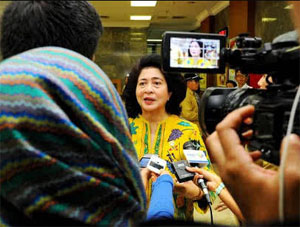
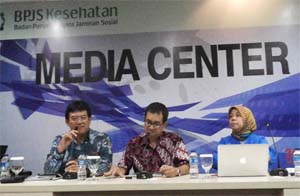
Seperti dikemukakan Direktur Riset Myriad Research Comitted Eva Yusuf , pihaknya melakukan survei pada 24 September-15 Oktober 2014 dengan responden sebanyak 17.280 peserta BPJS Kesehatan. Disebutkan, sebanyak 81 persen menyatakan puas terhadap BPJS Kesehatan.

“Angka ini melampaui target kepuasan masyarakat yang ditetapkan oleh pemerintah, yaitu sebesar 75 persen,” ujarnya.

Ditambahkan, persentase total sebesar 81 persen itu merupakan gabungan dari indeks kepuasan peserta terhadap layanan di fasilitas kesehatan tingkat pertama (FKTP), fasilitas kesehatan rujukan tingkat lanjutan (FKRTL), kantor cabang dan BPJS Kesehatan pusat.

Dari sisi jenis layanan, lanjut Eva, rawat jalan atau rawat inap di rumah sakit, tidak ada perbedaan tingkat kepuasan di antara keduanya. Sedangkan indeks kepuasan peserta rawat jalan dan rawat inap hampir sama tingginya, yaitu 81 persen dan 80 persen.

Sementara itu, survei yang dilakukan PT Sucofindo pada 28 Oktober hingga 30 November 2014 lalu itu untuk mengevaluasi awareness dan efektivitas iklan serta sosialisasi BPJS Kesehatan. Hasilnya menunjukkan, 95 persen dari 10.202 responden yang diambil dari 12 devisi regional di seluruh Indonesia mengenal BPJS Kesehatan dengan baik.

“Awareness masyarakat terhadap BPJS Kesehatan mengalami peningkatan. Bila di 2013 selagi masih menjadi PT Askes, awereness masyarakat hanya 58 persen, naik menjadi 95 persen pada tahun 2014,” kata Direktur Komersial PT Sucofindo (Persero), Mohammad Heru Risa Chakim.

Survei ini juga menyebutkan, hal pertama dan paling diingat dari BPJS Kesehatan adalah berobat gratis disusul dengan asuransi kesehatan rakyat. Ini berarti, BPJS Kesehatan secara merek masih diasosiasikan sebagai asuransi oleh masyarakat, bukan penyelenggara jaminan sosial kesehatan.

“BPJS Kesehatan juga masih kuat diasosiasikan dengan berobat gratis, khususnya di kalangan masyarakat berpendidikan rendah, yaitu sampai dengan tamat SMP,” ujarnya.

Karena itu, lanjut Heru Riza, diperlukan strategi untuk mengedukasi dan menggeser pola pikir masyarakat bahwa BPJS Kesehatan adalah sebagai pelaksana program jaminan kesehatan, bukan asuransi kesehatan. (TW)


Menkes targetkan layanan kesehatan berbasis IT

Menteri Kesehatan Nila F. Moeloek menargetkan tahun 2015 untuk meningkatkan layanan kesehatan masyarakat berbasis informasi teknologi (IT). Tentu hal ini tidak hanya berlaku di rumah sakit, tetapi juga di seluruh puskesmas di Indonesia.

Untuk mewujudkan target itu, Menteri Komunikasi dan Informatika (Menkominfo) Rudiantara menyatakan dukungannya atas usulan Menkes tersebut. Oleh karen itu, mantan Direktur Telkom itu menyatakan paling lambat semua bisa selesai di tahun 2015.

“Kami catat beberapa hal. Contoh bagaimana seluruh puskesmas di Indonesia bisa terhubung dengan Kemenkes secara langsung (dengan internet). Targetnya paling lama 2015 sudah selesai,” tutur Menteri Rudiantara kepada wartawan di Gedung Kemenkes RI, Jakarta.

Tambahnya, secara infrastruktur saat ini hampir seluruh kecamatan di Indonesia sudah memiliki layanan internet yang dapat diakses setiap saat. Tetapi teknis harus segera dibenahi agar masyarakat semakin puas dengan layanan kesehatan yang selama ini telah berjalan.

“Secara infrastruktur di lapangan seluruh kecamatan punya internet. Tinggal bagaimana di lapangan dihubungkan saja, karena itu bagian dari pelayanan masyarakat,” imbuhnya

Sekedar diketahui, menurut data Riset Fasilitas Kesehatan (Risfaskes) 2011, kondisi infrastruktur di rumah sakit jauh berbeda dengan puskesmas. Apalagi di era JKN, baru ada 1.227 RS di Indonesia menggunakan aplikasi Indonesia Case Base Group (INA-CBG). Sistem tersebut sudah menghitung layanan yang akan terima pasien, sekaligus pengobatannya hingga dinyatakan sembuh.

sumber: http://www.waspada.co.id

Did the International Monetary Fund help make the Ebola crisis?

Yes, according to a comment in one of the world’s leading health journals, The Lancet.

The Associated Press has a nice summary:

Professors from three leading British universities say International Monetary Fund policies favoring international debt repayment over social spending contributed to the Ebola crisis by hampering health care in the three worst-hit West African countries.

…IMF policies contributed to “under-funded, insufficiently staffed, and poorly prepared health systems” in the three countries — a major reason the outbreak spread so rapidly, the report said. The IMF’s insistence on decentralized health care made it difficult to mobilize a coordinated response to Ebola, it said.

Their basic argument: the IMF gives lip service to social services, but their insistence on financial austerity starved the health systems of Guinea, Sierra Leone, and Liberia, and the crisis is worse because of it.

Unfortunately, this just doesn’t really make sense if you’re familiar with the governments in these places, local politics, or more generally how weak states actually work. I see more opinion than evidence. To me, it illustrates of the perils of doing research from afar, and ignoring politics.

First, it assumes the thing that’s holding the country back is not enough money for public spending. Places like Liberia and Sierra Leone are actually awash with more outside money than ever before.

More importantly, after decades of war and political instability, the real problem is that they don’t have the people or the public organizations capable of spending more money well, even if they want to. We’re talking about countries that can’t get basic supplies like plastic gloves out of the warehouses by the port and into hospitals. The reason is not too little public money.

If you haven’t worked in a weak state, you have no idea how hard it is to get even basic things done. Trying to run research and programs in Liberia nearly broke me. It takes decades for countries to recover from complete state collapse. Liberia and Sierra Leone have only had about 10 years of real stability. In the meantime, a lot of things we take for granted in other countries, even other poor countries, just do not work.

Second, the Lancet comment assumes the government actually wanted to spend more money on health systems. As it happens, these countries have reasonably good and well-intentioned governments. It could be a lot worse.

Even so, the governments have a dozen priorities that come before health systems. Some of them are reasonable ones (like power supplies and roads) and some are not (lining the pockets of supporters). Health was not top of their lists. And health systems in remote areas of the country wasn’t even in their imagination.

This is exactly the right choice: When you’re three steps removed from war or a coup, and you don’t have a functioning police or justice system, building a fine public health system is not your first investment.

Finally, it assumes the IMF had any real influence over health policy and spending. As one senior adviser to the Liberian government wrote Tuesday, “the IMF has about as much influence over health systems building as the Lancet does over central banking.”

We so easily default to a Western-centric view, where it’s our aid or financial policies that are responsible for the success or failure of poor countries. It’s egoistic and exaggerated, and ignores domestic politics.

In my experience, you don’t see this as much when people write about India or China or Iraq. Too many people know something about these countries, including newspaper and journal editors. As a writer or researcher, you don’t get away with ignoring the context: who makes the decisions, who has what incentives, and what arms of the government can actually get things done.

When it comes to Africa, however, too many people are willing to assume it’s a blank slate, and that nations dance to the tune of Western donors and banks. Or that weak states are functioning, rational bureaucracies. I think this is one reason why so many newspapers are picking up the “IMF caused the Ebola crisis” so uncritically.

Ironically, this is exactly the mistake that the IMF made through much of the 1980s and 1990s. Whether you agree with the actual policies or not, the IMF prescribed reforms assuming they were dealing with governments that could and would implement them. And it backfired.

The Lancet piece, and the global health system in general, is making the same mistake today. This more than anything is what worries me about the global response to Ebola.

source: http://www.washingtonpost.com/

Gangguan Kesehatan Paru-paru Intai Generasi Muda

Jumlah perokok pemula di Indonesia terus mengalami peningkatan sekitar 5 persen setiap tiga tahun. Kondisi memprihatinkan itu membuat pemerintah harus gencar melakukan sosialiasi dan edukasi bahaya merokok bagi generasi muda.

“Pada 2010, jumlah perokok pemula dengan kisaran umur 10 – 15 tahun mencapai 13 juta anak,” kata Project Officer Komnas Pengendalian Tembakau Nanda Fauziyana dalam audiensi Yayasan Paru Sehat Indonesia bersama Menteri Kesehatan Nila Djuwita F Moeloek di Kantor Kementerian Kesehatan, Jalan Rasuna Said, Jakarta, Selasa (30/12/2014).

Data tersebut merujuk pada riset kesehatan dasar terakhir Kemenkes yang dilakukan setiap tiga tahun sekali. “Jumlah Itu meningkat tiga kali lipat dibanding jumlah perokok pemula pada 1995,” ucap Nanda.

Saat ini, tutur Nanda, data baru terkait jumlah perokok pemula belum dipublikasikan. Namun, Komnas Pengendalian Tembakau memperkirakan jumlah tersebut terus naik sekitar 5 persen atau 6 – 8 juta anak. Sementara itu, Menkes Nila F Moeloek mengakui banyaknya generasi muda yang merokok.

“Untuk merokok, saya khawatir anak-anak muda. Memang (merokok) lebih turun ke anak muda,” kata Nila. Pola hidup tak sehat dan merokok, lanjutnya, berdampak pada munculnya gangguan kesehatan pada paru – paru.

Tak hanya itu, orang yang tak merokok pun menjadi korban karena terpapar asap para perokok aktif. Nila menegaskan, aktivitas merokok juga tak boleh dilakukan di ruang publik atau tertutup. Pasalnya, hal itu akan meningkatan jumlah perokok pasif yang rentan terkena gangguan kesehatan.

Nila menyatakan, komitmennya guna membantu kiprah Yayasan Paru Sehat Indonesia dalam menyosialisasikan pentingnya menjaga kesehatan paru-paru.

“Kita bisa bantu promosi kesehatannya,” ujarnya.

Bantuan itu diberikan dalam bentuk pemasangan poster di unit-unit kesehatan masyarakat. Kemenkes juga aka menyebarkan poster berisi larangan merokok di tempat tertutup. Bagi Nila, menjaga kesehatan bisa dilakukan dengan cara – cara yang sederhana. Dia mencontohkan, gerakan dansa yang dilakukan sejumlah warga di Tiongkok pada pagi hari.

“Kenapa di Cina, genit berdansa-dansa, ternyata itu berolahraga. Itu kan sederhana, apakah itu tak bisa di-push (didorong di Indonesia),” tuturnya.

Dalam kesempatan itu, Nila berpesan agar hidup sehat menjadi bagian dari kehidupan masyarakat. “Kembali ke diri kita, kita mau hidup sehat enggak sih,” ucapnya.

Dia pun mewanti-wanti momen pergantian tahun dirayakan dengan sederhana dan penuh rasa syukur serta menghindari konsumsi minuman keras. (Bambang Arifianto/A-88)***

sumber: http://www.pikiran-rakyat.com


Parade Penelitian Kesehatan Tahun 2014

29des14

29des14Badan Penelitian dan Pengembangan Kesehatan (Balitbangkes) Kementerian Kesehatan menggelar Parade Penelitian Kesehatan 2014, di Jakarta, Senin (29/12). Dalam kesempatan yang sama, diluncurkan buku Indeks Pembangunan Kesehatan Masyarakat (IPKM).

“Ada 8 hasil riset yang dipamerkan dalam Parade Kesehatan, dengan harapan dapat dimanfaatkan masyarakat,” kata Menkes Nila FA Moeloek dalam kata sambutan saat membuka Parade Kesehatan 2014 dan peluncuran IPKM 2014, di Jakarta, Senin (29/12).

Disebutkan, 8 hasil riset itu adalah Studi Diet Total, Saintifikasi Jamu, Studi Kohort Faktor Risiko Penyakit Tidak Menular dan Tumbuh Kembang Anak, Riset Khusus Vektor dan Reservoir Penyakit, Riset Etnografi Kesehatan serta Kesiapan Laboratorium Menghadapi Pandemi.

Tentang IPKM 2014, Menkes menjelaskan, IPKM dikembangkan setiap 4 tahun sekali. IPKM tahun 2010 mengacu pada Riset Kesehatan Dasar (Riskesdas) 2007. Dan IPKM 2014 saat ini mengacu pada Riskesdas 2013.

Untuk itu, lanjut Menkes, telah dirumuskan 30 variabel penting dalam menggambarkan status kesehatan di suatu wilayah. IPKM dapat menggambarkan peringkat kabupaten/kota di Indonesia dalam menyelenggarakan pembangunan kesehatan.

“Melalui IPKM ini, diharapkan data yang ada dapat menjadi pertimbangan dan acuan dalam penyusunan prioritas pembangunan kesehatan, baik yang dilakukan daerah maupun pusat, sebagai bagian dari pembangunan nasional,” ujar Nila FA Moeloek menandaskan. (TW)

Materi Parade Litbangkes & Ringkasan Eksekutif Riset Kesehatan

Lampiran 1

Lampiran 2

Lampiran 3

Lampiran 4

Lampiran 5