WHO: Liberia Bebas dari Virus Ebola

Pada Sabtu lalu, Organisasi Kesehatan Dunia (WHO) telah menyatakan Liberia sepenuhnya telah bebas dari virus Ebola. Pernyataan tersebut disampaikan berkenaan dengan upacara peringatan korban terakhir yang meninggal akibat virus tersebut dan telah dikebumikan pada 42 hari lalu.

“Wabah virus Ebola di Liberia dinyatakan sepenuhnya telah berakhir,” kata WHO dalam sebuah pernyataan tertulisnya seperti yang dilansir situs berita The Independent.

Dalam laporannya, WHO juga menyimpulkan bahwa penjangkitan virus dari manusia ke manusia telah berakhir. Menurut data WHO, hingga saat terakhir ada lebih dari 3.000 kasus yang dikonfirmasi terjangkit Ebola di Liberia dan masih terdapat 7.400 kasus Ebola yang dicurigai tidak dideteksi.

Virus Ebola pertama terdeteksi di Liberia pada Maret 2014. Sejak saat itu, lebih dari 4.700 kematian terjadi lantaran Ebola, 189 diantaranya merupakan 189 petugas kesehatan.

Presiden Ellen Johnson Sirleaf mengatakan masa kerusakan dan kematian lantaran virus Ebola sudah selesai. Meski luka dan ingatan terhadap para korban tak akan pernah terlupakan. “Rasa sakit dan kesedihan tak akan bisa hilang, namun generasi Liberia akan terus tersembuhkan,” katanya.

Sementara itu, seorang juru bicara untuk WHO mengatakan, “Ini merupakan penghargaan kepada pemerintah dan rakyat Liberia yang memiliki teak dan keberanian yang tak pernah tergoyahkan untuk mengalahkan Ebola. Bahkan dalam kondisi sesulit apapun, seperti kelengkapan alat pelindung diri yang tak pernah memadai.”

Menurut WHO, empat dari enam negara yang mengalami epidemi Ebola dan telah dinyatakan bebas, kembali kambuh setelah tiga tahun. Kiat-kiat pencegahan telah dikampanyekan di Liberia seperti hidup higienis. (sip)

sumber: http://www.cnnindonesia.com/

Health Insurance Scheme Amasses Rp 1.93t Deficit in First Year

A year after its launch on Jan. 1, 2014, the Social Security Organizing Body (BPJS), which provides health care and insurance schemes for Indonesians, has posted a Rp 1.93 trillion ($148.22 million) deficit as claims exceeded premium income.

The health insurance agency generated Rp 40.72 trillion in premium revenue last year from its customers, which include employers, employees, workers of the informal sector and government officials.

Meanwhile, claims from customers — which include spending on curative health care, and rehabilitative in-patient care, preventive services like shots and screening tests — stood at Rp 42.65 trillion.

Of this figure, Rp 8.34 trillion was paid to 18,437 community health clinics, known as Puskesmas and Rp 34.31 trillion was paid to 1,681 hospitals.

The mismatch between claims and premium revenue means the government has to step in.

“We expect the deficit can be plugged with a government [cash] injection,” said Fahmi Idris, chief executive for the BPJS’s unversal health care branch known as BPJS Kesehatan.

This year, the agency expects to receive up to Rp 5 trillion in funds from the government, of which Rp 3.46 trillion is expected to be disbursed sometime in the first half of this year, while the remainder will be allocated at the end of 2015.

Through the BPJS, the government subsidizes health premiums for all Indonesians, including citizens working in the informal sector.

The government is still working to get as many health institutions as possible to participate in the program.

The agency had already estimated a potential deficit of up to Rp 1 trillion for the first quarter of 2015, said Riduan, its finance and investment director. Claims from January to March are expected to reach Rp 13 trillion, while the agency receives an average of Rp 4 trillion from premium income per month, he added.

This means premium revenue for the first three months stood at Rp 12 trillion, yielding to a shortfall of Rp 1 trillion.

In addition to seeking financial support from the government, the agency is working to make improvements in its operation that would allow it to generate more revenue and optimize claims.

Its efforts include revising the activation date of insurance cards and raising the amount of premiums.

Starting June this year, new participants will only be able to use the health insurance card two weeks after they register — only slightly longer than the current seven days.

This is done to avoid “free riders” — people who only register when they are sick, or know they would need to pay for health care services in the immediate future.

With regard to the premium, Riduan said the health agency is still reviewing the current figure, although he signaled the possibility of an increase.

The current premium for clients of BPJS Kesehatan’s health insurance schemes ranges from Rp 25,500 to Rp 59,500 per month, per person.

“The increase plan will start in 2016, not this year,” Riduan said.

He added that the agency still has Rp 400 billion in unpaid premium bills from regional governments who registered their officials last year.

These local administrations first need approval from their legislators to settle budget spending, delaying their premium payments.

Also, more than 2 million registrants from the workers category have yet to pay their premiums.

Riduan said BPJS Kesehatan also plans to cooperate with state lenders to help participants in making their payments, including Bank Rakyat Indonesia, Bank Mandiri and Bank Negara Indonesia.

source: http://thejakartaglobe.beritasatu.com/

 

Komnas Pengendalian Tembakau Desak Pemerintah Tolak Intervensi Industri Rokok

Komisi Nasional Pengendalian Tembakau (Komnas PT) bersama kelompok peduli pengendalian tembakau lainnya mendesak pemerintah agar menolak segala bentuk intervensi industri rokok multinasional dalam mencegah kenaikan cukai rokok yang dilakukan dalam forum-forum yang mereka sponsori.
“Industri rokok bisa mengintervensi lewat berbagai bentuk, misalnya lobi tingkat tinggi lewat lembaga internasional,” kata Ketua Umum Komnas PT Prijo Sidipratomo melalui siaran pers diterima di Jakarta, Kamis (7/5/2015).

Karena itu, Komnas PT menyayangkan keterlibatan sejumlah pejabat Indonesia dari sektor keuangan dan fiskal dalam Asia Pasific Tax Forum yang diselenggarakan International Tax and Investment Center (ITIC) pada Selasa-Kamis (5-7/5) di New Delhi, India.

Pasalnya, ITIC merupakan organisasi yang sudah masuk dalam daftar hitam Organisasi Kesehatan Dunia (WHO) dan Bank Dunia karena disponsori empat perusahaan rokok multinasional seperti Philip Morris International, British American Tobacco, Imperial Tobacco, dan JTI.

Berbagai kritikan terhadap forum tersebut telah menyebabkan Bank Dunia menarik dukungan dan sejumlah pejabat keuangan dari berbagai negara memutuskan tidak ikut berpartisipasi.

Komnas PT menilai forum yang diselenggarakan tersebut merupakan bentuk intervensi industri rokok untuk mengagalkan kebijakan negara menaikkan cukai rokok. Apalagi, forum tersebut mendiskusikan kebijakan pajak.

Menurut Komnas PT, harga rokok di Indonesia masih sangat murah dan dapat dijangkau, termasuk oleh anak-anak. Karena itu, untuk membatasi konsumsi produk adiktif tersebut, perlu ada kenaikan cukai rokok semaksimal mungkin.

Kenaikan cukai rokok akan menyebabkan kenaikan harga rokok sehingga akses kelompok rentan seperti rakyat miskin dan anak-anak dapat dikendalikan.

“Indonesia seperti medan perang di mana pemilik industri menjadi orang-orang terkaya dari uang orang-orang miskin yang kecanduan rokok,” kata guru besar Fakultas Kesehatan Masyarakat Universitas Indonesia Jakarta Hasbullah Tabrani.

sumber: http://nasional.kompas.com/


Ruang Isolasi di RS Harus Diperbanyak

Rumah sakit seharusnya memiliki ruang isolasi, mengingat masih tinggi kasus infeksi di Indonesia. Ruang isolasi dipergunakan untuk menahan penyebaran penyakit agar tidak menjadi outbreak atau kejadian luar biasa (KLB).

“Untuk itu, butuh dukungan pemda agar ruang isolasi dibangun di rumah sakit regional daerah,” kata Staf Ahli Menteri Kesehatan Bidang Perlindungan Faktor Risiko Kesehatan, Sri Henni Setyawati dalam seminar tentang infeksi memperingati Hari Ulang Tahun (HUT) Rumah Sakit Pusat Infeksi (RSPI) Sulianti Saroso ke-21, di Jakarta, Rabu (6/5).

Henni menambahkan, saat ini baru ada sekitar 20 ruang isolasi dibangun di rumah sakit yang sesuai standar badan kesehatan dunia WHO. Padahal, idealnya ruang isolasi itu ada di setiap rumah sakit provinsi.

“Jika tersedia di setiap provinsi, kalau ada outbreak bisa segera ditangani. Tak perlu dibawa ke Jakarta,” ucapnya.

Dijelaskan, ruang isolasi menjadi penting karena penanganan penyakit infeksi harus dilakukan secara cepat, tepat, dan tuntas. Untuk itu, perlu kesiapan dan kerjasama seluruh sektor terutama Pemda dan masyarakat, agar penularan kasus bisa dicegah sedini mungkin.

Diakui Henni untuk menuntaskan kasus-kasus penyakit infeksi memang tidak mudah. Indonesia dengan kondisi geografis yang terdiri atas 17 ribu pulau serta jumlah populasi mencapai 250 juta menjadi kendala dalam penanganan kasus penyakit infeksi.

“Belum lagi infrastruktur yang kondisinya beragam, untuk daerah terpencil akses ke layanan kesehatan masih sulit dilakukan dengan cepat,” ujarnya.

Sementara itu Direktur Utama RSPI Sulianti Saroso, Fatmawati mengatakan, penyakit infeksi berhubungan dengan beberapa faktor, antara lain kepadatan pendudukan, perjalanan (travel) penyakit, perubahan iklim, pergerakan ternak dan barang, dan perkembangan virus infeksi itu sendiri.

“Mobilitas manusia sangat cepat. Pagi di Jakarta, bisa jadi malam sudah di Amerika atau sebaliknya. Hal seperti ini harus kita antisipasi,” katanya.

Menurut Fatmawati selain rumah sakit, penelitian dan perkembangan teknologi serta terapi pengobatan penyakit infeksi amat menentukan keberhasilan Indonesia dalam menangani penyakit infeksi.

“Selain itu tentu perilaku masyarakat untuk hidup bersih dan sehat. Misalkan, membiasakan mencuci tangan sebelum makan,” kata Fatmawati. (TW)

{jcomments on}

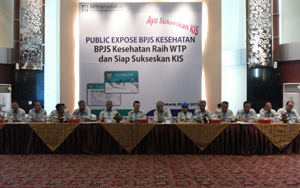
BPJS Kesehatan Raih Predikat WTP

6mei

6meiLaporan keuangan Dana Jaminan Sosial (DJS) dan Badan Penyelenggara Jaminan Sosial (BPJS) Kesehatan pada 2014 meraih predikat opini Wajar Tanpa Pengecualian (WTP) atau Wajar Tanpa Modifikasian (WTM) dari kantor akuntan publik Kanaka Puradireja Suhartono.

“Saat masih bernama Askes, selama 23 tahun berjalan laporan keuangan selalu meraih predikat WTP. Kami senang karena sebagai BPJS Kesehatan kinerja tak berubah, tetap WTP,” kata Direktur Utama BPJS Kesehatan, Fachmi Idris dalam acara Public Expose BPJS Kesehatan di Jakarta, Selasa (5/5).

Fachmi menjelaskan, hingga 31 Desember 2014 pendapatan iuran mencapai Rp40,72 triliun yang bersumber dari pemerintah, pemberi kerja dan pekerja serta kelompok peserta bukan penerima upah.

“Iuran tersebut dikumpulkan dengan mekanisme perbankan, oleh tiga bank yang selama ini menjadi mitra BPJS Kesehatan,” ucap Fachmi.

Ia menambahkan BPJS Kesehatan juga mengalokasikan dana cadangan teknis sebesar Rp5,67 triliun pada 2014.

Terkait realisasi biaya manfaat, Fachmi memaparkan, dana yang sudah dikeluarkan untuk biaya pelayanan kesehatan per orangan meliputi biaya promosi, preventif, kuratif dan rehabilitatif sampai dengan 31 Desember 2014 mencapai Rp42,65 triliun.

“BPJS Kesehatan melakukan pembayaran kapitasi sebesar Rp8,34 triliun kepada sebanyak 18.437 fasilitas kesehatan tingkat pertama (FKTP) atau Puskesmas dan dokter keluarga secara tepat waktu pada tanggal15 setiap bulan,” katanya.

Selain itu, kata Fachmi, pihaknya juga me geluarkan dana sebesar Rp34,31 triliun untuk membayar 1.681 fasilitas kesehatan rujukan tingkat lanjutan (FKRTL) atau rumah sakit dengan waktu pembayaran klaim rata-rata 13 hari atau lebih cepat dari ketentuan undang-undang maksimal 15 hari.

“Biaya manfaat tersebut untuk membayar sebanyak 6,17 juta kunjungan pasien rawat jalan tingkat pertama di puskesmas, dokter praktik perorangan dan klinik pratama atau swasta,” katanya.

Kemudian, lanjut Fachmi, tercatat sebanyak 511.475 kasus rawat inap tingkat pertama di FKTP, sebanyak 21,3 juta kunjungan pasien rawat jalan tingkat lanjutan dan sebanyak 4,2 juta kasus rawat inap tingkat lanjutan.

Ditambahkan, BPJS Kesehatan berupaya membayar tepat waktu klaim maupun kapitasi, dengan pertimbangan jika melebihi waktu ditetapka akan terkena denda dan catatan raport kinerja menjadi merah.

Dengan perolehan ini, Fachmi menegaskan, pihaknya siap menjalani program Kartu Indonesia Sehat (KIS) secara lebih baik lagi, dibanding program JKN 2014 lalu. “Kami belajar banyak dari program JKN yang sudah berjalan selama satu tahun terakhir ini,” kata Fachmi menandaskan. (TW)


Industri Kesehatan di Indonesia Sangat Potensial Tapi Belum Dioptimalkan

Perkembangan industri kesehatan di Indonesia sangat potensial. Selain memiliki penduduk terbesar keempat dunia setelah Tiongkok, India, Amerika Serikat, jumlah fasilitas kesehatan yang berkualitas masih timpang antardaerah.

Sementara kebutuhan akan layanan kesehatan juga terus berubah seiring dengan pesatnya ilmu pengetahuan dan pertumbuhan ekonomi. Namun, potensi industri kesehatan ini masih belum dioptimalkan.

Ini terbukti antara lain kualitas layanan yang belum terstandar. Akibatnya, triliunan rupiah harus terbuang ke luar negeri untuk membeli kesehatan.

“Kalau bahan pangan seperti gula dan beras kita impor, tapi satu yang kita eskpor, yaitu kesehatan. Sekitar US$ 700 juta atau setara Rp 7,5 triliun keluar tiap tahun untuk membeli kesehatan di negeri orang,” kata Komisaris Utama PT Bundamedik, Ivan Sini, di sela-sela penandatangan nota kerja sama Bundamedik dengan Deloitte Konsultan Indonesia, di Jakarta, Kamis (30/4).

Menurut Ivan, untuk mengembangkan industri kesehatan juga dibutuhkan pendekatan ekonomi. Dibutuhkan ketepatan dalam sistem pengelolaan. Tanpa pendekatan ekonomi yang kuat, industri kesehatan akan jauh tertinggal.

“Makanya kalau kita tidak pakai pendekatan ekonomi, industri kesehatan kita akan tinggal jauh. Karena itu, ke depan ketepatan dalam pengelolaan sistem sangat penting,” kata Ivan, yang juga adalah spesialis kandungan Rumah Sakit Bunda Jakarta.

Menurut dia, pelayanan kesehatan memerlukan modal, investasi, sumber daya manusia, dan teknologi tinggi. Ini yang masih perlu perhatian pemerintah, sehingga industri kesehatan dibedakan dengan jasa dan lainnya.

sumber: http://www.beritasatu.com/


Global health: How prepared are we for the next crisis?

It has now been over a year since the Ebola outbreak in West Africa was first reported and it has since gone on to become the deadliest occurrence of the disease since its discovery in 1976, claiming the lives of more than 10,000 people. So what has the outbreak taught us and how prepared are we for the next global health crisis?

What lessons have been learned from Ebola?

We have learned that the initial response to an outbreak must be robust and complete so that the outbreak does not spread from rural areas, where it emerges from an animal source in nature, into neighbouring countries and urban areas.

We have also learned that community engagement is of the utmost importance – helping village elders, paramount chiefs and others understand how the disease is transmitted and how it can be stopped, including emphasis on safe burial practices.

Equally important is contact tracing – and daily monitoring of the temperature of those who are known to have been in contact with a patient – for three weeks, in order to identify those who are potentially infected with Ebola; and surveillance to identify patients and ensure their transport and management in a health facility where infection control is up to standard.

Ebola transmission is amplified if patients are admitted to health facilities where infection control is sub-standard; and where health workers inadvertently become infected and then unintentionally infect their family members, spreading the infection to the community.

Health workers are often infected because it is impossible to diagnose Ebola early – it has signs and symptoms similar to other infections such as malaria – and they are therefore at great risk of infection. It has been shown that the Ebola virus does not cause major outbreaks where health facility infection control is up to standard.

The best means of dealing with an international health crisis is prevention – it has been known, for example, since 1976 that it is sub-standard health facility infection control that permits Ebola to spread, yet sub-standard infection control continues in many facilities. Emphasis must be placed on helping health facilities understand and use infection control measures as part of their routine activities.

The International Health Regulations are international laws that are meant to help prevent the international spread of disease, and they required countries to develop standard core capacity in public health between the years 2007 and 2014, yet many countries did not accomplish this and continue to be at great risk of not detecting and responding to outbreaks early, when their spread can be prevented.

What dangers lie ahead?

There continue to be many infectious disease risks that can spread internationally – some of them are known, others unknown. Those that are known include infections resistant to the medicines used to cure them (antimicrobial resistant infections). Infections such as Dengue, Chikungunya, and cholera all continue to spread throughout the world.

Those that are unknown – they emerge from a source in nature to infect humans – sometimes also have the potential to spread internationally. Sars in 2003 is an example – and others, such as Ebola, re-emerge from time to time. It is impossible to predict when these latter, emerging infections, will emerge or re-emerge, so it is important that all countries develop the public health capacity to detect and respond to infectious diseases when and where they emerge or re-emerge.

The way forward must therefore include stronger government engagement in developing core capacities in public health so that outbreaks can be rapidly identified and contained when and where they occur; and strengthening of global alert and response mechanisms to ensure a rapid and robust response – a safety net when countries are unable to detect and contain outbreaks on their own.

David Heymann is head and senior fellow, Chatham House Centre on Global Health Security, and professor of Infectious Disease Epidemiology, London School of Hygiene and Tropical Medicine.

source: http://www.bbc.com/


Indonesia’s healthcare agency urged to target 2 million late payers to ease financial burden

More than 2 million participants have fallen behind on National Health Insurance (JKN) premium payments, contributing to the programme’s financial difficulties last year.

The Healthcare and Social Security Agency (BPJS Kesehatan), the insurance operator, reported that 2,158,584 people had been late in their premium payments for three to six months.

“Those who are late in their payments are mostly workers who do not receive fixed salaries,” BPJS spokesperson Irfan Humaidi told The Jakarta Post recently. “They are people who register when they fall ill, but stop paying once they recover.”

There are 1,915,424 participants in this category, while 242,653 long-time members have failed to keep up with premium payments, including those covered by the Jamsostek insurance programme. A further 175 members have become late-payers after retiring from their jobs.

Irfan said that the rate of non-compliant participants had not harmed the agency’s finances, since their number accounted for less than two per cent of the current 140 million JKN participants.

Each JKN participant is required to pay premiums of differing sums, starting from Rp 25,500 (US$1.96) per month.

BPJS Kesehatan expects to remain in the red throughout this year, with its claim ratio expected to hover around 100 per cent. The claim ratio is the difference between the hospitals’ bills for health services provided and the premiums collected by the agency from participants registered in the programme.

Separately, the National Social Security Board (DJSN), which is tasked with monitoring the programme, said that while the number of late-payers might be relatively small now, BPJS Kesehatan should not ignore these groups of people.

“If non-compliant participants are ignored and there’s no punishment, their numbers will swell,” DJSN head Chazali Husni Situmorang told the Post.

BPJS Kesehatan should hunt these late-payers, he argued, a simple process since the agency already had their addresses and phone numbers.

“The agency has to have a strategy. For example, the marketing division should call all those who are late in their payments. The agency could also utilize a system to send automated SMS,” said Chazali.

Irfan said that the agency had already sent bills via text message.

“Moreover, late-payers receiving treatment at hospitals will receive notification that they haven’t paid,” he said.

After six months without payment, they are no longer eligible for health treatments, according to Irfan.

The late-payers also have to pay a fine of two per cent of the total premiums before they can resume their membership in the JKN programme.

“The fine is too small. It should be increased incrementally,” Chazali said. “If the fine is too small, then its deterrent effect is negligible.”

He also suggested that the BPJS Kesehatan require its participants pay premiums once every six months, instead of monthly.

“It would counter late payments. And it doesn’t violate the law because the law doesn’t stipulate that BPJS Kesehatan must collect premiums every month,” said Chazali.

He also suggested that BPJS Kesehatan publish the names of late-payers in local media or government offices to shame them.

Lastly, Chazali said, BPJS Kesehatan could team up with state-owned electricity company PLN and state-owned telecommunications company Telkom to target late-payers.

“When they pay their electricity bills or phone bills, they could be reminded to pay their JKN premiums,” he said

source: http://business.asiaone.com


Hari Ini Presiden Bagikan Kartu Indonesia Sehat di Klaten dan Sleman

Hari ini, Senin (4/5), Presiden Joko Widodo (Jokowi) dijadwalkan akan menyerahkan secara simbolik Kartu Indonesia Sehat (KIS) kepada peserta Penerima Bantuan Iuran (PBI) di Klaten, Jawa Tengah dan Sleman, Daerah Istimewa Yogyakarta (DIY).‬

Berdasarkan data dari Departemen Komunikasi dan Hubungan Masyarakat BPJS Kesehatan, di Klaten KIS akan diberikan mulai pukul 08.00 WIB di SDN 2 Temuwangi kepada 1.646 peserta. Setelah itu, Jokowi akan langsung menuju Sleman untuk menyerangkan KIS kepada 4.414 peserta.

Sumirah (54), warga Wonorejo mengaku antusias bisa bertemu Jokowi sekaligus mendapatkan KIS. Ia bahkan sudah tiba di SDN 2 Temuwangi sejak pukul 06.30 WIB. “Saya berterimakasih pada Jokowi, karena bisa berobat gratis. Tapi beberapa keluarga saya ada yang tidak dapat (KIS). Mudah-mudahan nanti semuanya juga bisa dapat,” kata Sumirah, Klaten, Senin (4/5).

‪Untuk KIS segmen PBI, peluncuran perdananya telah dilakukan presiden bersamaan dengan peluncuran perdana Kartu Indonesia Pintar (KIP) dan Kartu Keluarga Sejahtera (KKS), pada 3 November 2014. KIS yang terintegrasi bersama Program Keluarga Sejahtera dan Program Indonesia Pintar, saat ini telah terdistribusikan sebanyak lebih dari 4 juta kartu, atau tepatnya 4.426.010 kartu kepada peserta PBI, di 18 kabupaten/kota di seluruh Indonesia.‬

‪Pada 2015, BPJS Kesehatan bersama Kementerian Sosial dan Kementerian Kesehatan melanjutkan penerbitan dan pendistribusian hampir 82 juta kartu, atau tepatnya 81.973.990 KIS untuk segmen peserta PBI. Pada Mei 2015, sebanyak 82 juta KIS PBI mulai didistribusikan secara bertahap.

Sementara itu, menurut Direktur Utama BPJS Kesehatan, Fachmi Idris, masyarakat Klaten dan Sleman sangat gembira menerima KIS ini dan menyambut antusias kehadiran Presiden untuk berdialog. Presiden menyapa, mendengar dan merespons pertanyaan dan usulan dari masyarakat terkait kartu jaminan ini.

“Presiden Jokowi memberikan perhatian yang sungguh-sungguh atas pentingnya distribusi KIS bagi semua segmen masyarakat,” kata Fachmi dalam siaran pers di Jakarta, Jakarta, Senin (4/5).

sumber: http://www.beritasatu.com/


Intellectual Property Rights For Global Health

Republican congressional leaders are eager to give President Obama Trade Promotion Authority, or “Fast Track.” Proponents argue that Fast Track will break the logjam holding up important international trade agreements like the Trans Pacific Partnership (TPP), which includes countries as diverse as Australia, Canada, Peru and Vietnam.

Fast Track would allow the president to finalize the agreement before sending it to Congress for a straightforward up-or-down vote within a limited time. However, the likelihood of Fast Track resulting in TPP getting a “thumbs up” from Congress is limited by potential differences between the president and the congressional majority on intellectual property rights.

In a recent Wall Street Journal op-ed, Representative Paul Ryan (R-WI) and Senator Ted Cruz (R-TX) asserted that the administration must pursue a number of negotiating objectives, including “beefing up protections for U.S. intellectual property” if it wants Congress to approve the TPP.

It is uncertain the president is as committed to intellectual property as Mr. Ryan and Mr. Cruz hope, especially with respect to patents for medicines. Although the text of the TPP is not yet available to the public, the U.S. Trade Representative, who negotiates in the president’s name, insists that “TPP countries have agreed to reflect in the text a shared commitment to the Doha Declaration on TRIPS and Public Health.”

The 2001 Doha Declaration was an attempt to limit international trade agreements’ commitment to patent rights that were accepted in the World Trade Organization’s 1995 Trade Related Aspects of Intellectual Property Rights (TRIPS) Agreement. It insists that low and middle-income countries should have broad latitude to allow generic drug makers to make copies of patented medicines through a legal mechanism called “compulsory licensing.”

The Doha Declaration was an important achievement for well-intentioned advocates for public health, such as Doctors Without Borders (known also by its French acronym MSF), which has just launched an advertising campaign designed to gut patent rights in the TPP. MSF claims – reasonably – that poor countries and nonprofits cannot afford to pay the prices that manufacturers can negotiate with payers in wealthier countries.

Unfortunately, attacking patents is a misguided way to improve access to medicines in low and middle-income. Although it is a counter-intuitive conclusion, strong patent rights are a better way to achieve this goal.

In an international environment of strong patent rights, innovative drug makers would have every incentive to lower prices voluntarily to poor countries. Costs of manufacturing and distribution are a small percentage of prices charged for patented medicines in the United States. The reason the government recognizes patents is so the manufacturer can charge enough to earn a return on investment in research and development.

source: http://www.forbes.com/