Training in Qualitative Methods
Health Seeking Behavior and Health Expenditure Tracking Study
Surabaya 3, 4, dan 5 Desember 2012.
Potret dari kemakmuran rakyat diukur melalui berbagai indikator seperti bertambah tingginya tingkat pendapatan penduduk dari waktu ke waktu, kualitas pendidikan dan derajat kesehatan yang membaik, bertambah banyaknya penduduk yang menempati rumah layak huni, lingkungan permukiman yang nyaman bebas dari gangguan alam dan aman. Pelaksanaan beberapa program kesehatan oleh pemerintah untuk mencapai indikator-indikator tersebut telah dilaksanakan selama beberapa tahun ini. Program yang dilakukan oleh pemerintah, salah satunya dengan diluncurkannya beberapa macam jaminan untuk rakyat miskin agar bisa menjangkau ke fasilitas kesehatan. Bantuan-bantuan tersebut, antara lain; jamkesmas, jampersal, jamkesda, dan lain sebagainya. Bahkan program bantuan ini tidak dilakukan oleh pemerintah pusat saja, namun pemerintah daerah juga berpartisipasi.
Skema jaminan kesehatan yang telah diluncurkan oleh pemerintah sudah banyak diteliti. Saat ini muncul pertanyaan besar mengenai bagaimana sebenarnya utilisasi jaminan kesehatan tersebut oleh masyarakat, terutama masyarakat miskin, padahal pemerintah sudah mengeluarkan dana yang tidak sedikit untuk meluncurkan program-program tersebut. AusAID, Universitas Gadjah Mada dan Universitas Air langga bekerja sama untuk meneliti lebih lanjut pola pencarian layanan kesehatan oleh masyarakat miskin di Provinsi Jawa Timur beserta utilisasi program jaminan kesehatan oleh masyarakat miskin tersebut.
Secara khusus, tujuan dari penelitian ini antara lain melihat dari dua sisi, yaitu sisi permintaan (dari masyarakat/rumah tangga) dan dari sisi penawaran (dari pemerintah melalui pelayanan kesehatan primer di Puskesmas). Tujuan penelitian dari sisi permintaan yaitu : (1) Mengetahui jenis layanan kesehatan yang saat ini terdapat di Jawa Timur (pemerintah, pihak swasta), (2) Untuk mengidentifikasi penggunaan sumber daya kesehatan (formal dan non formal) oleh masyarakat miskin, (3) Mengidentifikasi penggunaan dan kualitas pelayanan perawatan primer dengan orang miskin dan hampir miskin di Jawa Timur, (4) Mengeksplorasi faktor-faktor yang berpengaruh dalam proses pengambilan keputusan mengenai penggunaan dari fasilitas kesehatan untuk mencari perawatan kesehatan, dan (5) Mengeksplorasi faktor sosial budaya yang berkontribusi ke kesehatan dan mencari perilaku masyarakat miskin dan hampir miskin, terutama faktor yang mungkin mengurangi penggunaan pelayanan kesehatan. Sedangkan dari sisi penawaran, yaitu pemberi layanan kesehatan, akan dianalisis (1) Identifikasi penggunaan sumber daya dan dana oleh pelayanan kesehatan dasar di PUSKESMAS, (2) Identifikasi perencanaan dan penganggaran, serta sumbatan dan hambatan yang ada di pelayanan kesehatan primer dengan focus kepada pelayanan kesehatan ibu dan anak dengan target kepada rumah tangga miskin dan hampir miskin di Jawa Timur, (3) Eksplorasi faktor-faktor yang berpengaruh dalam proses pengambilan keputusan mengenai perencanaan dan penganggaran bidang kesehatan dalam pelayanan kesehatan dasar di PUSKESMAS, (4) Studi dokumen perundangangan dan regulasi terkait pelayanan kesehatan dasar di PUSKESMAS.
Untuk provinsi Jawa Timur mengambil 4 kabupaten sebagai lokasi penelitian yaitu: Kabupaten Bangkalan, Kabupaten Bondowoso, Kabupaten Situbondo, Kabupaten Sampang, sedangkan 2 kabupaten untuk daerah perbandingan (comparison districts) adalah Kabupaten Sumenep, Kabupaten Probolinggo. Pengambilan data dalam penelitian ini menggunakan beberapa pendekatan (metode) sehingga diharapkan data yang diperoleh dapat bermutu, berkualitas dan mencerminkan fakta yang terjadi di daerah penelitian. Kegiatan pelatihan metode kualitatif ini bertujuan untuk membahas lebih jauh mengenai pendekatan yang akan digunakan dalam pengambilan data penelitian.
Maksud dari pertemuan ini untuk menjelaskan mengenai metode penelitian,proses pengambilan data, dokumen terkait dan aplikasi metode kualitatif dalam pengambilan data penelitian di lapangan. Fokus dari pertemuan ini, memaparkan secara detail mengenai penelitian ini termasuk dari;
• Latar belakang
• Tujuan umum dan spesifik dari penelitian
• Pemaparan waktu penelitian
• Proses pengambilan data kualitatif
• Data apa yang dicari dan harus ditemukan dalam penelitian ini.
• Proses transkrip hasil focus group discussion dan indepth interview
Peserta pertemuan ini dapat mengetahui, dan terjadi;
• Terjadi kepahaman dan satu pengertian dalam berbagai proses tahap dalam pengambilan data,
• Mendapatkan data yang bermutu dan berkualitas. Sehingga data yang diperoleh merupakan gambaran dari wilayah penelitian.
• Seluruh pihak yang terkait dengan penelitian mengetahui tujuan umum dan spesifik dari penelitian.
• Selain itu juga terjadi kepemahaman untuk jobdesk atau deskripsi tugas masing-masing orang.
• Seluruh pihak yang terkait dalam penelitian mengetahui time line penelitian.
Berdasarkan kebutuhan tersebut di atas, pertemuan pembahasan penelitian ini akan dilakukan selama 3 hari penuh.
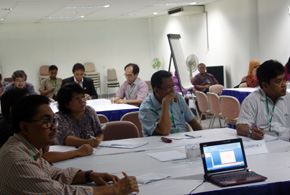
Pertemuan dilakukan dengan presentasi, diskusi dan latihan secara langsung dengan bimbingan narasumber.
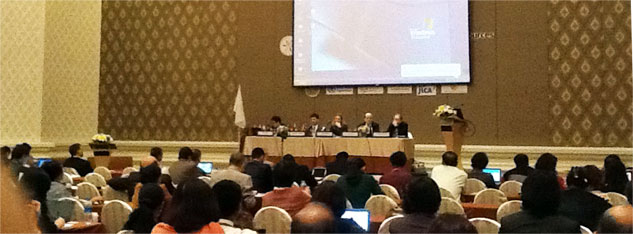
Pertemuan ini akan dilakukan pada tanggal 3, 4, dan 5 Desember 2012 di Surabaya (tempat pelatihan tercantum dalam undangan)
Pelatihan ini diselenggarakan oleh AusAID bekerja sama dengan Universitas Gadjah Mada dan Universitas Air langga
Senin, 3 Desember 2012
08.00 – 08.30 : Registrasi
08.30 – 09.00 : Pembukaan oleh Kepala Dinas Kesehatan Provinsi Jawa Timur, perwakilan dari UGM dan perwakilan Unair.
09.00 – 10.30 : Overview penelitian oleh tim UGM
10.30 – 11.00 : Break/ istirahat
11.00 – 12.00 : Koordinasi dan diskusi dengan Dinkes Provinsi, Dinkes Kabupaten (6
kabupaten) dan BPS Provinsi
12.00 – 13.00 : Makan siang, istirahat, ibadah
13.00 – 14.00 : Penjelasan penelitian kualitatif secara umum, cara kerja penelitian dan tugas
masing-masing pihak
14.00 – 15.00 : Overview penelitian kualitatif dan kuantitatif
15.00 – 16.00 : Pemilihan lokasi dan sampel penelitian
Selasa, 4 Desember 2012
08.30 – 09.00 : Penjelasan mengenai “health seeking behavior” dan “health expenditure tracking study” (R. Siwi Padmawati – Deni Harbianto,UGM).
09.00 – 09.15 : Diskusi
09.15 – 10.00 : Penjelasan mengenai focus group discussion dan teknik memfasilitasi FGD
10.00 – 10.30 : Break/ istirahat
10.30 – 12.00 : Latihan memfasilitasi FGD
12.00 – 13.00 : Makan siang, istirahat, ibadah
13.00 – 14.00 : Penjelasan mengenai wawancara dan teknik wawancara
14.00 – 15.00 : Praktik wawancara (indepth interview)
15.00 – 16.00 : Overview bagaimana memahami dan beradaptasi dengan budaya lokal
Rabu, 5 Desember 2012 (Tim Health Seeking Behaviour)
08.30 – 09.00 : Penjelasan mengenai traskrip wawancara
09.00 – 09.15 : Penjelasan mengenai envivo dan open code
09.15 – 10.00 : Manajemen data kualitatif
10.00 – 10.30 : Break/ istirahat
10.30 – 12.00 : Praktik transkrip
12.00 – 13.00 : Makan siang, istirahat, ibadah
13.00 – 14.00 : Penjelasan mengenai koding dan kategorisasi
14.00 – 15.00 : Praktek koding dan kategorisasi
15.00 – 16.00 : Rencana pengambilan data di lapangan (pembagian kerja, sistem pelaporan,
honorarium)
Rabu, 5 Desember 2012 (Tim Health Expenditure Tracking Study)
08.30 – 09.00 : Penjelasan mengenai definisi operasional dan delivery order kegiatan
09.00 – 10.00 : Penjelasan mengenai study pengumpulan dokumen perundangan dan regulasi
10.00 – 10.30 : Break/ istirahat
10.30 – 12.00 : Manajemen Data dan Analisis Dokumen
12.00 – 13.00 : Makan siang, istirahat, ibadah
13.00 – 14.00 : Penjelasan mengenai instrument kualitatif dan kuesioner
14.00 – 15.00 : Praktek menggunakan kuesioner
15.00 – 16.00 : Rencana pengambilan data di lapangan (pembagian kerja, sistem pelaporan,
honorarium)
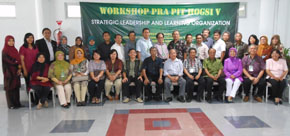
Pelatihan ini akan melibatkan koordinator studi masing-masing penelitian beserta seluruh enumerator atau pengambil data di lapangan. Secara detail peserta pelatihan adalah sebagai berikut:
1. Koordinator penelitian Health Seeking Behavior Study Universitas Air Langga
2. Koordinator penelitian Health Expenditure Tracking Study Universitas Air langga
3. Enumerator penelitian Health Seeking Behavior Study (8 orang) dari Provinsi Jawa Timur
4. Enumerator penelitian Health Expenditure Tracking Study (4 orang) dari Provinsi Jawa Timur























 Deskripsi
 Tantangan pertama adalah belum terbiasanya peneliti dan dosen di fakultas kedokteran untuk melakukan penelitian kebijakanmedik dan menggunakannya dalam kurikulum. Secara tradisi peneliti di fakultas kedokteran menguasai metode penelitian epidemiologi, clinical trial, biomedik, namun jarang yang memahami ilmu-ilmu sosial sebagai dasar penelitian kebijakan kesehatan.
 Tantangan kedua adalah Fakultas Kedokteran yang meneliti kebijakan kesehatan dan menggunakan dalam kurikulum pendidikan dokter dan pendidikan residen belum banyak jumlahnya di Indonesia. Mengapa? Dosen-dosen di fakultas kedokteran jarang yang terpapar oleh ilmu kebijakan.
 Tantangan ketiga adalah sumber daya keuangan untuk menjalankan riset kebijakan medik belum banyak. Akan tetapi dalam era BPJS, diperlukan banyak penelitian untuk kebijakan medik untuk peningkatan efisiensi. Kesempatan penelitian inti tentunya perlu dimanfaatkan oleh fakultas kedokteran ,
 Tujuan Kegiatan
 Agenda Kegiatan: